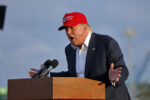
During a July 23, 2026, press conference, White House press secretary Karoline Leavitt accused the Democratic Party of harboring officials who openly identify as communists, defended a contentious atomic energy pact with Riyadh, and dodged inquiries connecting President Donald Trump’s Iranian military campaign to inflated household expenses across America.
The session combined attacks on political rivals with justifications for international agreements and economic policy, revealing the administration’s messaging strategy. The event’s dissection exposed priorities that prepared statements could not.
Nuclear Pact Framed as Economic Gain
When reporters questioned Leavitt about the Saudi Arabia nuclear agreement, she responded by reading Trump’s Truth Social message posted earlier—a rare tactic for addressing queries about delicate diplomatic arrangements.
Challenged about permitting civilian atomic programs for Saudi Arabia while denying them to Iran, Leavitt argued the arrangement secures American business interests and prioritizes the United States. The core defense amounts to corporate profit: U.S. companies gain preferential contracts.
What the pact authorizes raises alarms. Saudi Arabia can pursue nuclear expansion without international monitoring—a sharp departure from the administration’s absolute stance against Tehran acquiring such capabilities. One nation faces warnings it can never develop weapons; the other receives an opportunity packaged as commerce.
Affordability Dismissed Amid Rising Expenses
Leavitt’s rhetoric extended to domestic concerns, targeting what she termed the Democrat approach to affordability with audible skepticism. Trump previously labeled affordability a Democratic fabrication, dismissing the concept entirely.
Yet electoral outcomes tell a different story. Left-leaning Democrats including Democratic Socialist Zohran Mamdani secured victories in New York by emphasizing cost reduction for working families. Insisting the problem doesn’t exist rings hollow to voters confronting mounting bills for groceries and gasoline.
The Iran war’s economic impact complicates the White House position further. Fertilizer costs skyrocketed due to Trump’s military operations, driving up food expenses nationwide. Oil prices surged for the same reason, forcing drivers to pay more at the pump. Leavitt promoted administration talking points about economic strength and worker prosperity, but those messages clash with the financial strain households actually experience.
Electoral Opponents Branded as Radicals
Leavitt declared that individuals who describe themselves as communists now win races and claim Democratic leadership, cautioning the nation risks resembling Cuba. Republicans have historically labeled Democrats socialists or worse, but emphasizing terms like “literal” and “self-proclaimed” represented a particularly forceful escalation.
The timing matters. Candidates like Mamdani succeeded by centering their campaigns on making life more affordable—precisely the issue the administration dismisses as invented. When political newcomers triumph by promising relief from high prices, calling the whole subject a hoax fails to comfort families watching expenses climb.
Trump has invoked fallen U.S. troops in his Iran policy defense, claiming without supporting proof that deceased service members told him Tehran must never obtain atomic weapons. This assertion transforms military sacrifice into policy validation, with “Iran must never have a nuclear weapon” serving as the administration’s core justification for its Middle East approach.
Regional Volatility and Contradictions
Middle East instability persists, with Iranian activity near the Strait of Hormuz and mass American evacuations from the region demonstrating how rapidly the conflict transformed everyday existence and international commerce. Daily tracking reports have documented these consequences.
The briefing showcased an administration determined to control the narrative. Painting opposition figures as extremists, rejecting cost-of-living concerns as partisan theater, and rebranding an atomic treaty as job creation represents messaging calculated to reshape inconvenient truths. But underlying realities persist: war-driven price increases, nuclear policy inconsistencies justified through financial arguments, and unsupported claims about fallen soldiers.
Vice President JD Vance has participated in the broader administration effort to promote its foreign policy and economic achievements. Questions from the July 23 session endured past Leavitt’s departure from the lectern: will Americans accept that affordability concerns are fictional, and should the international community tolerate Saudi nuclear advancement without supervision?