
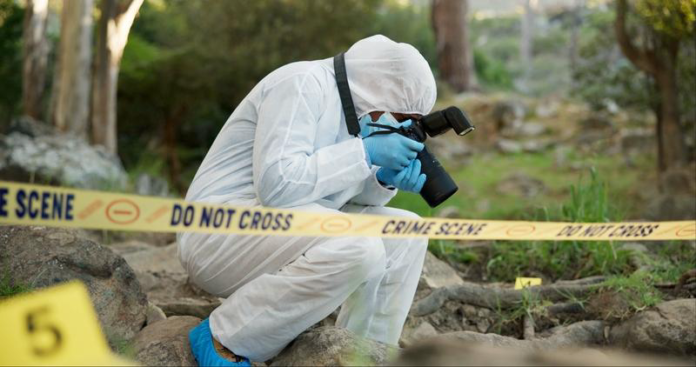
A grim excavation at a former Catholic-run institution in County Galway has yielded the skeletal remains of 22 more infants, investigators disclosed on July 22, pushing the total number of recovered bodies to 99 since digging commenced at the Tuam site in July 2025. Forensic experts fear as many as 800 children may be interred in unmarked graves at what was once Ireland’s most infamous mother and baby home.
Dr. Niamh McCullagh, a forensic specialist leading the excavation, said the concentration of infant remains discovered in coffins along the southwestern perimeter suggests many more bodies await recovery. “To find such a high number this early in the excavation of this space specifically, indicates to us there are more in the area,” she said.
Historical records identified the patch of ground as a “burial ground,” and the density of remains there has convinced the team that the worst is yet to come.
A System Built on Shame
The Bon Secours Mother and Baby Home operated out of a gray three-story building in Tuam, a town whose Irish name translates to burial place. Established in 1925 by the Bon Secours Sisters on behalf of County Galway, the institution occupied a former workhouse constructed in the 1840s for paupers, where countless famine victims had perished. British forces had used the structure during the Irish Civil War of 1922-23, executing half a dozen republican militants opposed to the Anglo-Irish Treaty there in 1923.
Ireland’s network of mother and baby homes emerged in the 1920s following independence from Britain, most operated by Catholic nuns. Unmarried pregnant women, banished by their families, were sent to these institutions where shame was enforced through isolation and forced labor. At Tuam, primitive conditions prevailed: heating was inadequate, and plumbing existed only in kitchen and maternity sections. Large dormitories held as many as 200 children and 100 mothers simultaneously.
Women labored for up to a year before being cast out, the vast majority compelled to surrender their babies permanently. The stigma surrounding pregnancy outside wedlock was so severe that many arrived in darkness. Peter Mulryan, raised at the home, discovered decades afterward that his mother had been transported by bicycle in her sixth month, hidden from view.
The men responsible—whether through consensual relationships, rape or incest—faced no consequences. Children from the institution endured ridicule at school.
A Secret Buried for Decades
The truth began to emerge through an improbable sequence of events in the 1970s. Franny Hopkins and his friend Barry Sweeney, two boys fleeing an orchard owner after stealing apples, scrambled over the stone wall encircling the abandoned home. When their feet hit the ground, it sounded hollow. The pair pulled back vegetation and hoisted up a concrete slab.
“There was just a jumble of bones,” Hopkins recalled. The boys had stumbled upon a mass grave hidden inside a disused septic tank.
For 40 years, the find remained largely confined to whispers within the crumbling walls. Catherine Corless, a homemaker with an interest in local history, set out to write an article for her historical society and instead unearthed a catastrophe. She could find no cemetery records for infants who had died at the home. “I thought I was doing a nice story about orphans and all that, and the more I dug, the worse it was getting,” she said. Her investigation ultimately pointed to the remains of nearly 800 infants and young children.
The Painstaking Work of Identification
Recovered remains are now transferred to a purpose-built mortuary and laboratory in Toghermore, Tuam, where specialists clean, dry and examine them. ODAIT, the agency managing the excavation, uses radiology and 3D scanning to establish age, sex and other details about the children’s lives and deaths. This forensic data may enable investigators to match skeletal evidence with specific identities, providing families their sole opportunity for closure.
Documentation shows an average of two infant deaths weekly at the home, many caused by malnutrition and diseases that were treatable even at the time. McCullagh emphasized that the discovery transcends mere statistics—the apparent burial ground and tightly concentrated remains hold profound significance, and the team expects to uncover additional bodies.
The Tuam site has triggered a national and international reckoning, compelling both the Irish government in Dublin and the Vatican to confront a legacy of ostracizing unwed mothers and separating them from their children. For relatives whose histories are entwined with the former home, each body recovered represents a measure of justice long withheld.