
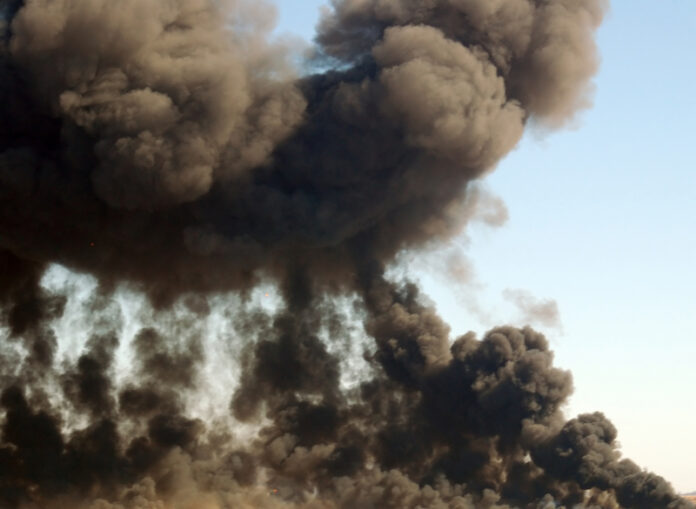
A methane gas explosion that trapped workers deep inside a hydropower construction site in India’s Sikkim state ultimately claimed 25 lives, authorities confirmed after a four-day recovery operation concluded Thursday, July 23. Two of the victims were identified as senior managers with the National Hydroelectric Power Corporation (NHPC): Manish Prakash and Anish Mohan.
The disaster unfolded Monday, July 20, 2026, at the 500-megawatt Teesta Hydroelectric Project near Samardung village, roughly 40 kilometers (25 miles) south of Gangtok, the state capital. Workers had reportedly raised concerns about unusual underground conditions for at least three months before the explosion, according to Ramesh Murmu, a 28-year-old tunnel mechanic from Jharkhand who lost colleagues in the disaster.
NHPC, the state-owned utility managing the project, said the blast resulted from a “sudden burst of suspected methane gas present inside the rocks, which led to an explosion generating dense fumes and toxic gases.” Thick smoke filled the passage immediately after the event, severely hampering access for emergency teams.
Rescue Teams Battle Toxic Gases
Recovery crews equipped with oxygen cylinders fought through hazardous fumes throughout the multiday operation. As of July 23, the death toll stood at 22, with rescue operations still in progress at that time to locate remaining victims. An official in Namchi district confirmed Thursday afternoon that the final three bodies had been extracted, completing a 72-hour search-and-rescue mission.
Of the 25 workers caught in the blast, 19 were employed by Patel Engineering Limited, a contractor on the hydroelectric project. The Sikkim state government issued an official announcement confirming that after all missing personnel had been retrieved, crews performed a thorough final examination of the passageway. “Tragically, all 25 individuals lost their lives, and their bodies were recovered during the course of the operation,” authorities said.
Geology and Safety Questions
Initial investigative results identified a flammable gas escape as the most probable cause of the blast, but authorities stressed that a definitive determination awaits completion of specialist assessments. NHPC rejected news accounts claiming that the passageway had given way due to a rockslide triggered by the detonation. Sikkim’s state government has established a senior-level panel tasked with probing the incident and producing guidance aimed at averting comparable tragedies going forward.
The region surrounding the Teesta River, home to this hydropower development, lies within an earthquake-prone corridor known for geologically immature, broken bedrock capable of trapping ancient volatile gases in underground chambers. Experts note that ongoing seismic activity combined with volatile subterranean environments make excavation work throughout this Himalayan sector especially dangerous. Located close to Samardung village within Namchi district, the site presents geological hazards matched only by its isolation.
Latest in a Series of Infrastructure Tragedies
Sikkim’s tragedy represents only the most recent in an ongoing series of fatal episodes linked to India’s intensive infrastructure expansion drive, especially throughout mountainous territories in the northeast and north. Deadly construction mishaps have become characteristic of this development surge, as schedules demanding rapid progress repeatedly clash with unstable terrain, variable enforcement of workplace protections, severe climate patterns, and the brutal realities of boring passages through primordial mountain mass. A coal mine blast in adjacent Meghalaya state during February 2026 took approximately 30 lives. Earlier, in 2023, structural failure within a tunnel in Uttarakhand state in the north sealed 41 laborers beneath ground for over two weeks before successful extraction. That rescue operation evolved into an extended countrywide watch; Sikkim’s calamity, offering even briefer prospects for survival, concluded with far darker outcomes. NHPC initiated the Teesta Hydroelectric Project as one element of India’s wider campaign to harness energy from Himalayan waterways. The Teesta River, fed by Sikkim’s high-elevation ice fields before descending toward West Bengal’s lowlands, has historically attracted interest as a renewable power source. Yet the very geological immaturity lending the area its hydrological strength—unstable rock, precipitous slopes, dynamic seismic boundaries—simultaneously renders it among earth’s most dangerous locations for subsurface excavation.
Investigation and Accountability Ahead
Having now recovered all 25 fatalities, focus is turning toward the official inquiry, financial redress for bereaved families, and questions surrounding whether existing safety requirements for tunnel work in earthquake-vulnerable areas are sufficient. Sikkim’s senior investigative panel is anticipated to look beyond simply identifying what sparked the methane ignition that Monday morning, addressing broader questions of whether institutional shortcomings permitted laborers to face such danger without appropriate protective measures.
For relatives gathered outside the tunnel mouth in Samardung village, the conclusion of recovery efforts offered not comfort but merely validation of early fears following the explosion. Twenty-five workers went into that tunnel on a construction shift. None came out alive.