On July 26, former Honduran president Juan Orlando Hernández stepped off a private aircraft at Palmerola International Airport, bringing to an end eight months of freedom following President Donald Trump’s controversial pardon in late last year. The 57-year-old politician, who had been serving a 45-year U.S. sentence for drug and arms trafficking, was greeted by his wife Ana Garcia Carias, relatives and jubilant members of his right-wing National Party.
Yet the celebrations at a rally in the town of Comayagua, where hundreds of supporters gathered at a farm to hear him speak, cannot erase the legal peril waiting for him in Honduras. Hernández thanked Trump for clemency, but domestic prosecutors have charged him with fraud and money laundering in a case known as Pandora II, alleging he diverted $2 million in government funds to finance his first presidential campaign. He is due in court on August 3.
In June, a Honduran judge temporarily lifted an arrest warrant after Hernández pledged to submit to proceedings voluntarily, opening the door for his return. He maintains his innocence, portraying himself as a victim of relentless political attacks.
Domestic Charges Beyond the Reach of U.S. Clemency
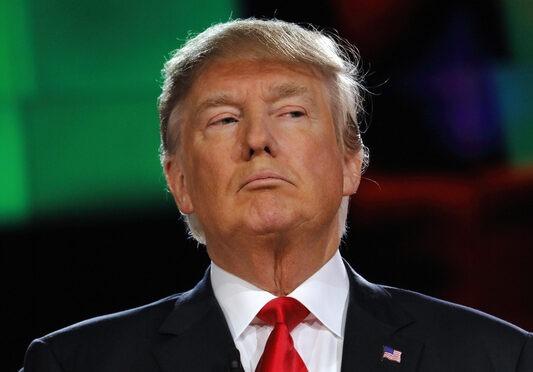
Trump granted the pardon on December 1, 2025, approximately 19 months after Hernández began serving his sentence. The U.S. president had previewed the decision in November 2025, asserting without proof that the former Honduran leader had been treated very harshly and unfairly and “set up” by former President Joe Biden’s administration. While the pardon wiped away his federal convictions and restored his civil rights in the United States, it has no effect on charges filed in Honduras.
A federal jury on March 8, 2024, returned a guilty verdict against Hernández for his role in a plot to ship cocaine into the United States, and he received a 45-year term. U.S. prosecutors contended he took millions in bribes from trafficking organizations across 18 years to fuel his political rise. They alleged he once declared he would “shove the drugs right up the noses of the gringos,” a derogatory term for Americans.
The U.S. Department of Justice asserted that Hernández misused his position to facilitate the movement of more than 400 tons of cocaine into American territory. At trial, he rejected the bribery allegations, insisting he had instead led a vigorous crackdown on narcotics and highlighting his government’s collaboration with U.S. military forces. A U.S. court determined in 2024 that he had orchestrated the smuggling of hundreds of tons of cocaine alongside cartel leaders, including Mexico’s Joaquin “El Chapo” Guzman.
Decades in Politics Shadowed by Scandal
Hernández began his political journey in Gracias, located in the western department of Lempira, signing on with the National Party in the 1990s and securing a congressional seat in 1997. He ascended to president of the National Congress by 2010, consolidating power within the ruling party. Scandal dogged him even then: roughly $360 million vanished from a congressionally controlled development fund while he led Congress, and his sister, Hilda Hernández, oversaw the program.
His brother, Juan Antonio “Tony” Hernández, received a United States conviction in 2019 for narcotics smuggling and is currently serving time in prison there. Hernández governed the Central American nation from 2014 to 2022, winning a disputed second term in 2017 after a Supreme Court ruling struck down single-term limits, sidestepping a constitutional prohibition.
During his presidency, multiple U.S. administrations viewed him as a dependable pro-U.S. partner, channeling hundreds of millions of dollars in military assistance to Honduras. Following the end of his term, left-leaning successor Xiomara Castro ordered his extradition to the United States.
Accusations of Election Meddling and Impunity
Trump’s pardon came just days ahead of Honduras’s presidential election last year, coupled with a warning to cut off aid unless Hernández’s conservative ally, Nasry “Tito” Asfura, emerged victorious. Asfura did prevail. Castro and her supporters condemned the episode as blatant foreign interference, and critics pointed to the contradiction between the pardon and Trump’s own military actions against suspected cartel vessels in Latin America, as well as the January 5, 2026, arrest of Venezuela’s Nicolás Maduro on drug and gun charges.
Speaking at his rally, Hernández insisted he had returned “without any electoral ambitions,” though he suggested he might reenter politics if he saw a resurgence of radicalism. Supporter Eva Amador, 56, carried a banner expressing gratitude to Trump and said the crowd was overjoyed by his homecoming.
Human rights activists and legal experts, however, warn that any trial under a government controlled by his party risks becoming a charade. Human rights advocate Joaquin Mejia described Hernández’s return with complete impunity as an enormous insult to those who suffered because of his criminal actions.