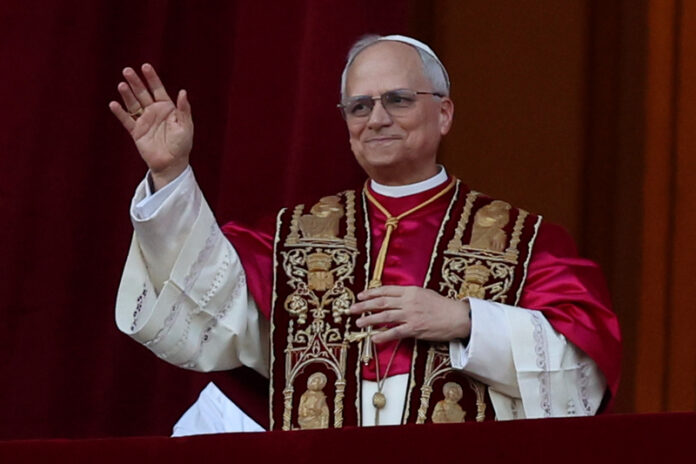
In his first appearance on American television since ascending to the papacy, Pope Leo XIV chose to highlight the nation’s historic embrace of newcomers from across the globe — a pointed contrast with border restrictions championed by the Trump administration. The 70-year-old pontiff, born in Chicago and the first American to hold the office, spoke with NBC anchor Tom Llamas from the Borgo Laudato Si’ papal gardens near Rome in an interview broadcast Wednesday.
Asked by Llamas what he treasures most about the United States, Leo discussed core national values before singling out one element: the country’s tradition of “having invited for generations people from around the world to be part of America.” The statement arrived during President Donald Trump’s aggressive campaign to restrict immigration.
Family History Shapes Vatican Leader’s Outlook
Referencing genealogical work from the prior year, Leo tied his perspective to personal ancestry. “I come from a family that—my grandparents were immigrants. On my mother’s side, we have people who were both slaves and slave owners,” he stated. That background, he said, shapes his view of what ranks among America’s finest qualities, and he vowed to keep defending traditional American values.
The conversation with Leo marked his inaugural U.S. television interview after his election, though NBC’s Lester Holt had previously spoken with him during an international media event the year before. His American background gives added weight to commentary on United States policy matters.
Escalating Vatican-White House Tensions
Friction between Rome and Washington has intensified. Trump has labeled Leo “weak on crime” and “terrible for foreign policy.” Vice President JD Vance, who became Catholic in adulthood, has challenged the pope’s command of church teaching. Leo, meanwhile, has called the administration’s migration tactics “inhuman.”
Leo stated he has no fear of the current government and will persist in preaching gospel principles, which he calls the church’s core responsibility. White House representatives did not immediately comment on the interview.
A July 4 Choice That Spoke Volumes
Although President Trump extended an invitation for the pontiff to join Washington’s 250th anniversary celebrations, Leo instead traveled to Lampedusa on July 4, 2026. The Italian island serves as a primary landing point for those crossing the Mediterranean.
Leo conducted a procession and celebrated Holy Mass there. Father Antonio Spadaro, undersecretary at the Vatican office overseeing culture and education, described the choice as deliberate — an American pontiff selecting his homeland’s birthday to stand at what he called the wounded threshold of the Mediterranean rather than celebrating territorial borders. The act itself, Spadaro noted, served as an unofficial declaration.
Spadaro framed the journey as presenting an alternative perspective rather than picking a fight. He observed it happened when migrant exclusion had become flagship policy — circumstances an American pope understood intimately. Leo avoids accusatory statements, Spadaro said, but underscores that divine-granted human dignity outweighs any boundary.
Before the anniversary, Leo sent written correspondence to the United States framing the issue through Catholic teaching. He argued that protecting human life requires nations to receive, shelter and support those who cross borders seeking refuge. He asserted that showing kindness and hospitality toward migrants recognizes the inherent worth every person possesses.
Together, the television appearance, written message and Lampedusa pilgrimage form a cohesive Vatican response — answering enforcement crackdowns not with direct attacks but through steadfast focus on migrants’ moral worth. For a pope who shares the president’s country of birth, the question of what defines American greatness has become one of the most divisive issues separating Rome from Washington.