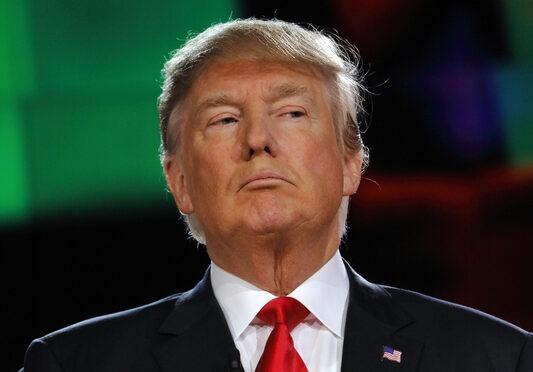
President Donald Trump, 80, used a new magazine interview to defend his decision to oust three news organizations from the White House, then turned his criticism on CNN anchor Kaitlan Collins, 34, in a blunt personal attack.
Asked about the ban in an interview Time published Thursday, Oct. 1, 2026, Trump broadened his answer into a complaint that the press will never treat him fairly. He said he could list 100 achievements and still get bad coverage. “I don’t think anybody should be forced to bear fake news, constantly bad stories, because I’ve done great things,” he told Time.
He then named Collins in a personal attack. “What’s the purpose of like this crazy Kaitlan Collins?” Trump said, calling her “a very average person” and “the most unhappy young person I’ve ever seen.” He said even a spectacular achievement would be written up badly.
The interviewers tried to steer him to the war in Iran. Instead, Trump spent time on the size and warmth of his rally crowds and insisted he had not been booed.
Three Outlets Shut Out
Trump announced Friday, Sept. 18, that CNN, MS NOW and Politico were barred from the White House, accusing them of printing falsehoods about him. Reporters from the three outlets were kept out from Sept. 19, and the networks condemned the move. They sued on Monday, Sept. 21, saying it violated the First Amendment and their due process rights.
U.S. District Judge Timothy Kelly, a Trump appointee, ordered access restored on Thursday, Sept. 24. He wrote that he was “skeptical” — at least on the record before him — that national security was the true reason for pulling the credentials. The fight over the press comes only weeks before the midterm elections.
A Hearing That Went Badly for the Government
At a preliminary-injunction hearing on Thursday, Oct. 8, Kelly pressed Justice Department lawyers over their national security defense of the ban, saying of it: “That’s an uphill climb.” He pointed out that Trump has said openly that the ban is tied to his distaste for the outlets’ coverage. The outlets’ lawyer, Theodore Boutrous, called the process offered to challenge the exclusion a “sham process.”
The judge appeared most bothered that the outlets received no due process beforehand, though he is also weighing First Amendment concerns. He prolonged the networks’ access while he considers a longer injunction that would hold in place while the lawsuit moves forward, a process that could last months. Kelly said he would rule by Tuesday, Oct. 13, and possibly sooner.
Blocked Anyway
Even with the order in force, the White House kept CNN out of the pool covering Trump’s Thursday, Oct. 1, trip to Texas and Oklahoma, and it left Politico off the traveling press group for his Monday, Oct. 5, visit to Nebraska. Communications director Steven Cheung has said the order covers entry to the White House complex, not seats in the pool or the Oval Office.
Reporters from all three outlets were also turned away at Secret Service checkpoints the day Trump welcomed Chinese President Xi Jinping for a state visit. The administration has stood by the ban.
Collins and Trump: A Running Feud
The two have clashed repeatedly since he returned to office in January 2025. In September, days after the ban began, Collins asked Trump at the United Nations when he expected the Iran war to end. He told her, “You shouldn’t be here.” The outlets’ lawyers later put that exchange into the court record.
In February, Trump told Collins from behind the Resolute Desk that she never smiled and tied that to her not being truthful, after she raised a question about Jeffrey Epstein. He has come back to the same line of attack more than once in his second term.
CNN has backed her. “We stand by her to the fullest extent,” a CNN spokesperson said. After the ban, the network said it “will not be deflected from our duty to hold the government and other public bodies to account.”
Experts Warn of a Pattern
Scholars say the attacks follow a familiar script. Harvard professor Steven Levitsky, co-author of “How Democracies Die,” called baseless conspiracy claims an opening move for leaders who later crack down. Princeton historian Julian Zelizer said Trump learned from mentor Roy Cohn that accusing shadowy enemies can rally supporters and cast him as the wronged party.