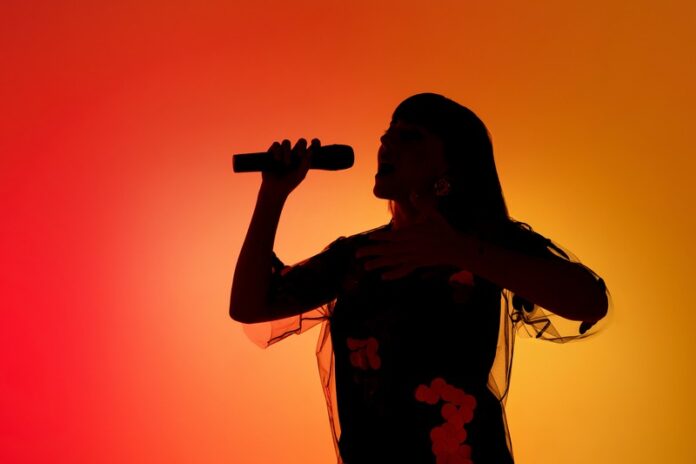
Cassandra Wilson, the Grammy-winning jazz singer and songwriter whose deep, smoky voice made her one of the genre’s most influential modern vocalists, died at 70 in Jackson, Mississippi. She was laid to rest there on September 11. No cause of death has been provided.
Robert Torre, who managed Wilson for 20 years, said in a statement to WBGO, the jazz radio station, that the singer “transitioned peacefully at home, surrounded by family, close friends, and her manager.” Hinds County Coroner Jeramiah Howard confirmed that she died in her native Jackson on a Tuesday morning, without giving a cause. Accounts differ on the day: the coroner’s account and The Associated Press point to September 1, while the New York Times, NPR and DownBeat report September 2.
Over a career that began in the early 1980s, Wilson reshaped what a jazz singer could sound like, pulling blues, folk, country and pop songcraft into a sound built around her unmistakable low register. She won two Grammy Awards, was declared America’s best singer by Time magazine in 2001, and received one of the field’s highest distinctions when the National Endowment for the Arts named her a Jazz Master in 2022.
From Jackson to the New York Jazz Scene
Born Cassandra Fowlkes in Jackson on December 4, 1955, she grew up in a household where music was the family trade: her father, Herman Fowlkes Jr., was a guitarist, bassist and music teacher, and her mother, Mary, taught school and held a doctorate in education. She began piano at six and later picked up the guitar, the instrument that would become central to the spare, string-driven arrangements of her best-known records. A Murrah High School graduate, she studied theater arts and philosophy at Millsaps College before taking a degree in mass communications at Jackson State University.
Wilson moved to New Orleans in 1981 and to New York a year later, working her way into a jazz community crowded with young players hunting for a new vocabulary. She joined Steve Coleman’s M-Base Collective and became its principal vocalist, an apprenticeship in rhythmic experiment that marked everything she did afterward. She opened for Miles Davis at the 1989 JVC Jazz Festival, sang on three tracks of Greg Osby’s “Season of Renewal,” and took the role of Leona in Wynton Marsalis’ “Blood on the Fields,” which in 1997 became the first jazz work ever to win the Pulitzer Prize for Music.
A Voice That Crossed Genres
Her move to Blue Note Records began the stretch that would define her career. “Blue Light ’til Dawn,” released in November 1993 and produced by Craig Street, established the template: hushed, atmospheric production and a repertoire that refused to respect genre borders. Two years later came “New Moon Daughter,” which broke through commercially and earned her the 1997 Grammy for Best Jazz Vocal Performance. Published sales counts diverge: the New York Times puts it above 400,000 copies, Britannica above 650,000.
Much of her draw came down to what she chose to sing. She made material by songwriters well outside the jazz repertoire sound wholly hers — Joni Mitchell’s “Black Crow” on “Blue Light ’til Dawn,” a reading of Neil Young’s “Harvest Moon” on “New Moon Daughter” that became one of her signatures, and, on the 1999 Davis tribute “Traveling Miles,” Cyndi Lauper’s “Time After Time,” a song Davis had recorded himself. That willingness to reach across styles brought in listeners who might never have bought a jazz album.
A second Grammy followed in 2009, when “Loverly” took Best Jazz Vocal Album. She stayed a steady presence on the touring circuit throughout, performing at the JVC Jazz Festival in Newport, Rhode Island, in August 2003 and singing “Fever” at the Songwriters Hall of Fame’s 48th annual induction gala in New York in June 2017.
Mississippi Mourns a Native Daughter
Back home in Mississippi, the news registered less like the death of a celebrity than the loss of a relative. Jackson Mayor John Horhn said Wilson “carried the sound, spirit and history of Mississippi with her wherever her music reached,” adding that the city had lost an extraordinary native daughter and the world had lost a singular musical voice. Musicians followed. Jon Batiste, in a eulogy posted September 2, wrote that her “approach of weaving folkloric, R&B and diasporic music together with experimental and popular genres had a major impact on me,” and added the line The Associated Press lifted for its own obituary: “She sounded like the South.” Jill Scott and Jools Holland also paid tribute. Her home state had marked her long before: she is the subject of Mississippi Blues Trail marker No. 100, dedicated in 2010.
Wilson was a member of Alpha Kappa Alpha Sorority, Incorporated, which acknowledged her death on its official social media account and described her life as one lived beautifully and boldly. A visitation was set for Collins Northside Chapel in Jackson on Thursday afternoon, September 10, with the sorority’s Ivy Beyond the Wall rite scheduled for Friday morning. The celebration of life followed at noon on September 11 at New Horizon Church International, where the producer Fabrizio Sotti and the guitarist David O’Rourke spoke. Horhn delivered the eulogy and proclaimed the day Cassandra Wilson Day in Jackson. A scholarship fund in her name is being established at Jackson State, The Mississippi Link reported.
Wilson never treated the jazz tradition as a museum piece; she treated it as a living language, one flexible enough to accommodate a Mississippi childhood, a folk-rock ballad and a Blue Note session in the same breath.
She is survived by a son, Jeris Wilson, from her first marriage, to Anthony Wilson, a retired anchor and reporter at WTVD-TV in Durham, N.C. The New York Times named a different man as her first husband and corrected its obituary on September 9. She was later married, from 2000 to 2003, to the actor Isaach de Bankolé. The tributes that followed her death kept circling back to the same quality: a voice so distinctive that a single phrase was enough to identify it.