Conditions at Mzuzu Airport on the morning of June 10, 2024 were good enough to put the aircraft down, a government meteorologist has told Malawi’s parliamentary inquiry into the crash that killed Vice President Saulos Klaus Chilima — testimony that sets her own station against the German investigators whose conclusions the inquiry exists to examine.
Olive Chavunguma, then the officer in charge at the Mzuzu Climate Change and Meteorological Station, put visibility at the airport that morning at eight kilometers. “The plane could have landed at Mzuzu airport. If there were limiting factors, then the challenges were enroute because the accident happened in Chikangawa,” she told the committee. Describing conditions as “overcast with drizzle and fog in the vicinity,” she added: “I have worked in aviation for 35 years and from my experience it was possible to land the plane on the day,” she said. Her station would only have issued a special weather report to air traffic control if visibility had improved beyond 10 kilometers or deteriorated to five kilometers or less, she said, and visibility at Mzuzu improved further by the afternoon of June 10, 2024.
The German Federal Bureau of Aircraft Accident Investigation, whose report put the crash down to the weather, logged less than eight kilometers. Pressed by MPs on the discrepancy, Chavunguma maintained her station’s eight-kilometer reading and suggested the difference may reflect the German bureau’s own separate assessment. The crash site is identified as Nthungwa Hill, within the Viphya Plantation forest area. She also told the committee that the same aircraft had previously operated and landed under similarly challenging conditions, and that she could not confirm the crash was caused by bad weather. Terrain, elevation and atmospheric conditions vary between locations, she said, cautioning MPs against relying solely on Mzuzu Airport’s records as an indication of conditions at the crash site.
A pilot handed the committee the opposite judgment. Retired Brigadier General Juvenalis Mtende, who flew the Dornier 228 on VVIP missions and trained the flight’s commander, Colonel Owen Sambalopa, said he would not have taken off. “I would personally have advised the vice-president that the aircraft could not safely proceed,” he said, adding that conditions at Mzuzu have seen “no significant improvement” since. An experienced crew, he testified, would have been well placed to assess the risks, and continuing the mission in those conditions was extremely dangerous. Asked how he would respond to the pressures of VVIP flights, Mtende said he would stand by his assessment despite professional and political consequences, and that any refusal to fly should be communicated “clearly and confidently,” with safety taking precedence over rank, protocol or expectation.
Both testified in the opening days of phase two of the inquiry, which opened on August 24, 2026, and runs through September 11. Its focus is the day of the flight. Witnesses still to come include fuelling and airport meteorology staff, pilots experienced on the type, and eyewitnesses from the Nthungwa Forest, the locality inside the Chikangawa plantation where the aircraft came down.
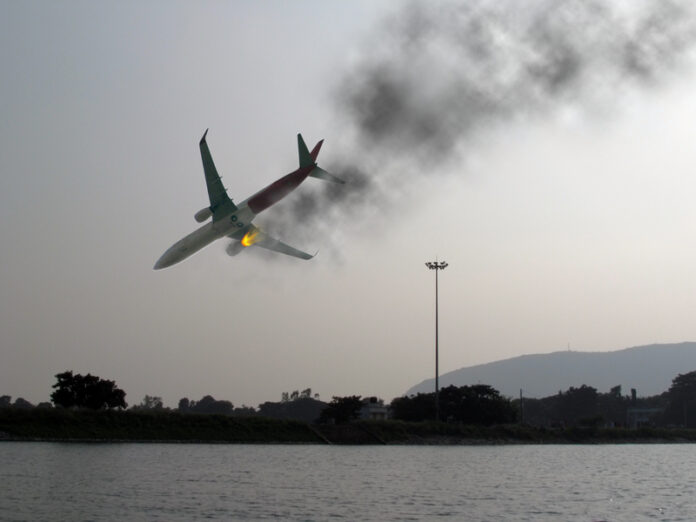
The Malawi Defence Force (MDF) plane went down in bad weather in the north of the country, killing Chilima and eight others, among them former First Lady Shanil Dzimbiri. The Dornier 228-202(K) was found completely wrecked in the Chikangawa Forest, and President Lazarus Chakwera announced that there were no survivors.
Chilima, 51, had just returned from the Korea-Africa summit in South Korea and was traveling to Nkhata Bay for the funeral of former justice minister Ralph Kasambara. The aircraft left Lilongwe at 9:17 a.m. but could not land at Mzuzu Airport, the closest field to the funeral, because of low visibility. Redirected to Lilongwe, it then lost contact with air traffic control and disappeared from radar.
Before politics, Chilima was managing director of Airtel Malawi. He led the United Transformation Movement and ran as Chakwera’s running mate in their winning 2020 campaign, a partnership that had soured as the 2025 presidential election approached, with Chilima expected to challenge him. His wife, Mary, and their two children survived him.
Neither of the two earlier reports settled the matter. The German bureau’s investigation, released in May 2025, found the aircraft collided with rising terrain in poor visibility, while a commission set up by Chakwera blamed human and environmental factors. Evidence of foul play turned up in neither, and neither satisfied many Malawians.
President Peter Mutharika ordered a fresh investigation after beating Chakwera in the September 2025 election, and the earlier reports had not answered the critical questions, Justice Minister Charles Mhango told Parliament in February 2026. In late March, Speaker Sameer Suleman appointed a 13-member Parliamentary Ad Hoc Committee, chaired by Walter Nyamilandu Manda and given 90 days — a deadline the inquiry has long since overtaken.
The committee is running three strands at once: a forensic audit; a health, safety, security and environmental audit; and post-mortem examinations that require exhuming all nine victims, none of whom were examined when the bodies were recovered.
More than 40 witnesses appeared in phase one, which revived doubts about the decisions that put Chilima aboard and about how the government conducted itself after contact was lost. Former Defence Minister Harry Mkandawire told the inquiry that Chakwera assigned the vice president to represent the state at Kasambara’s funeral and approved the MDF Dornier for the trip. State House arranged a K5 million condolence payment for the family.
Then-MDF Commander General Paul Valentino Phiri phoned him at about 10:02 a.m. to say weather had turned the aircraft back to Lilongwe, Mkandawire testified — minutes before its scheduled 10:16 a.m. landing in Mzuzu. Under questioning, he acknowledged remaining at the funeral, then going home to bathe and sleep, and reaching the crash site only the following day.
Colonel Alex Mwachande, the Zomba Air Base commander, delivered the most damaging technical evidence. On a June 9, 2024 flight to Mzuzu, the same aircraft’s crew had reported “very bad weather,” he said, and that warning never reached the vice president’s office. He also testified that the plane’s emergency locator transmitter had been dead for years: the battery had expired in 2006 and replacements were no longer being made, so nothing aboard transmitted a position once the plane went down.
Two South African pathologists, Dr. Robert Gabriel Ngude and Dr. Wilson Sibusiso Ntsele, are to lead the pathology work, but as of early August 2026 no exhumations had taken place, the committee citing legal clearances and consultation with the families. Nyamilandu said on July 3 that the panel was prioritizing thoroughness over speed and might seek an extension. Decomposition and embalming can blunt toxicology and soft-tissue analysis, forensic specialists have noted — meaning the longer the delay, the less those examinations may resolve.