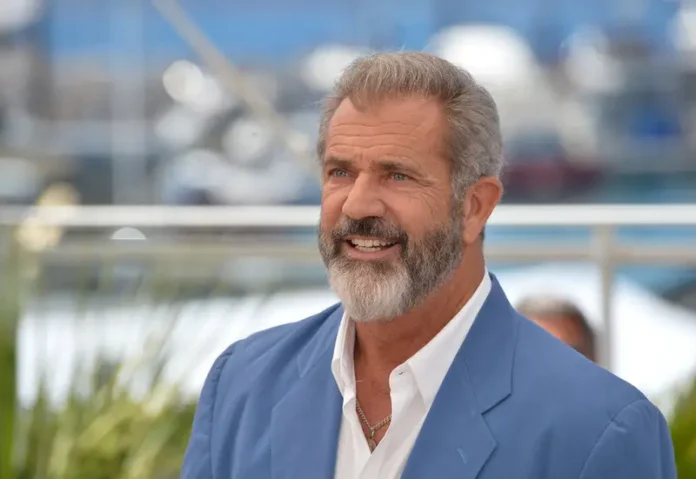
A former top Justice Department lawyer says the department chose not to bar convicted domestic abusers from a new federal gun-rights restoration program because a senior official told her that Mel Gibson had to get relief. The claim appears in a complaint she filed with the department’s inspector general, reported Thursday, Oct. 1, 2026.
Elizabeth Oyer, who served as U.S. pardon attorney from April 2022 to March 2025, says she pressed for a blanket exclusion for people with domestic violence convictions while the program was still being designed. She says she was overruled because of the ties between Gibson, the 70-year-old “Lethal Weapon” star, and President Donald Trump.
Her complaint targets Associate Deputy Attorney General Paul Perkins. “Ms. Oyer was advised by Mr. Perkins that domestic violence offenders could not be excluded because it was necessary to grant relief to Mel Gibson,” the complaint states. Perkins rejects that account as “categorically false.” He says no decision on the program’s scope had been made at the time and that the department consulted several offices, including its Office on Violence Against Women.
The Timeline Oyer Lays Out
Oyer says the eligibility question for domestic violence offenders surfaced in February 2025. Her suggestion was to carve them out entirely or, at minimum, seek advice from the Office on Violence Against Women.
On March 6, 2025, she sent Perkins a memo naming candidates for restoration. Her staff had started with 95 people who had been through the pardon process’s thorough screening, and leadership trimmed that pool to nine. Oyer alleges Perkins responded by telling her to add Gibson, who had not been through that screening.
She says Gibson’s attorney leaned on the actor’s friendship with Trump and his film career in seeking the restoration. After she declined to endorse him, Oyer says, Perkins phoned to ask whether she could be flexible and hinted she should recommend him. The next morning she submitted a memo with background on Gibson but no recommendation. Within hours, she says, Todd Blanche, then the deputy attorney general, fired her.
Rules Now in Force
The program has since opened its first phase without the exclusion Oyer says she wanted. Under final rules from Attorney General Blanche, people with misdemeanor domestic violence convictions can still apply, although the department says it will generally deny restoration for 10 years unless extraordinary circumstances exist.
Gibson’s Record and the Lawsuit
Gibson lost his firearms rights after pleading no contest in 2011 to misdemeanor spousal battery involving his then-girlfriend, Oksana Grigorieva. In 2025, the Justice Department restored them. Months earlier, in January 2025, Trump had named Gibson one of his “ambassadors” to Hollywood, along with Jon Voight and Sylvester Stallone.
Oyer sued Blanche and the department in federal court in Washington in early September, according to the ABA Journal, alleging violations of her due process and First Amendment rights, among other claims. Blanche has said Gibson played no part in her dismissal, and told senators at his July confirmation hearing that he knew nothing of the Gibson matter when he removed her. The case is still pending.
Advocates Sound an Alarm
Tonia Moultry-Pace, interim president and CEO of the National Network to End Domestic Violence, said the policy puts women at risk. She cited a figure that a male abuser’s risk of killing a female partner rises by 1,000 percent when he has a gun, and said removing firearms from convicted offenders is a lifesaving protection.
The complaint also suggests Gibson was on the department’s mind from the earliest days of the program, long before news reports revealed that his rights had been restored. With the first phase now open, the very applicants Oyer wanted screened out are free to file, and her lawsuit continues.