
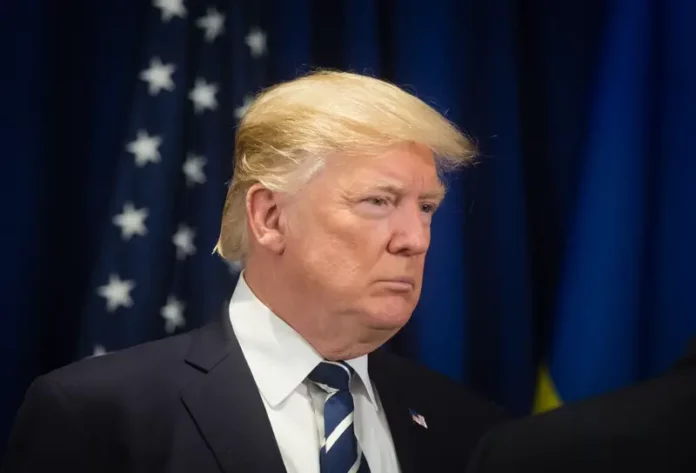
“Tonight Show” host Jimmy Fallon used his August 10, 2026, broadcast to ridicule President Donald Trump’s abrupt change in rhetoric on the war against Iran. The comedian highlighted how Trump has stepped back from earlier aggressive language, adopting a new strategy. “He says that his new approach is ‘low-keying it.’ We’ve gone from Operation Epic Fury to Operation Chillax Bruh,” Fallon said, noting that “Trump has now backed off his threats to launch more strikes.”
Comedian’s Earlier Strike on Leaker Hunt
That monologue wasn’t his first attempt to exploit the ammunition issue for laughs. On August 6, he responded to Trump’s declaration that those responsible for what the president termed “treasonous statements” regarding the reported missile shortage “are being hunted down.” Trump had gone further on Truth Social that morning: “Long term jail sentences will be sought!” Fallon replied with precision: “Well, we know one thing. They’re not being hunted by missiles. We don’t have ’em.”
That quip captured the essence of how late-night comedy has approached the Iran war narrative for months — identifying absurdity where presidential swagger meets operational constraints. Both the bombast and its deflation have become staple content as the conflict continues without resolution.
A Running Streak of Shortage Jokes
The depleted arsenal has been a recurring target for the host. In his August 4 monologue, Fallon seized on reporting that American long-range stockpiles were running dry and proposed a replacement arsenal. “Yeah, we’re pretty much out of long-range missiles,” he said. “The plan now is to send Iran thousands of Lime scooters and hope that they injure themselves.” In the same August 6 broadcast that produced the leaker joke, he recast the president’s twin difficulties as a medical complaint: “Right now Trump is dealing with leaks and shortages, which is actually pretty normal for an 80-year-old man.”
The Missile Shortage Behind the Jokes
Behind the president’s softened public stance on Iran lies a more complicated story. Sources say Trump has privately informed top advisers he might abandon his chief stated goal — obtaining an agreement with Iran to dismantle its nuclear weapons capability — if he can instead claim success by pointing to a fully reopened Strait of Hormuz. The irony is impossible to miss: the waterway was open before the military offensive began on February 28, and Iran moved to block it within hours of the first strikes.
Adding pressure to the situation, accounts have emerged indicating a munitions shortfall that could weaken the president’s bargaining position. The reported scarcity may also account for White House reluctance to order additional attacks. Trump has rejected reports, attributed to Reuters, claiming the United States faces ammunition constraints stemming from the Iran confrontation.
The figures underneath the jokes are less amusing. An analysis by the Center for Strategic and International Studies estimated that the Patriot missile inventory has fallen by roughly two-thirds since the campaign opened, with THAAD interceptors down by nearly half. Gen. Dan Caine, chairman of the Joint Chiefs of Staff, had told reporters in March that the military held sufficient “precision munitions for the task at hand, both on the offense and defense.” After the July analysis, chief Pentagon spokesman Sean Parnell said America’s military “has everything it needs to execute at the time and place of the President’s choosing.”
A military campaign straining supplies has provided ample fodder for critics and entertainers alike. For viewers, Fallon’s sharp observations on Trump’s shift from combative posturing to a self-described “low-keying it” posture offer one lens through which to understand a turbulent period in American policy. Whether the president’s tonal pivot represented authentic strategic adjustment or camouflaged withdrawal was still an open question when Fallon told the joke. Events have since answered part of it. The 60-day deadline Trump set expired on August 17 with no agreement; on August 24 the Treasury imposed secondary sanctions on some 60 entities in what Secretary Scott Bessent called a campaign of “economic asphyxiation”; and on August 28 the president declared the Strait of Hormuz open, though Central Command said 75 ships had been redirected since mid-July and analysts counted about five transits a day. On Sunday, August 30, U.S. forces struck two Iranian rocket launchers on Larak Island — the first publicly reported American attack on Iranian positions in more than a month — and Iran said it fired ballistic missiles at two bases housing U.S. troops in Jordan. Fallon, for his part, was back on the subject on August 20 with a joke about the “Driveway of Hormuz.”