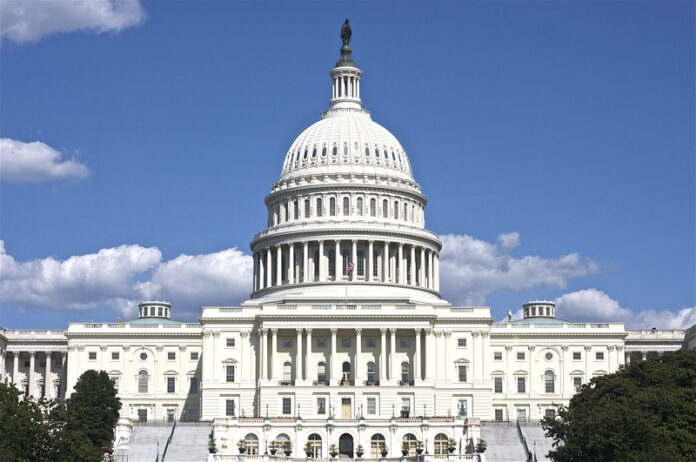
On Wednesday, August 12, 2026, President Donald Trump used Truth Social to champion an unlikely combination of policy objectives — ending the twice-yearly clock shift while simultaneously cutting violent crime — as he urged the Senate to act swiftly on legislation that sailed through the House in July with broad bipartisan support.
The Sunshine Protection Act passed the House on July 14, 2026, by a 308-117 margin and now sits before the Senate, where Trump has called for rapid approval. His message to lawmakers was emphatic: he urged Senate Republicans to move “ASAP” on a bill that would eliminate the seasonal time switch Americans have endured since 1966.
Trump’s lengthy social media statement painted the measure as fulfilling a desire the public has harbored for years, blaming prior administrations for failing to deliver. He characterized it as something “Republicans, Democrats, and Independents can unite behind,” describing Americans as “sick and tired of having to change their clocks twice a year.”
Beyond the convenience argument, Trump’s post cataloged a sweeping array of supposed advantages: diminished traffic fatalities, lower heart attack risk, relief from seasonal depression, economic benefits for dining establishments and shops, and improved safety for children traveling to school. But his most eyebrow-raising assertion was that locking in daylight saving time year-round would reduce both robbery and murder.
Does Science Support the Crime Connection?
Research does back one-half of that claim. A 2015 study in The Review of Economics and Statistics documented that robberies climb seven percent across the full day when clocks fall back in autumn, with a dramatic 27 percent spike during the hours right after dusk, when sudden darkness creates opportunity for street criminals.
The murder argument stands on far shakier ground. A 2012 working paper from Stanford observed a decline in killings around sunset after the spring time change, yet the authors themselves acknowledged the finding lacked statistical significance in follow-up work. A 2024 paper in Lighting Research & Technology analyzed 11 American cities and discovered no credible link between daylight hours and homicide, though it reinforced the robbery-deterrent effect of extended evening light. Separate research in Rio Grande do Sul, Brazil, similarly found no significant impact on homicide rates per 100,000 residents from daylight saving time.
The data thus validates robbery reduction while offering little support for homicide prevention.
A 2024 Campaign Vow Nears Reality
Trump campaigned explicitly in 2024 on a vow to end the clock-changing ritual, and the current legislation embodies that commitment. His Truth Social post announced that the bill had cleared the House and was awaiting Senate consideration, framing it as a long-overdue correction to a practice that frustrates the American public.
The issue has seen near-success before. In March 2022, the Senate voted unanimously for a version of the Sunshine Protection Act, sparking optimism and headlines nationwide. Yet that earlier effort collapsed in the House amid disagreement over whether to enshrine daylight saving time or standard time as the permanent default. The current bill settles that debate by choosing the daylight saving option, keeping summer hours in place throughout the year rather than reverting to standard time each November.
Federal law currently mandates the shift forward at 2 a.m. on the second Sunday in March and the return on the first Sunday in November. The requirement does not apply universally: most of Arizona declines to participate, although the Navajo Nation within that state does observe the change. Hawaii opts out entirely, as do Puerto Rico, Guam and the U.S. Virgin Islands.
Committee Assignment and Historical Context
The legislation now rests with the Senate Committee on Commerce, Science, and Transportation, the standard procedural checkpoint before any floor vote. Whether senators will act with the speed Trump demands — or whether the bill will meet the fate of its 2022 predecessor — remains uncertain. Lawmakers from northern states have objected to dark winter mornings under permanent daylight saving time, and by August 17 Trump was publicly pressing Republican senators to lift holds on the bill.
Daylight saving time itself has roots reaching back to World War I. Germany adopted the system in 1916 to preserve coal supplies, and the United States followed in 1918 with the Standard Time Act, which simultaneously established the nation’s five federal time zones. The federal government imposed uniform scheduling of the clock changes in 1966, cementing a ritual that has persisted for six decades.
Waiting on the Senate
Trump’s message positioned the measure as a rare point of political agreement in a polarized climate, and the House’s 308-117 tally suggests genuine cross-party backing. Whether the upper chamber shares that enthusiasm will decide if the president can deliver on a promise he carried into his second term. For the moment, the bill awaits committee action, leaving millions of Americans uncertain whether they face another March morning of resetting their clocks.