Rescuers recovered the bodies of two women off northern Cyprus on the morning of September 4, 2026, and a 14th body came up from the wreck a day later, raising the confirmed death toll to 14 from the ferry Filo Jet, which capsized on Sunday, August 30, and leaving 14 people still unaccounted for. TCG Isin, a Turkish navy rescue and salvage ship carrying a remotely operated vehicle and capable of atmospheric diving to 365 meters, took station over the wreck on the morning of Tuesday, September 1; TCG Alemdar joined it the following day.
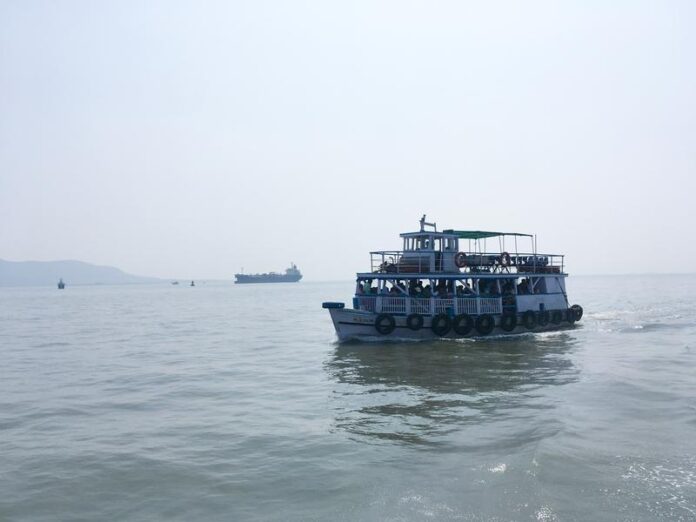
Filo Denizcilik operated the 42.8-meter (140-foot) catamaran, which went down minutes after pulling out of the new port of Kyrenia, also known as Girne, in the Turkish Republic of Northern Cyprus (TRNC) on a run to Tasucu in Turkey’s Mersin province. There were 267 people aboard — 259 passengers and eight crew — almost all of them Turkish or Turkish Cypriot.
Of those on board, 239 reached shore alive. Earlier counts had put survivors at 241, and in a first account given to the Anadolu news agency, Unal Ustel, prime minister of the TRNC, put the number at 237.
Salvage Ships Work Over the Wreck
The wreck lies in about 554 meters (roughly 1,820 feet) of water about four nautical miles off Kyrenia, far deeper than locally available equipment can reach; earlier estimates had put the depth at 514 and then 550 meters. TCG Alemdar, which can search at depths down to 3,000 meters, is working inside the hull. A technical team from Turkey’s Ministry of Transport and Infrastructure has also reached the operation. The tasks include surveying the hull, establishing whether anyone remains inside, and bringing up the voyage data recorder, the black box seen as central to explaining what went wrong; as of September 6, it had still not been retrieved.
No further bodies were recovered on September 5 or 6. “As of today, no new missing persons have been found,” Ustel said on Sunday. “As the days pass, the conditions for the search-and-rescue operation, especially underwater and inside the sunken boat, are becoming increasingly difficult.” Authorities said they were pursuing new resources and alternative methods, with technical staff from private firms surveying the wreck and preparing preliminary reports. Of the 132 people taken to hospital after the sinking, 131 had been discharged by September 5.
The first body taken from inside the wreck was brought up by September 3. Ustel said it was a male passenger of about 50.
Nine boats, eight ships, seven helicopters, five unmanned aerial vehicles and a single aircraft were committed to the round-the-clock effort as of September 1. “Our greatest priority is reaching our missing people,” Ustel said. TRNC President Tufan Erhurman set out the same goal, saying all of the government’s concentration was on reaching the wreck in the depths. He acknowledged that progress had been slower because of the technical complexity.
Cabins were where investigators feared the worst: when the catamaran rolled over, authorities believed, there was a strong chance that passengers unable to escape were shut inside them.
Nine in Custody, Captain Among Them
Fourteen people appeared before Judge Hazal Hacimulla at Kyrenia District Court on Monday, August 31. Allegations that carelessness and negligence had caused deaths led the judge to remand nine of them in custody for three days. The group included the ferry’s captain, Mustafa Oz, who is 67 according to the Honduran license he was sailing under. Also detained were one company official and seven of the captain’s fellow crew members. Five more individuals, port department officials and shareholders in the operator, among them, were ordered by the court to be investigated at once. Detention on its own does not establish criminal liability, officials have emphasized.
At a second Kyrenia hearing on September 3, the nine suspects were remanded a further eight days for causing death through carelessness and negligence.
Testimony from assistant police inspector Mehmet Mannas described the tip of the port forward hull section fracturing roughly four miles out of port, with the ferry then taking on water and capsizing. Passengers warned that the vessel was taking on water and were not heeded, the court heard, and the crossing went on. A Turk Loydu survey had cleared the vessel as seaworthy in June 2026, according to Mannas, though the court also heard that two certificate documents were missing from Port Authority records. Mannas said there were enough lifejackets aboard and four liferafts with a capacity of 100 people each, but that the crew was insufficiently informed about the lifejackets’ number and location, which did not help the evacuation. Turbulent seas broke the bow apart, the crew told the court.
Police investigators said the disaster could have been avoided had the captain reduced speed and turned back when the ferry began taking on water.
The court also heard that Tasucu was closed at the time of departure, that the first mate said he had urged the captain not to make the crossing, and that the master’s certificate had lapsed and was replaced for $3,500.
The captain had obtained a license in Turkey, but it became invalid after he spent 10 years out of the profession, the court heard, and he then bought a Honduran license, issued in October 2024 and valid to 2029. He told the court his weather data showed no problem with sailing. Local media say the crew lacked documentation and training.
Fifteen Minutes Out of Kyrenia
Saturday, August 29, had been the original date for the crossing, but weather pushed it back; departure came at about 12:30 p.m. local time (09:30 GMT), against a scheduled noon sailing. Some 7.5 kilometers out, off Diana Beach on the island’s northern coast, water began entering the vessel about 15 minutes later. Two waves struck the boat, Ustel told the Anadolu news agency, the second arriving as the captain tried to recover from the first. Speculation about the cause is unwise while nothing has been officially established, Erhurman said; the weather that Sunday had been considered suitable for travel.
A noise like an explosion is what survivors recalled, describing a catamaran that moved erratically and slammed down hard on the surface, breaking its bow. Suitcases and belongings strewn across the water appeared in footage that also showed passengers in life vests standing on the overturned hull as helicopters lifted them off. Among the missing are six-year-old Mehmet Asaf and his 12-year-old sister, Miray; their mother, Ayten Bicer, said her daughter slipped from her grasp in the chaos. “Two of my children are gone. One of my sons is alive. Two of my children are gone,” Bicer said.
Questions Over an Aging Ferry
Public records are inconsistent on the flag of the 26-year-old vessel, built in 2000, listing it variously as Turkish and TRNC-registered. An accident in Turkey roughly 12 years ago left the ferry damaged, police testified, and the operating permit was issued after its purchase in 2024. An even earlier mishap appears in documents quoted by TRNC media: on October 26, 2003, the ship struck a quay, and serious water ingress followed about 10 days later. Turk Loydu inspections on March 19 and May 26, 2018 logged 29 deficiencies, said Serhat Akpinar, general secretary of the Democratic Party and a Kyrenia member of parliament, who asked whether those were fixed before the vessel was licensed for the Mersin–Kyrenia service.
Ustel dismissed Erhan Arikli, the TRNC minister of public works and transport, on September 2, saying the government “cannot allow the shadow of suspicion to arise during the investigation process.” Arikli’s YDP submitted its withdrawal from the coalition the next day, leaving a UBP–DP government with a majority of three. On September 4, Ozdemir Berova was named acting transport minister and three senior officials were dismissed: the ministry’s undersecretary, its director and the head of the ports department. Every Filo Denizcilik sailing from the TRNC has been suspended by the ministry until further notice, and from Tuesday, September 1, the link has been served by Akgunler Denizcilik on a route set by the Coast Guard Command; that same day Pegasus Airlines added four flights between the TRNC and Turkey. Gross negligence charges against all those responsible are likely, Turkish Cypriot officials have said.
No maritime disaster in Cyprus’ history has been worse, in Ustel’s description of the sinking. The Turkish Cypriot Council of Ministers declared three days of national mourning running through Wednesday, September 2, in the territory, which has controlled the northern third of the island since declaring independence in 1983 and is recognized only by Turkey. The Stelios Philanthropic Foundation, founded by Sir Stelios Haji-Ioannou, first offered €260,000 to 26 families of the dead and missing and on September 6, raised the sum to €280,000 for 28 families, at €10,000 each, opening an online claim form. At Kyrenia’s new port, where relatives gathered for news, Erhurman visited and vowed the search would go on without interruption, day and night.