
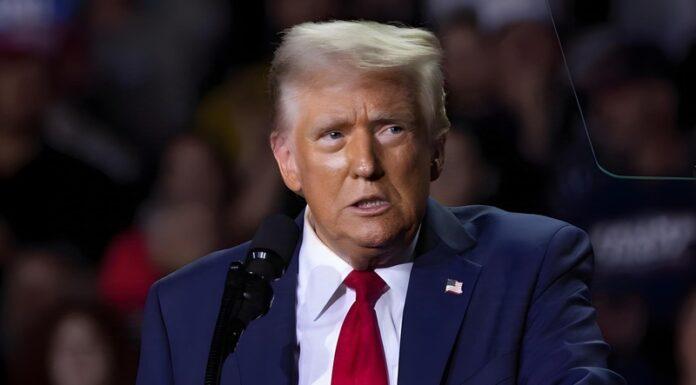
President Donald Trump has ignited a diplomatic firestorm with stunning comments about King Charles, claiming the British monarch privately supports U.S. military action in Iran—a position that directly contradicts British Prime Minister Keir Starmer’s staunch opposition to the conflict.
The explosive remarks arrive just three weeks before King Charles is scheduled to make a state visit to the United States from April 27–30, 2026, a trip that royal watchers now describe as one of the most delicate diplomatic missions of his reign.
Speaking with The Telegraph, the 79-year-old president asserted that the 77-year-old monarch would have handled the Iran situation differently than the current UK government. “I think he would have taken a very different stand [on the war against Iran] but he doesn’t do that. I mean, he’s a great gentleman,” Trump said.
Buckingham Palace swiftly moved to distance the King from Trump’s characterization. A palace source told the Daily Beast that “the King is above politics”—a pointed reminder of the royal family’s long-standing political neutrality.
The statement underscores the precarious position King Charles now occupies as he prepares to travel to Washington amid escalating tensions between the Trump administration and NATO allies over the Iran conflict. Prime Minister Starmer has firmly opposed expanded military action in the Middle East, telling Parliament that the UK was “not involved in the initial strikes against Iran” and will “not join offensive action now.” The stance has created a rare public rift in the historically strong U.S.-UK alliance, with Trump declaring that Starmer is “no Winston Churchill.”
TalkTV presenter and royal expert Samara Gill, speaking on the Sun’s Royal Exclusive show, described the upcoming visit as potentially the most significant challenge of Charles’ time as monarch. She warned that the King faces performing “diplomatic gymnastics” to navigate the crisis, noting that Trump “listens to no one” except, perhaps, the monarch himself.
Despite the controversy, Trump has expressed nothing but admiration for the British monarch, calling him “a wonderful and brave man” and emphasizing their longstanding relationship. The two leaders met during Trump’s unprecedented second state visit to Windsor Castle on September 17, 2025, where Charles welcomed him with full royal pageantry—including 1,300 military personnel, 120 horses, and a lavish state banquet.
Trump’s warm feelings toward King Charles may have had unexpected consequences for Canada. According to a new book by British journalist Robert Hardman titled “Elizabeth II: In Private. In Public. The Inside Story,” Trump’s respect for the King potentially derailed his interest in annexing Canadian territory.
The book, being serialized in the Daily Mail, recounts conversations between Hardman and Trump earlier this year at Mar-a-Lago in Florida. During their discussion, Trump revealed he was primarily interested in annexing Canadian territory just above the U.S. border but appeared to reconsider when reminded that King Charles serves as Canada’s head of state.
Trump asked Hardman whether Canadians still recognized the King, apparently unaware of Charles’ constitutional role as King of Canada. When informed that Charles remains Canada’s monarch, Trump criticized Canadian politicians but seemed to back away from his annexation rhetoric. The 79-year-old president conceded that he probably couldn’t deal with Canada—and its long history—in the three-and-a-half years he had left in office.
Hardman wrote that this represented “the closest I had heard to an acknowledgement that, as long as Canada had the King, Mr. Trump was not going to usurp him.”
Trump’s latest jab toward Canada came last month when he announced plans to work with Michigan Governor Gretchen Whitmer to “save The Great Lakes from the rather violent and destructive Asian Carp.” In that Truth Social statement, he referenced “the future Governor of Canada, Mark Carney”—reviving an insult he previously hurled at former Prime Minister Justin Trudeau and prompting fresh concerns about his territorial ambitions.
King Charles delivered Canada’s throne speech last May, marking only the third time in the country’s history that a reigning monarch performed that duty—the previous occasions being Queen Elizabeth II in 1957 and 1977. During his remarks, he received an unusual standing ovation after stating that “the True North is indeed strong and free”—words widely interpreted as a subtle message to Trump about Canadian sovereignty.
The April visit will be Charles’ first state visit to America as King, though he has traveled to the U.S. 19 times previously. The itinerary includes a state banquet at the White House on April 28 and an address to a joint meeting of Congress—the first by a British monarch in more than three decades. Congressional leaders have framed the invitation as an opportunity to “reaffirm” the special relationship between the two nations.
As the visit approaches, the 77-year-old King faces an extraordinary challenge: maintaining his constitutionally required political neutrality while navigating perhaps the most volatile period in U.S.-UK relations in decades. With Trump viewing him as a potential ally and the British government firmly opposed to expanded military action in Iran, Charles will need every ounce of diplomatic skill to preserve the special relationship while steering clear of the political crossfire.