
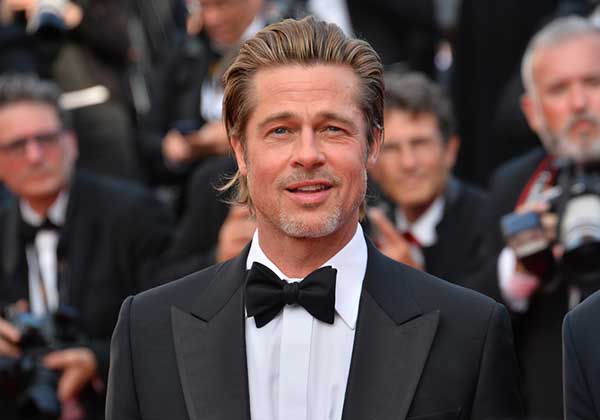
Brad Pitt has never maintained a personal social media profile. For years that was just a facet of one of Hollywood’s most private figures. Today it has become the focus of an urgent alert — scammers are exploiting that absence, using AI-made deepfakes of the Oscar-winning actor to swindle victims out of large sums, and the issue is escalating.
The warning from Pitt’s team gained wide attention in January 2025 after a French interior designer known only as Anne went public with a shocking account.
Anne, 53, said she was first messaged on Instagram in early 2023 by an account posing as Pitt’s mother, followed by a fake “Brad Pitt” profile that sent AI-crafted love notes, staged hospital photos, and urgent pleas for money. Over 18 months she divorced her husband and funneled nearly all of her divorce settlement — €830,000 (about $850,000) — to the fraudsters, who claimed Pitt had kidney cancer and needed help. She learned the truth only when images of the real Brad Pitt with his girlfriend, Ines de Ramon, appeared online. The emotional toll was devastating; Anne reportedly attempted suicide three times.
Pitt’s representatives quickly issued a public statement. “It’s awful that scammers take advantage of fans’ strong connection with celebrities,” a spokesperson said, warning people not to reply to unsolicited messages, “especially from actors who have no social media presence.” His team had made a similar appeal months earlier in September 2024 after two Spanish women lost a combined €325,000 to the same Brad Pitt impersonation scheme.
Even with those warnings, Pitt’s likeness remains heavily exploited by deepfake fraudsters. In late 2025 cybersecurity firm McAfee published its annual “Most Dangerous Celebrity: Deepfake Deception List,” placing Brad Pitt among the most-targeted celebrity images globally. McAfee’s analysis — using verified social activity, search trends, and media reports across countries — found 72 percent of Americans had seen fake celebrity endorsements online, and 10 percent of those who clicked lost money. McAfee singled out the French woman case as a clear example of how scammers exploit parasocial bonds and amplify them with AI to create videos and voice clips that feel painfully authentic.
When Anne was duped in 2023–24, the deepfakes were fairly basic — static AI images edited with tools like Adobe Photoshop’s generative fill. Security firm isFake.ai warned in January 2026 that the technology has progressed rapidly, citing DeepStrike data showing global deepfake output topped eight million files in 2025 — a sixteenfold rise since 2023. Scammers using Pitt’s likeness now have access to cloned voices, synthetic facial motion, and packaged “persona kits” — turnkey fake identities needing little technical know-how. isFake.ai said these celebrity-based scams are now “more persistent and harder to disrupt” because the AI systems involved learn and adapt throughout prolonged contact with victims.
The approach popularized by the Brad Pitt scams has become a template. In a 2025 case often compared to Anne’s, a 66-year-old Southern California woman, Abigail Ruvalcaba, lost her paid-off house and over $81,000 after scammers used AI deepfake video calls and cloned voice messages imitating a TV actor she trusted. Like Anne, Abigail was first approached on Facebook, then moved to WhatsApp where personalized deepfake videos addressed her by name. “To me, it looks real, even now,” she said. The emotional manipulation, family isolation, and slow financial depletion mirrored the Brad Pitt scam pattern.
The technology has advanced again. In March 2026 Malwarebytes reported on industrial-scale operations in Southeast Asia hiring “AI models” — human operators using real-time deepfake face-swapping during live calls — to run romance scams. Job postings describe handling up to one hundred live deepfake calls per day. Where Anne was fooled by static images and pre-recorded clips, victims now may be placed on live calls with someone who looks and sounds exactly like a trusted celebrity — with little way to tell it’s fake in real time.
Brad Pitt does not have Instagram. No X account. No Facebook page. No TikTok. His team has reiterated this repeatedly: any online profile claiming to be Brad Pitt is fraudulent. Any message from “Brad Pitt” requesting money — for medical costs, customs fees, or any purpose — is a scam. The deepfakes will appear authentic. The voice messages will sound convincing. Live video calls will feel genuine. That is the danger. As Pitt’s representatives have warned, the best safeguard is simple: do not engage.