The White House declined to rule out deploying Immigration and Customs Enforcement agents to polling locations during the November 2026 midterm elections, raising concerns about potential voter intimidation as former Trump adviser Steve Bannon called for immigration enforcement to “surround the polls.”
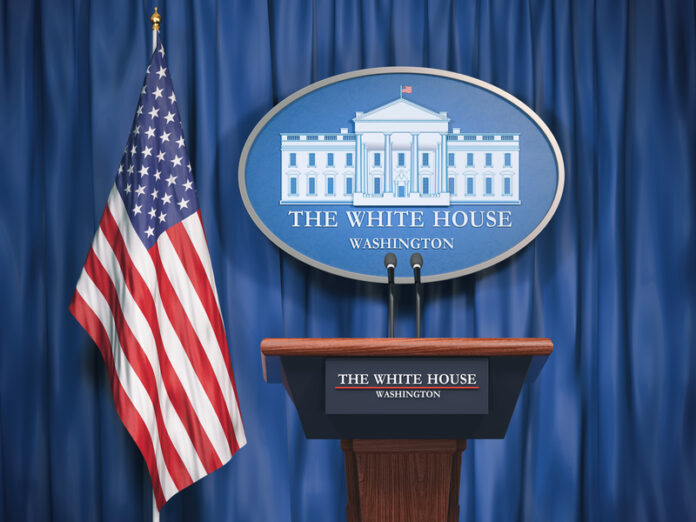
During a press briefing at the White House in Washington, D.C., Press Secretary Karoline Leavitt refused to guarantee that ICE agents won’t be stationed near voting sites this fall. Leavitt said she hasn’t heard President Donald Trump discuss formal plans for ICE at polls, but can’t guarantee that an ICE agent won’t be around a polling location in November.
The press secretary characterized the question as a silly hypothetical. However, her refusal to categorically reject the deployment marks a departure from longstanding federal practice.
The federal government has historically recognized polling places as off-limits for immigration enforcement, treating voting locations as sensitive spaces where any law enforcement presence could deter eligible voters from exercising their constitutional rights. The presence of armed federal agents at polls raises particular concerns in immigrant communities, where even citizens and legal residents might avoid voting due to fear of racial profiling or detention.
Leavitt’s comments came after Bannon made his remarks during his War Room podcast, echoing unsubstantiated claims about election integrity that have circulated among Trump allies.
There is no evidence that undocumented immigrants vote in large numbers in U.S. elections. Federal and state laws already prohibit non-citizens from voting in federal elections, with significant penalties for violations. Studies have consistently found that non-citizen voting is exceedingly rare, with isolated cases typically resulting from confusion rather than deliberate fraud.
Trump has continued promoting the false claim that the 2020 election was stolen, despite dozens of court cases rejecting such allegations and audits confirming results across multiple states. The president recently suggested that Republicans should nationalize voting and take over voting in 15 places, a proposal that would violate constitutional provisions requiring elections be administered by states and counties.
Trump also claimed that undocumented people are brought to the United States to vote, repeating allegations that have been thoroughly debunked by election officials and researchers. The president’s statements have fueled concerns among election administrators about potential federal interference in the midterm elections.
Democratic lawmakers have expressed alarm at the prospect of immigration agents near polling places. Senator Mark Warner of Virginia said he was greatly afraid that ICE roving vans would be used to intimidate voters at polling stations. Senator Ed Markey called it a red alert moment, emphasizing the need to protect polling places from what he termed federal enforcement overreach.
The controversy over ICE at polls comes amid broader tensions over Trump administration actions related to elections and immigration. FBI agents, accompanied by Director of National Intelligence Tulsi Gabbard, recently seized ballots from the November 2020 election in Fulton County, Georgia, executing a search warrant at election facilities in an investigation that election experts have criticized.
The Department of Justice has also requested voter rolls from several states, prompting legal battles as election officials resist the demands over privacy and security concerns. In Minnesota, where thousands of agents have been deployed in recent weeks, Attorney General Pam Bondi issued demands that included turning over the state’s voter rolls to the federal government.
Courts have blocked much of Trump’s election executive order, which sought to require proof of citizenship to vote and would have expanded federal authority over state-run election systems. The judicial interventions have recognized states’ constitutional roles in managing elections, limiting the administration’s ability to impose federal mandates on voting procedures.
During the briefing, Leavitt said Trump is urging Congress to pass the SAVE Act, legislation that would require Americans to provide proof of citizenship and identification to vote in federal elections. The press secretary characterized these proposals as very common sense policies.
The political landscape heading into the midterms has been marked by significant Republican departures from Congress. Representative Barry Loudermilk announced he won’t seek reelection in November, becoming the 29th House Republican to leave office or announce a resignation. Republicans currently hold a four-seat majority in the House, making each seat crucial to maintaining control of the chamber.
Election officials across the country have been preparing for potential challenges during the November voting period, with many expressing concern about federal interference in election administration. State and local authorities typically oversee polling place security through designated law enforcement channels that are trained in election law and voter protection protocols.
The presence of federal immigration agents at polls would represent an unprecedented development in modern American elections, potentially chilling turnout in communities with large immigrant populations regardless of voters’ citizenship status. Civil rights organizations have historically opposed any law enforcement presence at polling places that could be perceived as intimidating or coercive.
As the November midterm elections approach, the debate over ICE deployment at polls highlights broader tensions over federal versus state control of elections, immigration enforcement priorities, and protections for voting rights. The administration’s refusal to rule out such deployments has intensified concerns among voting rights advocates and Democratic officials about potential suppression tactics aimed at deterring turnout in key demographic groups.