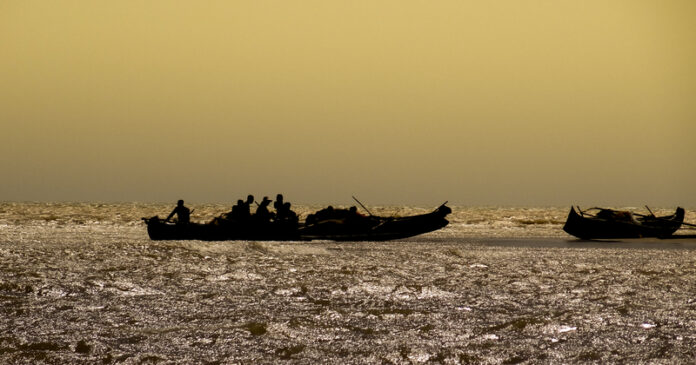
An inflatable boat carrying migrants capsized off the coast of Libya, leaving 53 people dead or missing, including two babies, the International Organization for Migration reported Monday, February 9, 2026.
The vessel departed from Zawiya in northwestern Libya around 11 p.m. on Thursday, February 5, 2026, carrying 55 African migrants. Approximately six hours later, the boat began taking on water before capsizing on Friday morning, north of Zuwara.
Two Nigerian women survived the shipwreck and were rescued by Libyan authorities. One survivor lost her husband in the tragedy, while the other reported losing her two babies. The IOM provided emergency medical care to both survivors upon disembarkation.
The incident marks the latest deadly crossing attempt on the central Mediterranean route, a pathway that has become increasingly dangerous for migrants fleeing war and poverty in Africa and the Middle East. The UN migration agency documented 484 dead or missing on this route in 2026 alone, with Monday’s tragedy contributing significantly to that total.
“Trafficking and smuggling networks continue to exploit migrants along the central Mediterranean route,” the IOM stated, noting these networks profit by using unseaworthy boats to transport people from chaos-stricken Libya to European shores.
Libya has emerged as the dominant transit point for Europe-bound migrants in recent years, even as the North African nation has remained in chaos following the overthrow and killing of longtime autocrat Muammar Gaddafi in 2011. The country’s instability has created conditions that allow human trafficking networks to flourish, exploiting vulnerable migrants attempting to reach safety and opportunity in Europe.
The central Mediterranean crossing remains one of the world’s deadliest migration routes. More than 33,000 migrants died or went missing in the Mediterranean from 2014 to 2025, according to the IOM’s Missing Migrants Project. The organization recorded 1,873 missing or dead in the Mediterranean in 2025, including 1,342 on the central route alone.
January 2026 proved particularly deadly, with 375 migrants reported dead or missing following multiple invisible shipwrecks amid extreme weather conditions. These incidents, often occurring far from witnesses or rescue vessels, suggest the actual death toll may be significantly higher than recorded figures indicate.
“These repeated incidents underscore the persistent and deadly risks faced by migrants and refugees attempting the dangerous crossing,” the IOM said in its statement.
The year 2025 saw more than 1,300 migrants dead or missing on the central Mediterranean route. The UN agency called for stronger international cooperation to address the crisis and create safer pathways for migration.
The dangerous conditions migrants face begin long before they reach the sea. Human trafficking networks have benefited from Libya’s ongoing chaos, exploiting vulnerable migrants attempting to reach Europe. These individuals are typically forced to sail on crowded, ill-equipped vessels, including rubber boats that are unsuitable for open-water crossings.
The smuggling networks operate with relative impunity in Libya’s fragmented security environment, where competing militias and authorities control different territories. This lack of unified governance creates gaps that traffickers exploit, using unseaworthy boats to transport desperate migrants toward European shores.
The central Mediterranean route connects North Africa with southern European destinations. Despite its dangers, thousands continue attempting the crossing each year, driven by conflicts, economic hardship and persecution in their home countries.
The presence of two babies among the dead in this latest incident highlights how entire families undertake these perilous journeys. Parents often make the agonizing decision to risk their children’s lives on dangerous crossings, viewing the potential for a better future in Europe as worth the immediate threat to survival.
Search and rescue operations in the Mediterranean remain contentious, with debate over who bears responsibility for patrolling the waters and saving lives. European nations have struggled to develop coordinated responses, while humanitarian organizations operating rescue vessels have faced legal challenges and port restrictions.
The Libyan coast guard, which rescued the two survivors in this case, continues to operate in the challenging maritime environment off Libya’s coast.
Weather conditions significantly impact survival rates on these crossings. The winter months bring rougher seas and colder temperatures, factors that contributed to January’s high death toll. Inflatable boats offer minimal protection against the elements, and overcrowding makes capsizing more likely when waves strike.
The IOM’s call for stronger international cooperation reflects growing recognition that current approaches have failed to prevent deaths or dismantle trafficking networks. The agency advocates for safe and regular migration pathways that would allow people to move legally, reducing reliance on smugglers and decreasing the loss of life at sea.
As 2026 continues, the trajectory suggests another year of significant casualties on the central Mediterranean route. With nearly 500 already dead or missing in just over a month, the urgent need for comprehensive solutions becomes increasingly apparent. Yet political will for meaningful change remains elusive, leaving migrants to continue facing the choice between staying in dangerous circumstances or risking death in pursuit of safety and opportunity.