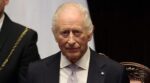
The first American pontiff has now put words to the cancer that cost him part of a lung — and to the rosary that struck him in the face in Peru.
Pope Leo XIV broke his silence on the details of his cancer and his major surgery, and on the rosary that hit his face in Peru, after completing the Nov. 6-17, 2026 journey to Uruguay, Argentina and Peru.
The 71-year-old pope went into Rome’s Gemelli Hospital on Oct. 13 and came out with the lower lobe of his right lung gone. The tumor surgeons removed was a lung adenocarcinoma, a non-small cell cancer and the most common form of the disease.
The Nodule Found by Accident
Nobody was hunting for it. The growth turned up by chance during routine abdominal examinations, and Leo was not experiencing symptoms of any kind, said Stefano Margaritora, the chief thoracic surgeon at Gemelli, who led the operation and described it in an interview on Oct. 17 as routine.
The pope made the news public himself. Addressing pilgrims in St. Peter’s Square after the Angelus on Oct. 11, he said doctors had found a small nodule confined to one spot in his lung, caught at a very early stage, and that he had chosen to have it removed.
Cardinal Baldassare Reina led a rosary for him at the hospital on the evening of the operation. All papal audiences were scrapped through Oct. 20, with recovery estimated at about one week. Leo did not stay idle: on the afternoon of Oct. 14 he concelebrated Mass in a room set up for him on the 10th floor, and he kept working from his hospital room, including a phone call with Russian President Vladimir Putin.
The Pope’s Brother Knows the President
President Donald Trump sent his good wishes on Oct. 14, saying he wanted the pope to recover and offering love and best wishes on behalf of the country. Trump also spoke about the pope’s older brother, Louis Prevost, who lives in Florida, calling him a friend and a fantastic guy who loves the pope a great deal.
Vice President JD Vance wrote on X that he and his family were praying for Leo after the lung cancer surgery, and that millions of American Christians had the pope on their minds. At daily Mass across the United States, including at the Shrine of the Most Blessed Sacrament in Washington, Catholics prayed a rosary for him on Oct. 14. Bishops in the U.S., Australia, the Philippines and Ecuador joined in, as did the pope’s own Augustinian order and his former diocese in Peru.
Leo asked for those prayers directly. In a message read Oct. 14 to a Vatican conference on the 10th anniversary of Amoris Laetitia, he thanked participants for their work, noted that he had been unable to join them and asked them to pray for him as he prayed for them.
Nothing Left to Treat
He left Gemelli on Saturday, Oct. 17, four days after the operation, and the Vatican said he would pick his schedule back up gradually. His first public appearance came with the traditional Sunday blessing from the window overlooking St. Peter’s Square on Sunday, Oct. 18.
The decisive news arrived three days after that. Final histopathology and molecular testing reports on the removed tissue were issued Oct. 21, and Margaritora and the pope’s personal physician, Dr. Luigi Carbone, said in a statement released by the Holy See Press Office that the tumor was an adenocarcinoma, that the disease was localized and that an oncological assessment had confirmed “no further treatment is necessary.”
Doctors generally add treatment when follow-up testing turns up signs the cancer has traveled, through the lymph nodes for instance, or looks particularly aggressive. When a tumor is caught very early, surgery alone is often enough.
That same Wednesday, Oct. 21, Leo was back in St. Peter’s Square for his weekly general audience, greeting cardinals on his way in and working the crowd of pilgrims. “Thank you! Thank you for the support of your prayers,” he told the audience.
Why South America Stayed on the Schedule
The question hanging over the recovery was the trip. The Vatican said on Oct. 14 that the Nov. 6-17 visit to Uruguay, Argentina and Peru would proceed as planned, with Holy See Press Office director Matteo Bruni saying the pope intended to go. Margaritora told an interviewer on Oct. 17 that nothing in the pope’s condition medically ruled out the visit.
It was not a gentle itinerary for a man weeks out of thoracic surgery: a dozen flights, two helicopter rides and stops at high altitude. Peruvian President Keiko Fujimori said on Oct. 14 that millions in her country were praying for a fast recovery, while cautioning that the Vatican might yet adjust the schedule of his visit.
“Maybe in Your Eye”
The rosary hit him on Monday, Nov. 16, as he rode the popemobile through the crowds on the way to his farewell Mass at Las Palmas Air Base in Lima, Peru. A worshipper threw it from the crowd, and it struck him near the eye after he failed to catch it. He rubbed his eye and carried on with his schedule, and he did not appear to be hurt.
Speaking to reporters on the papal plane on the flight back to Rome, Leo forgave the thrower and joked about the moment. “The nice thing about Peruvians, including the person who with a lot of faith simply wanted to offer me a rosary, are things you carry in your heart – or maybe in your eye – but that mark the life of someone,” he said.
He also talked openly about his health. “I’m not 100% but I’m pretty good,” Leo said of his recovery. “Endurance is one of the gifts the Lord gave me.” The diagnosis caught him off guard, he said: “The first news was a surprise. There were no symptoms. I felt fine.”
He said he never doubted he would be well enough to make the trip, and that the surgery had not changed his agenda or his priorities. Asked about planning for a possible resignation, he said: “Eventually I will do it, I think, but I don’t see the need now.”