
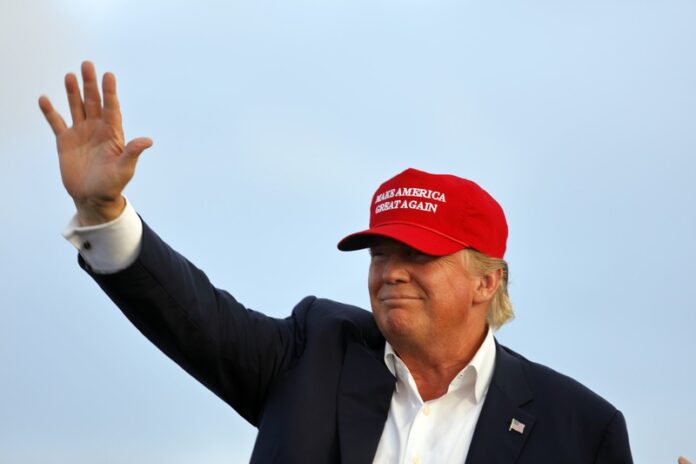
President Trump said a far more aggressive phase of the war with Iran remains on the table, in an interview with Axios published Thursday, September 17, 2026. “I have a big decision coming up. Do I want to go in and annihilate them [the Iranian regime] or do I not? It’s a big decision. Anything could happen with me,” he said, declining to say whether the call comes before or after the November midterms. The U.S. campaign against Iran, Operation Epic Fury, began February 28 and is now in its seventh month.
Six Gulf Leaders, a Wider Room
The remarks came days before a Tuesday, September 22 meeting with Gulf Cooperation Council leaders — Saudi Arabia, the UAE, Qatar, Bahrain, Kuwait and Oman — on the sidelines of the UN General Assembly in New York. The six had been expected to press Trump toward diplomacy over escalation; warnings from Saudi Arabia and Qatar that Tehran could strike Gulf energy facilities had already led Trump to shelve a return to major combat in early August. Saudi Arabia is separately fending off missile and drone strikes from Yemen’s Iran-backed Houthis. The session ultimately drew representatives from 12 Middle Eastern countries, including Jordan, Egypt, Turkey, Iraq, Lebanon and Syria, with several Gulf states sending foreign ministers or crown princes rather than heads of state. No new agreements were announced, though Trump said: “There’s a lot of momentum for them to make a deal. That’s what we are hearing from everybody.”
The tone a day earlier had been notably softer. “Hopefully we’re toward the end of the war. They want to make a deal. We’ll see how that works out,” Trump told reporters on September 16, adding that the U.S. and Iran deal with each other directly rather than through intermediaries. At a rally that evening in Gastonia, North Carolina, he predicted the fighting would end soon and dismissed concerns over gas and oil prices, which have climbed during the war, calling the cost “a very inexpensive price to pay for what we’ve done.”
A Blunter Warning at the UN
Addressing the UN General Assembly on September 22, Trump called Iran “the number one sponsor of terror” and said it is “the bully no more.” He claimed “all 159 ships of their navy are now lying at the bottom of the sea,” along with a destroyed air force and radar network — a tally Iranian state media and independent analysts dispute. He framed the choice ahead as a negotiated deal or “annihilating” the regime, said he’d give the midterms “absolutely no credence” on Iran policy, and called on other nations to join a “complete economic isolation” of Tehran until it stops attacking commercial shipping. Most of Iran’s delegation walked out roughly 10 minutes into the address; Cuba’s delegation left later, after Trump called Havana “an absolutely failed state.”
Blockade, Sanctions and the Strait
Short of resuming full-scale strikes, Washington has kept its naval blockade of Iranian ports in place and widened sanctions. “Not one ship has gone to Iran since we started. They tried and we blew them up,” Trump told Axios. CENTCOM commander Adm. Brad Cooper said U.S. forces have helped move more than 1 billion barrels of crude oil and over 2,000 commercial vessels through the Strait of Hormuz in recent months, while Iran has exported none. Iran maintains the strait is effectively closed; on September 22 a senior Iranian official said it could reopen within a week if the U.S. lifted the blockade and eased military pressure. Under Trump and Secretary of War Pete Hegseth, U.S. forces in the region are being held at current strength, with deployments reportedly extended into 2027, keeping them able to resume full combat operations if ordered.
Talks Resume in New York
Iran had sent conditions to Washington via Qatar on September 19, through Supreme National Security Council secretary Mohsen Rezaei: ending the war on all fronts, releasing frozen Iranian funds, and lifting the naval blockade. On September 22, U.S. and Iranian negotiators held roughly three hours of talks on the UN sidelines — the first substantial contact since mid-June. Envoys Steve Witkoff and Jared Kushner represented the U.S. side, with Iranian Foreign Minister Abbas Araghchi and Qatari mediators involved, though accounts differ on whether the two sides met directly or only through shuttling intermediaries; Witkoff himself described the U.S. and Iranian delegations as talking “through the mediators, who shuttled between the two sides throughout the day.” Trump called the session “a very good meeting, a very productive meeting,” with another expected soon. Oil fell to a two-week low on the news.
Inside the White House, early post-war planning is built around containing Iran regionally and normalizing Israel’s ties with its neighbors, with Israel’s October 27 Knesset election and the November 3 U.S. midterms both shaping the timeline for any announcement.