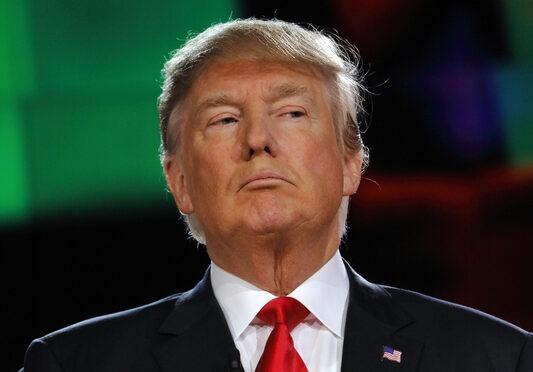
Spain’s Prime Minister Pedro Sánchez sat through President Donald Trump’s 40-minute address to the U.N. General Assembly in New York on Tuesday, Sept. 22, 2026 — and when comedian Jon Stewart asked what he thought of it, the Spanish leader didn’t bother pretending to be impressed.
“It was, as usual, a very ideological speech,” Sánchez, 54, told Stewart, 63, on Stewart’s “The Weekly Show” podcast, in a clip released the evening of the speech ahead of the full episode the next day. “Not backed and supported by facts and data.”
“When he speaks about climate change, or the war in Iran, or the things that are going on in the Middle East,” Sánchez continued, “his political positions are not, let’s say, largely supported by many countries worldwide.”
Inside Trump’s 40-Minute Address
The president, 80, packed the speech with the kind of material that guarantees a reaction in a room full of diplomats. He said he faced a decision over whether to make a deal with Iran or “annihilate the Islamic Republic.” He called Cuba “an absolutely failed state.” And he told the assembly that the United States “totally rejects any attempt to construct a globalist scheme to control” artificial intelligence — a technology he attempted to relabel “super intelligence” from the lectern.
Sánchez, who leads a government that has clashed with Washington over climate policy and Spain’s refusal to meet NATO’s 5 percent defense spending target, framed his critique less as an attack than as a fact-check, suggesting Trump’s positions simply do not command broad support among other governments.
Walkouts and a Phone in the Chamber
The room offered its own commentary. Both the Cuban and the Iranian delegations walked out of the chamber while Trump was still speaking. Canadian Prime Minister Mark Carney, 61, was seen scrolling on his phone during the address.
Stewart, for his part, laughed at how carefully the prime minister had chosen his words. “That is a very tactful way of putting it, sir,” the host said.
A Press Ban the President Seemed to Misread
Shortly before he took the rostrum, Trump appeared surprised to find CNN reporter Kaitlan Collins at the U.N. He had banned CNN, MS NOW and Politico from the White House on Sept. 18, and he appeared to believe the ban extended to the United Nations as well.
“The United Nations let us in, sir,” Collins told him. “You should not be here covering me. You said you weren’t going to cover me,” Trump replied. Two days later, a federal judge temporarily blocked the White House ban.
The exchange underlined how far the administration’s press restrictions have traveled beyond the West Wing — and how little they bind an international body that issues its own credentials.
A Second Term on the Road
Trump, the 47th president and now in his second term, has spent stretches of 2026 working the same diplomatic circuit that gave Sánchez his front-row seat. On July 7, 2026, Air Force One touched down at Etimesgut Air Base in Ankara, Turkey, for a NATO leaders’ summit, where Turkish President Recep Tayyip Erdogan met him on the tarmac. An aqua blue carpet had been rolled out, members of the Turkish military were assembled for the arrival, and the two leaders talked briefly and posed for photographs before heading into the terminal building.
Those trips have produced warm handshakes and ceremonial honor guards. The General Assembly is a different kind of audience: delegations sit in alphabetical order starting from a country drawn by lot, cameras catch every reaction, and — as the walkouts and Carney’s phone showed — there is nowhere to hide a shrug.
Sánchez skipped Trump’s reception for world leaders that evening, citing his schedule, but struck a warmer tone the next day at a Spain-U.S. business forum in New York, calling the bond between the two countries “more solid than the steel that holds up the Brooklyn Bridge.”
Sánchez’s assessment landed on the one line from the speech with the longest tail. Trump’s refusal to countenance rules for artificial intelligence arrived as public unease about the technology keeps generating headlines of its own, including a Sept. 28 CNN report on parents who fear AI could threaten humanity before their children are grown. That is the gap the Spanish leader was pointing at: not that Trump spoke, but that much of the rest of the world is not persuaded he is speaking for it.