
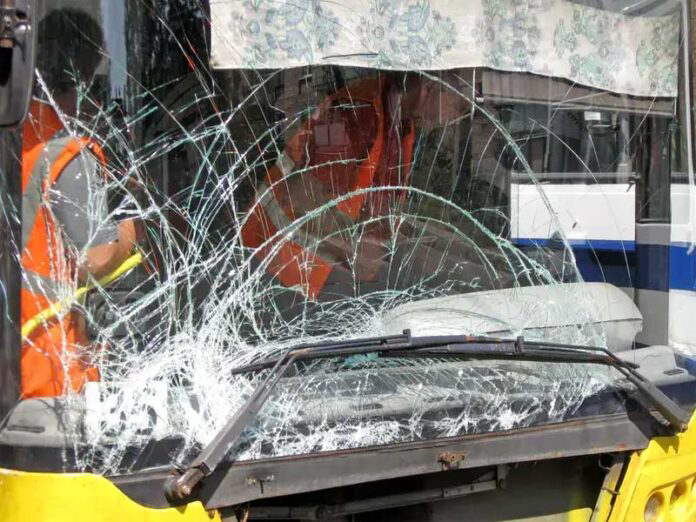
A passenger bus carrying mostly secondary school students went over the edge on Saturday, September 5, 2026, plunging about 100 feet into a rocky ravine along the mountainous Campanas de Cima route on Fogo Island, Cape Verde, Africa. Twenty-five people died, the driver among them, and fourteen were injured.
Passengers were returning from a day trip to Chã das Caldeiras — a settlement that sits inside the volcanic crater dominating the island — when the bus went over at about 9 p.m. local time. Teenagers accounted for most of the dead. São Filipe Mayor Nuias Silva confirmed the death toll on Saturday.
First accounts estimated about 30 people aboard. A fuller count put the figure at 38 passengers plus the driver. Reporting from the island said around 19 people were taken to São Francisco de Assis Regional Hospital, four of them in serious condition. Local media, citing the island’s health authorities, reported that seven bodies were buried immediately because of their condition.
No transport accident on Cape Verdean soil has killed more people. The crash surpasses the 1999 crash of TACV Flight 5002.
Not a School-Organized Outing
Students filled nearly every seat, but the excursion had not come from their schools, a local authority said. According to that same local authority, the man behind the wheel put the driver himself arranged the annual outing together for the students on his regular school-year route, customarily at the end of one school year or before the start of the next.
Curral Grande and Ponta Verde, two communities on an island whose population is spread across steep terrain, lost most of those killed.
Rescuers Slowed by Rocky Terrain
The fall threw several people from the bus and left others trapped inside. Crews then had to work on rocky, difficult ground where the vehicle came to rest, which complicated the rescue and recovery effort.
Bereaved families drew an expression of solidarity from the São Filipe Municipal Council in a posted statement, which extended the same message to the victims’ classmates, teachers and the wider educational communities affected. A council team was in the field, the statement said, working alongside the Health Department, the National Police and the Municipal Volunteer Fire Department.
In a statement, Jose Maria Neves, Cape Verde’s president, described what happened as “a great catastrophe.” “I offer my condolences to the bereaved families, to the friends of the victims, and to the island of Fogo,” he said.
The government declared two days of national mourning.
Cause Remains Under Investigation
An investigation is open, and authorities have not established an official cause. Early accounts differed on what happened in the moments before the bus went over the edge. Outlets at home and abroad described the vehicle simply running off the mountain road; other reports raised a possible tire failure, which remains an early hypothesis rather than a finding.
Rather than settle on a single presumed cause, investigators must work through several questions. They will need to determine what took the bus off the roadway, whether the vehicle was mechanically sound, and how much the route’s layout and any roadside barriers contributed to how severe the crash became. When a vehicle leaves a road at a high point, rocks and terrain can batter it on the way down, so the force of the impact multiplies well beyond that of an ordinary collision.
A Small Nation, an Outsized Loss
Fewer than 600,000 people live in Cape Verde, an archipelago off the coast of Africa, so a crash of this scale registers nationally as well as locally. Fogo ranks among the smaller inhabited islands, and two neighboring communities supplied most of the dead.
Figures presented by Interior Minister Paulo Rocha counted 5,903 road crashes across the country in 2024. Those crashes killed 39 people, seriously injured 154 and left 1,404 hurt less severely. Crashes rose 6.4 percent from 2023, while the death toll increased by two.
The official tallies understate the problem, international estimates suggest. A 2023 road-safety profile counted 97 people killed on Cape Verdean roads in 2021 — far more than the 39 fatalities officially reported for 2020 — and calculated a 2021 death rate of 16.5 per 100,000 residents.
Campanas de Cima has left 25 dead and 14 injured, and the investigation into what sent the bus off the road is still open.