
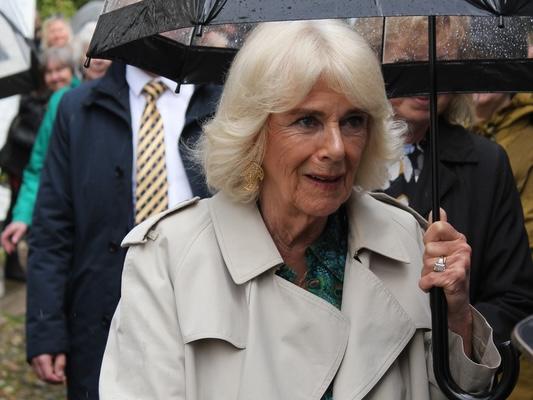
More than two and a half years after the fact, Queen Camilla has described what it felt like to move through a room full of cancer patients while sitting on a secret about her own husband — a January 31, 2024, visit to a London support center that came only days after doctors found cancer in King Charles.
Her account arrives in a seven-minute film shot at Clarence House and released on August 18, 2026, to mark 30 years of the charity Maggie’s. In it, the queen talks with Dame Laura Lee, the organization’s chief executive, about that day at the Maggie’s Royal Free center in London — a center she had officially opened that same afternoon, already knowing what the doctors had found.
A Secret She Had to Keep
Buckingham Palace did not make the diagnosis public until February 5, five days after that visit. In the stretch between, Camilla went about her engagements chatting with patients and the relatives who care for them, saying nothing about what was unfolding at home. More than once, she has admitted, she nearly let it slip.
“I was just longing to let it out, but obviously I couldn’t,” Camilla said. Looking around at people who had just had their lives upended by test results, she said, only sharpened a belief she already held about how badly such places are needed. She caught herself before speaking: “I almost said something but, you know, I felt that it wasn’t the time to say.”
The enforced silence was not hers alone. “Nobody could say anything at the time, that was quite difficult,” she said of the days before the announcement.
As royal patron, Camilla had toured Maggie’s centers across Britain for years, sitting with people as they described hearing the word cancer for the first time. That January day scrambled the usual dynamic. Her conversations, she said, carried a private layer nobody else in the room could have guessed at, though she was careful not to push patients further than felt right.
When Cancer “Came Back to Roost”
For a long time, the queen said, she had been on the supportive side of the equation — an advocate who listened, at some distance from the disease itself. “It had never really come back to roost at home,” she said, “and suddenly your husband is diagnosed.” A diagnosis inside her own household erased that distance in a single day. She was no longer a guest passing through someone else’s emergency but a wife with a husband in treatment, facing the same decisions and the same emotional freight.
She spoke proudly of how the king handled it, refusing to let illness set his schedule or dictate what he did with his time. Charles’ treatment, she confirmed, is still going, and it has not kept him from official duties. “Nothing stopped him. He just said, ‘This is my way. I’m going to cope with it,’” she said.
The cancer was found by surgeons at The London Clinic during a routine operation for a benign enlarged prostate. The palace later clarified that it was not prostate cancer and had nothing to do with that procedure. What followed was a long and, at points, brutally hard course of treatment, part of which continues. Officials say the king’s condition is kept under constant review so that his recovery stays the priority.
The King’s Approach Inspires Others
There is a measurable footprint to the king’s decision to talk publicly. Maggie’s has logged a 12 percent rise in men turning up at its centers for support since he disclosed his diagnosis, a number the queen pointed to as proof of what candor can do.
Lee said the king’s “openness about his diagnosis has undoubtedly helped others to be more open themselves.” Of the queen’s account, she added: “To hear her speak so powerfully of her own emotions when visiting our Royal Free centre, while knowing about His Majesty’s diagnosis, is a huge honour.”
Camilla has spent years arguing against the hush that tends to surround serious illness, and she made the case again here, urging that every hospital in the country have a Maggie’s center within reach. These are rooms, she said, where nobody has to pretend to be coping — where fear, uncertainty and grief can be named out loud.
Talking honestly, she argued, brings a psychological release of its own and is central to getting through treatment. That view grows out of what the couple have been through together in the months following the diagnosis, as well as her broader belief that emotional care is not an add-on but part of recovery itself. It is a lesson she and Charles have shared firsthand.
A Royal Voice for Cancer Support
The Clarence House conversation broadens how the royal family has publicly engaged with cancer. The king has spoken before about the flood of messages that followed his announcement, calling it a “great personal blessing” that so many strangers offered their own stories and good wishes.
Palace aides describe him as doing exceptionally well, with the continued monitoring framed as precautionary. By going back to that visit in January and describing the burden of knowing something she couldn’t say, the queen has given perhaps the frankest picture yet of what the diagnosis cost the people nearest to the king while the rest of the country was still in the dark. Her remarks were recorded for the anniversary film.