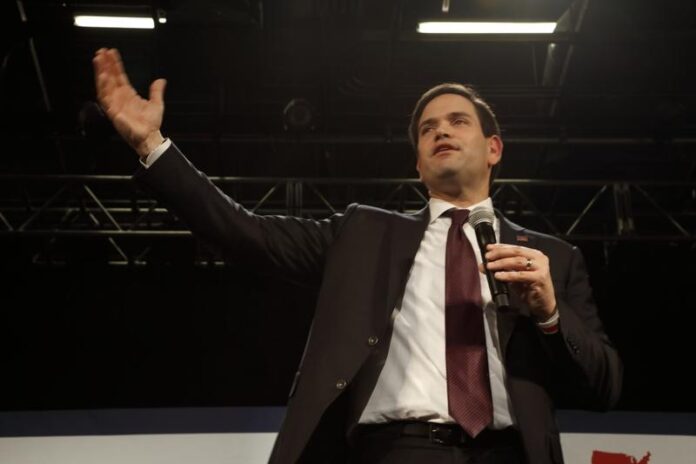
Secretary of State Marco Rubio has extended invitations to senior ministers from more than 60 nations for a July 16 State Department meeting focused on what the Trump administration characterizes as the “resurgence of transnational far-left terrorism”—and the response from America’s closest allies has been strikingly cold.
The invitation was sent only last week, with responses due July 10, giving foreign capitals almost no runway to plan. Several governments indicated their foreign or interior ministers were unlikely to show, citing the crowded summer diplomatic calendar. Multiple European diplomats, granted anonymity to avoid publicly criticizing the administration, questioned why they were asked to come at all. One European diplomat said, “We don’t have antifa.” A second diplomat expressed similar disinterest, while a third noted that law enforcement in their nation does not prioritize left-wing terrorism—a view that seems common throughout Europe.
A Pattern of Flat Receptions
The July gathering is not the first attempt to enlist international partners in the administration’s framing of antifa as a grave terrorist danger, and each prior effort has stumbled. A State Department session in the Netherlands in late May fell flat, with most attendees signaling they did “not see it quite the way you do.” A follow-up meeting in Washington in early June fared little better; an email went out an hour into the event urging people to still come by.
The skepticism is not confined to foreign governments. Within the U.S. government itself, the campaign has drawn resistance. Certain intelligence analysts have refused to present briefings on antifa during interagency sessions, declining to characterize it as a legitimate counterterrorism threat. Officials at the Justice Department and the White House Counsel’s Office have voiced worries. And some U.S. officials have decided to skip the July 16 event entirely.
Legal Warnings and Political Risks
The stakes go beyond a poorly attended conference. Sebastian Gorka, the administration’s counterterrorism czar, has explored the possibility of applying foreign terrorist designations to antifa as a mechanism for investigating Americans connected to the movement—a move that would open the door to surveillance and other tools. Experts caution that the law does not stretch that far. Jason Blazakis, who oversaw the State Department’s designation process for a decade, said flatly that a group with any significant domestic presence cannot be designated.
Even some inside the administration are uneasy about the precedent. One official warned that the approach could hand future opponents a weapon, suggesting the tactics could someday be aimed at conservatives under a possible future Gavin Newsom administration. It was a rare acknowledgment that the machinery being built now may not always be controlled by those building it.
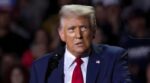
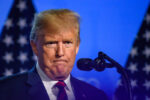
The hardline posture has champions at the top. Deputy Chief of Staff Stephen Miller and Gorka are pushing the initiative most aggressively. During a White House roundtable, when President Donald Trump asked his view, Miller backed designating antifa a foreign terrorist organization. “It’s true,” Miller said. “There are extensive foreign ties. I think that would be a very valid step to take.”
Experts Question the Priorities
Counterterrorism specialists have been blunt in their criticism. Colin P. Clarke of the Soufan Center described the effort as the politicization of intelligence, warning that officials were playing partisan politics with counterterrorism while examining only a sliver of the actual threat landscape. Bruce Hoffman of the Council on Foreign Relations offered a similar assessment, noting that left-wing extremists would not crack his top three priorities and that such violence has historically proven less lethal than other forms of terrorism.
Those critiques land against the backdrop of the administration’s own words. Its counterterrorism strategy, released in May, pledged that it would not permit the weaponization of America’s counterterrorism capabilities for partisan ends—a commitment several current officials say the July meeting itself calls into question.
The friction over antifa arrives as Rubio navigates broader strains with allies. He met with NATO partners in Sweden amid confusion over shifting U.S. troop levels, after Trump announced he would send an additional 5,000 troops to Poland while withdrawing 5,000 from Germany. Tensions in the alliance have been simmering over the Iran war, uncertainty about American support for Ukraine, and Trump’s threats to seize Greenland. Rubio insisted the troop decisions were “not political.”
At home, Rubio has faced sharp accusations of stonewalling Congress. Sen. Jeanne Shaheen, the ranking Democrat on the Foreign Relations Committee, has said his office refused to provide requested information about shifts in the administration’s European troop deployments, as well as American actions in Iran and assistance for Ukraine. As RSVPs for the July 16 meeting trickled in this week, the administration’s push to rally the world against a threat much of the world does not recognize appears no closer to success.