
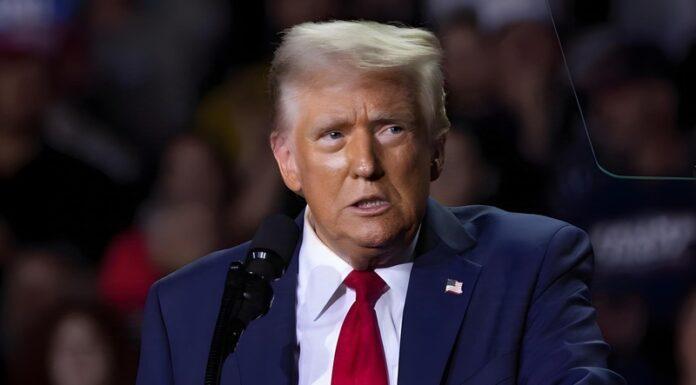
President Donald Trump is now repudiating the same trade agreement he once hailed as “the fairest, most balanced, and beneficial trade agreement we have ever signed into law,” creating a remarkable case of a politician undermining his own legacy. On Wednesday, the Trump administration officially declined to renew the United States-Mexico-Canada Agreement (USMCA), the very pact Trump himself negotiated and signed during his first term.
The Self-Contradiction Nobody Saw Coming
The spectacle is unusual even by Washington standards: Trump is effectively criticizing himself. It is not a political opponent or a foreign government calling the agreement inadequate — rather, the same man who negotiated, signed and celebrated the deal is now declaring it flawed and walking away. This moment of self-contradiction has generated widespread attention across major national and international news outlets, as Trump dismantles what was once considered a signature achievement of his first term.
What the Decision Actually Means
Wednesday was the deadline written into the USMCA for all three countries to jointly determine the agreement’s future. After a virtual meeting between trade leaders from the United States, Mexico and Canada, the Trump administration failed to reach a renewal agreement. A senior administration official confirmed that because the United States declined to renew the USMCA in its present form, the agreement would not be renewed.
The pact will not expire immediately, however. Rather than expiring immediately, the pact remains in force while negotiations continue. The key change is that the three countries will now be required to reconvene annually for the next 10 years — shifting from the original schedule of a review once every six years — with the agreement set to expire in 2036 if no new deal is reached. U.S. Trade Representative Jamieson Greer announced the United States would not renew the USMCA “in its current form,” pointing to persistent trade deficits with both Canada and Mexico as the administration’s central concern. Trade deficits occur when one country imports more from a trading partner than it exports to that same partner.
Greer stated the US would continue working with Mexico and Canada to address what he called the agreement’s shortcomings, and senior administration officials signaled an interest in pursuing trade talks on a bilateral basis as well. Withdrawing from the deal altogether remains an option, though the earliest that could happen under the terms of the agreement is six months from now. There is also an open question of whether Trump would have the authority to withdraw without congressional approval.
A Deal Trump Built — and Now Rejects
The United States-Mexico-Canada Agreement was struck by Trump in 2020 as a modernized replacement for the 1992 North American Free Trade Agreement (NAFTA). At the time, he championed it enthusiastically as a landmark achievement of his first term. Fast forward to 2026, and the same president was telling reporters in the Oval Office last month that he had no interest in keeping it alive. Trump said he wasn’t looking to renew the agreement, arguing that while the United States doesn’t need Canadian or Mexican goods, both countries depend on American products and should offer better terms.
That reversal had been building for some time. Trump routinely criticized the USMCA as of late, and last month he was openly musing, “I don’t know that I’m going to renew it.”
Uncertainty for Businesses and Investors
The agreement governs roughly $2 trillion in annual goods and services trade among the three neighboring nations, and its provisions — particularly duty-free terms for the auto industry — are deeply embedded in North American supply chains. Auto parts routinely travel back and forth across North American borders multiple times during the production process, making a sudden collapse of the framework extraordinarily disruptive.
Despite the dramatic framing, the refusal does not kill the USMCA outright. However, the shift to annual reviews introduces a prolonged stretch of uncertainty that analysts warn could weigh heavily on businesses that have built their operations around the USMCA’s stable framework. Extended negotiations would inject a fresh dose of uncertainty for businesses across the continent. The prospect of year-by-year reviews could limit investment decisions throughout North America, particularly in industries with complex cross-border supply chains.
Mexico’s economy minister, Marcelo Ebrard, offered a more optimistic read at a press conference Wednesday. He said his government is prepared to address the foreign-dependence concerns the US has raised, and expressed confidence that the parties could find common ground, saying there is no difference between the three countries “so big that we cannot resolve it.” Senior US administration officials, for their part, characterized the decision as a deliberate choice to push for improvements rather than simply rubber-stamp an existing arrangement.