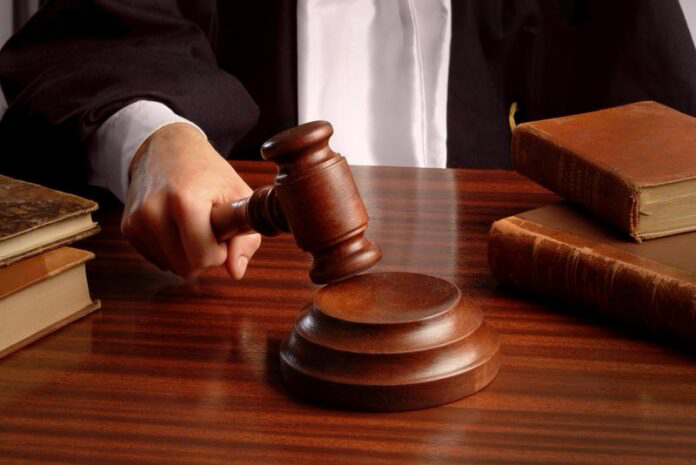
A Massachusetts federal judge delivered a stinging rebuke to President Donald Trump on June 8, 2026, blocking his administration’s attempt to impose a $100,000 fee on H-1B visa holders and declaring it an unconstitutional tax that only Congress has the power to enact.
U.S. District Judge Leo Sorokin, who was appointed by former President Barack Obama, issued the 42-page ruling from Boston, vacating the policy entirely and handing a major victory to 20 Democratic state attorneys general who brought the challenge.
“The substance and application of the $100,000 payment reveal that it is a tax, regardless of what the payment is called,” Sorokin wrote.
A Six-Figure Barrier for Skilled Workers
Trump announced the H-1B fee in September 2025, skyrocketing the typical $2,000–$5,000 cost to $100,000 and creating immediate chaos for employers who rely on highly skilled foreign workers. The federal government issues 65,000 H-1B visas annually, with an additional 20,000 set aside for workers holding advanced degrees.
Technology companies, universities and hospitals depend on the visas to fill specialized roles in science, technology, engineering and math. Court filings documented widespread disruption after the fee took effect, with few employers willing to absorb the charge. In one incident at San Francisco’s airport, some passengers on a Dubai-bound Emirates flight demanded to get off the plane, terrified they would be stranded abroad if they departed.
While the administration erected the six-figure barrier for engineers and scientists, it simultaneously launched a program for the ultrawealthy. Trump championed the “Gold Card” visa on September 19, 2025, creating a fast-track pathway for wealthy foreigners and corporations willing to pay $1 million.
The Tax Question at the Heart of the Ruling
The Trump administration’s September 2025 proclamation argued that H-1B visa holders suppressed American wages and flooded science and technology fields with foreign labor. The administration contended it possessed executive authority to levy the charge as a penalty, invoking presidential power to bar foreigners whose entry is “detrimental to the interests of the United States.”
Sorokin rejected that reasoning, finding federal agencies had sidestepped the Administrative Procedure Act by failing to conduct notice-and-comment rule making. He cited a February 2026 Supreme Court decision that classified tariffs Trump imposed in 2025 as taxes and ruled the president lacked authority to enact them.
“While the Executive has broad discretion over the admission and exclusion of aliens, … that discretion is not boundless,” Sorokin wrote, adding that the policy “imposes a tax on H-1B petitions without the requisite delegation by Congress.”
Sorokin’s decision determined the executive branch had overstepped constitutional limits, concluding the Immigration and Nationality Act grants presidents extensive power over noncitizen entry but falls far short of authorizing them to impose taxes.
White House spokesperson Taylor Rogers announced plans to appeal, asserting Trump has “clear legal authority to restrict entry of any class of aliens he determines is not in America’s best interests.” Trump struck a sharper tone Monday evening, complaining that “these federal judges are really giving us a hard time” and “they’re hurting our country very badly.”
A MAGA Civil War Over Foreign Talent
The ruling arrives amid a bitter internal fight within Trump’s political coalition. Silicon Valley conservatives, including Elon Musk — himself a former visa holder — contend foreign engineers and scientists are essential to maintaining American dominance in artificial intelligence and advanced manufacturing. Nationalist hardliners view H-1B as a wage-suppression scheme designed to replace American workers with cheaper foreign labor.
Steve Bannon has portrayed H-1B as a mechanism for displacing American workers, while Fox News host Laura Ingraham has accused companies of using the visas to avoid hiring U.S. graduates.
Trump sparked outrage among his base during an October 2025 interview with Ingraham when he defended the visa program, acknowledging the country lacked sufficient talented workers. He reinforced that position at a U.S.-Saudi investment forum, highlighting massive chip manufacturing projects in Arizona that depend on imported expertise.
Another Judicial Setback
Sorokin’s ruling continues a pattern. In 2025, he became the fourth judge to issue a nationwide injunction blocking Trump’s executive order seeking to limit birthright citizenship, finding the policy likely unconstitutional under the 14th Amendment. That dispute has since reached the Supreme Court, where a ruling is expected.
Since returning to office, Trump has pursued an aggressive immigration crackdown encompassing stricter visa rules, expanded deportation efforts and curtailed asylum access. The forthcoming appeal of Sorokin’s H-1B ruling is set to test again how far executive power extends before confronting the Constitution’s explicit grant of taxing authority to Congress.