
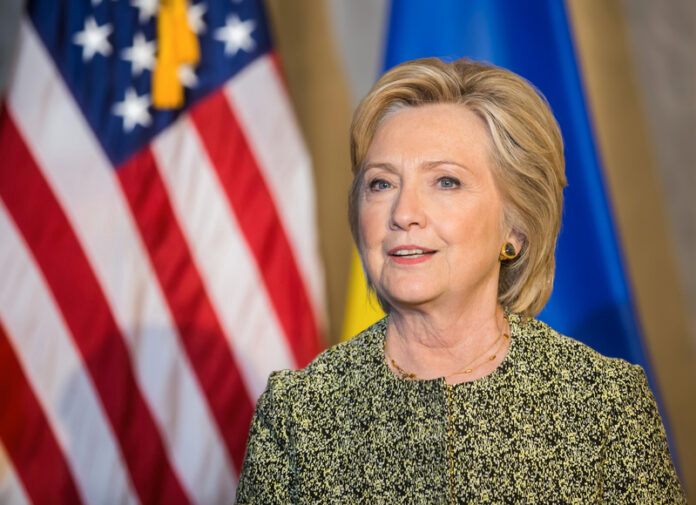
Former Secretary of State Hillary Clinton found herself at the center of a political firestorm after remarks she made on June 12, 2026, at the Rainbow PUSH Coalition in Chicago about voter identification requirements. Clinton claimed that Republicans were demanding “forms of identification that most real people don’t have, and most older people, and most rural people don’t have,” before accusing the GOP of redistricting to suppress minority representation.
The backlash was immediate and fierce. The RNC Research account amplified the remarks on social media, asking: “Does Clinton think Americans are dumb and racist?” Fox News devoted a segment to the comments on June 13, 2026, with hosts comparing them to Clinton’s infamous 2016 “basket of deplorables” remark — widely credited with alienating the very rural voters she was now, critics argued, condescending to once again.
George Washington University law professor Jonathan Turley was among the most vocal critics. “Having Hillary Clinton talk about the lives of ‘real people’ is about as authentic as a Chuck Schumer lesson on backyard grilling,” Turley wrote, adding: “Despite 83% of Americans favoring voter ID, Hillary declared, ‘most real people don’t have, and most older people, and most rural people don’t have’ such IDs.” Turley argued the comments revealed Clinton’s deep-seated belief that rural Americans are incapable of navigating basic civic tasks without the guidance of the political establishment.
The timing made the controversy even harder for Clinton to shake. CNN data analyst Harry Enten had previously noted that support for voter ID had been “north of 75 percent” for years, reaching 83 percent in 2025 — with support cutting across racial and party lines, including 71 percent of Democrats. Clinton’s remarks placed her squarely at odds not just with conservatives but with a substantial portion of her own party’s voters.
It was not the first time in recent weeks that Clinton had found herself at the center of a self-inflicted controversy. On April 13, 2026, Clinton appeared on Morning Joe and made sharp remarks about President Donald Trump’s handling of the Iran crisis, calling his diplomacy “a joke” and following up on X with a post declaring that “Trump has become fully unhinged.” That too triggered significant conservative pushback, with critics pointing to the Iran nuclear deal her own State Department had helped broker in 2015 — a deal Trump abandoned in 2018 and has spent much of his second term attempting to renegotiate.
Before that, on May 29, 2026, Clinton posted on X mocking President Donald Trump’s ongoing White House renovations, describing portions of the building as “rubble.” The post backfired almost immediately, as users flooded her replies reminding her of the Clintons’ own history — specifically, the allegations of vandalism and removal of White House property when the Clinton administration departed in January 2001. The episode generated days of negative coverage and renewed attention on one of the more unflattering chapters of the Clinton legacy.
Taken together, the three incidents form a pattern that Clinton’s critics say has become familiar: a public statement, an explosion of outrage, and a news cycle that ultimately does more to energize her opponents than her allies. For a Democratic Party still searching for its footing after the 2024 election, each Clinton controversy carries an additional sting — a reminder of the baggage that has followed the party’s most recognizable figure for decades.
What makes the June 2026 voter ID remarks particularly damaging is the specific demographic they targeted. Rural voters and older Americans are not an abstract political category — they are the voters Democrats have been hemorrhaging for years and have been openly discussing how to win back ahead of the 2026 midterms. Clinton’s suggestion that these voters lack basic identification did not read as a defense of voting rights to most observers. It read as confirmation of exactly the kind of elite condescension that has driven so many of them away from the Democratic Party in the first place.
Whether Clinton intended to insult those voters or was simply making a clumsy argument about structural barriers to voting access, the effect was the same. By June 14, 2026, the story had taken on a life of its own — and once again, Hillary Clinton was the story.