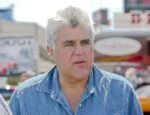

Ted Turner, who revolutionized television by launching CNN as the first 24-hour cable news network and transformed himself from the owner of a struggling Atlanta TV station into one of the most powerful media barons in American history, has died at age 87.
A statement from Turner Enterprises confirmed that Turner died peacefully Wednesday, May 6, 2026, with family members at his side. The family said a private service will take place, and plans for a public memorial will be shared later. Turner had stepped away from the public eye in recent years after revealing in September 2018 that he had been diagnosed with Lewy body dementia, a progressive brain disorder affecting memory and cognitive abilities. He suffered a mild bout of pneumonia in January 2025 that required hospitalization.
The Birth of 24-Hour News
Cable News Network debuted June 1, 1980, as America’s first 24-hour cable news network and the world’s first dedicated rolling news channel. Critics dismissed it as the “Chicken Noodle Network.” That mockery didn’t last.
The network demonstrated its value through intensive reporting of the 1981 assassination attempt on President Ronald Reagan and the 1986 Challenger space shuttle disaster. CNN reached maturity with live rolling coverage from Iraq during the 1991 Gulf War. President George H.W. Bush relied on CNN for real-time information during the conflict, underscoring the network’s influence.
“Ted was an intensely involved and committed leader, intrepid, fearless and always willing to back a hunch and trust his own judgment,” CNN chairman and CEO Mark Thompson said in a statement honoring the founder. “He was and always will be the presiding spirit of CNN.”
Captain Outrageous and the Mouth of the South
Known as “The Mouth of the South” and “Captain Outrageous,” Turner cultivated a reputation for unpredictability and blunt talk. He lived for a time at CNN’s Atlanta headquarters, occasionally roaming the newsroom in a bathrobe to argue about current events.
His competitive nature extended to sports. An accomplished yachtsman, Turner captured the America’s Cup in 1977 and the Fastnet race, earning Yachtsman of the Year honors four times — a first. After a Murdoch-backed yacht struck his vessel during a 1983 race in Australia, Turner challenged Rupert Murdoch to physical combat.
Turner purchased the Atlanta Braves in 1976 — in part to provide content for his superstation — and celebrated a World Series championship with the team in 1995. He also acquired the Atlanta Hawks in 1977 and later the Atlanta Thrashers. In 1977, he appointed himself Braves manager, triggering a conflict with Major League Baseball; the team lost the single game he managed.
Turner married three times and fathered five children. His most publicized union was with actress Jane Fonda, lasting from 1991 to 2001.
From Billboards to a Broadcasting Empire
Born Robert Edward Turner III on Nov. 19, 1938, in Cincinnati, Ohio, to Ed and Florence Turner, he spent his childhood around his father’s billboard advertising company. He entered Brown University in 1956 but faced expulsion in 1959 — allegedly for having a woman in his dorm room — then served in the U.S. Coast Guard.
In 1960, Turner joined the family business as a branch office general manager. His father’s 1963 suicide left the 24-year-old in charge as president and CEO. After purchasing several radio stations, he renamed the operation Turner Communications, then made the pivotal decision to acquire a failing UHF television station in Atlanta.
The station evolved into WTBS and became the cornerstone of Turner Broadcasting System Inc., which received its new name in 1979. Distributed by satellite, the “superstation” TBS reached 2 million cable households and fueled the cable and satellite television explosion of the mid-1970s. Turner subsequently created TNT, developed original basic cable programming, and established Cartoon Network and Turner Classic Movies. He briefly held MGM, divesting the studio and brand but retaining its valuable film archive.
A Billion-Dollar Conscience
Turner became a philanthropic pioneer in 1997 when he announced a stunning $1 billion pledge — one-third of his fortune at that time — to establish the United Nations Foundation. The gift made him one of the first billionaires to donate massive wealth during his lifetime instead of through an estate.
“Everybody could be doing more! Nobody’s doing enough. I could be doing more!” he once said of his drive to make the world safer.
His environmental activism extended to co-founding the Nuclear Threat Initiative, advocating for global nuclear disarmament, and funding efforts against climate change, fossil fuel dependence, and overpopulation. He created “Captain Planet and the Planeteers,” an environmentally themed Saturday-morning animated series. In 2002, Turner launched Ted’s Montana Grill, an eco-conscious restaurant chain featuring bison burgers sourced from his own ranches — properties that helped restore bison populations throughout the American West. The 2026 Sierra Club Vanguard Award, which he received earlier this year, recognized his decades of environmental leadership, land conservation, and climate action.
President Trump, who frequently criticized CNN in its current form, responded to news of Turner’s death by calling him “one of the greats of broadcast history, and a friend of mine,” adding, “Whenever I needed him, he was there, always willing to fight for a good cause!”
Named Time Magazine’s Man of the Year in 1991, Turner departs having built much of the modern media landscape — and having established a philanthropic model that influenced how the super-rich approach charitable giving.