
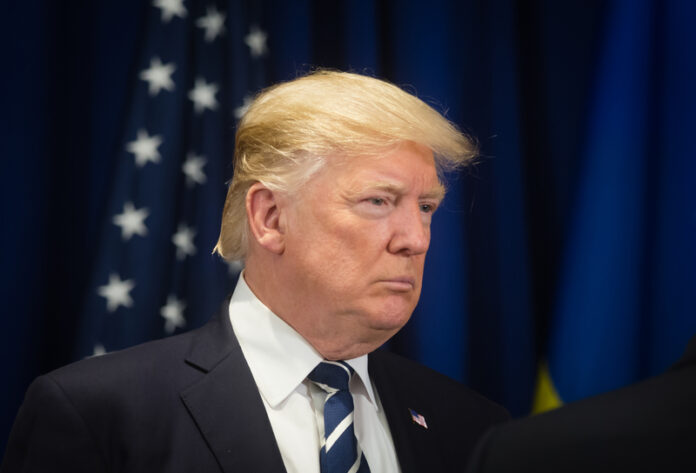
President Donald Trump is facing mounting questions about his health following a series of public appearances that have drawn widespread attention and skepticism. From visible injuries to moments of apparent confusion on the world stage, the oldest sitting president in American history confronts growing doubts from the public and calls from lawmakers for greater transparency about his medical condition.
Public Opinion Shifts as Concerns Mount
A Washington Post/ABC News/Ipsos poll conducted in late April revealed that the majority of Americans now doubt Trump’s fitness for office. This marks a significant shift for a president who built much of his campaign around contrasting his own vitality with predecessor Joe Biden’s age-related challenges. The poll results come amid an accumulation of visible health issues and unexplained medical treatments that have dominated headlines throughout his second term.
Trump became the oldest person ever inaugurated as president when he was sworn in for his second term in January 2025 at 78 years and seven months old. His administration has consistently maintained he is in excellent condition, but a pattern of incomplete disclosures and puzzling medical incidents has made those assurances increasingly difficult for many to accept.
Unexplained Injuries and Medical Visits
Photographs from an early May White House health care affordability event showed deep bruising and discoloration on both of Trump’s hands. The White House attributed the visible injuries to frequent handshaking combined with his daily aspirin regimen. Trump revealed to The Wall Street Journal in January 2026 that he takes 325 milligrams of aspirin daily, four times the commonly recommended 81-milligram dose, which officials have cited as a factor in his persistent bruising.
The bruising followed other unexplained incidents. In February 2025, dark bruising on Trump’s hand was partially concealed with makeup. During July 2025, photos from the FIFA Club World Cup final in New Jersey revealed visible swelling around his ankles and lower legs. The White House subsequently confirmed Trump had been diagnosed with chronic venous insufficiency, a common circulatory condition in older adults that causes blood to pool in the legs.
Two unscheduled dental visits to a Florida practice in late April also raised eyebrows, with the White House choosing a private facility rather than the White House dental operatory. Dr. Jonathan Reiner, a cardiologist, wrote publicly that “there’s been such lack of candor about the health of the president that even a visit to the dentist raises questions.” In October 2025, the administration did not initially disclose that Trump had undergone an MRI at Walter Reed until he mentioned it himself to reporters aboard Air Force One. Officials later confirmed the scan examined his heart and abdomen.
The Rash That Started the Latest Round
On March 2, 2026, photographers captured a red, scabbing rash on the right side of Trump’s neck during a Medal of Honor ceremony at the White House. The irritation, visible extending from below his jawline toward his ear with scabbing and flaking skin, had already been noticed during his State of the Union address the week before the ceremony and in photos from a February 19 Board of Peace meeting. Photographers had first spotted the redness during Trump’s visit to Corpus Christi on February 27, where he appeared alongside actor Dennis Quaid.
Trump’s physician, Dr. Sean Barbabella, issued a statement that medical experts found perplexing. “President Trump is using a very common cream on the right side of his neck, which is a preventative skin treatment, prescribed by the White House Doctor,” Barbabella said, adding that the redness was expected to last for a few weeks. The White House refused to say what the treatment was preventing. Dr. Vin Gupta, a pulmonologist and NBC News medical analyst, criticized the explanation as “nonsensical.” Some observers speculated the rash could be a reaction to Fluorouracil, an anti-skin cancer medication commonly known as 5-FU, though no official diagnosis was made public.
The vague explanation triggered immediate online commentary. California Governor Gavin Newsom’s office posted a photo of Trump’s neck with a series of eye emojis. By the White House event, the condition had visibly worsened. His physician noted in an April 2025 physical that the president was using mometasone cream “as needed” for an unnamed skin condition.
Beijing and a Viral Moment
While the neck rash had largely faded from public discussion by May 2026, Trump’s two-day summit with Chinese President Xi Jinping in Beijing generated new concerns. Footage circulated widely online showing Trump appearing visibly unsteady while descending stairs at a diplomatic venue, with Xi reportedly steadying him. During a joint press conference with Xi, Trump appeared to pause mid-sentence with a dazed expression, a stark contrast to his usual commanding stage presence, observers noted.
According to the Associated Press, Trump’s itinerary for the trip had been “condensed to essentially one day and reduced to the essentials,” with his team also seeking shorter speech times and reduced walking distances between venues. White House Press Secretary Karoline Leavitt dismissed concerns about the Beijing footage as politically motivated. “The president is literally constantly shaking hands. The Oval Office is like Grand Central Terminal,” she said, reiterating the administration’s position that Trump remains in excellent condition.
A Poll, a Physical and a Congressional Call
Maryland Congressman Jamie Raskin has called publicly for Trump to undergo a comprehensive cognitive evaluation, citing concerns about recent public remarks. Dr. Reiner has separately called on Congress to pass legislation requiring the White House physician to periodically certify a president’s fitness for office through annual physical, cognitive and psychiatric evaluations.
Trump is scheduled to undergo his annual physical at Walter Reed on May 26, 2026. It will be the administration’s first formal opportunity to provide a comprehensive medical update since growing public pressure began building around the Beijing footage and the hand bruising photographs. His last full physical, in April 2025, declared him in “excellent health” and “fully fit” to serve. A follow-up visit in October 2025, which the White House initially described as a routine yearly checkup before Trump rebranded it a “semiannual physical,” included a CT scan that showed no cardiovascular abnormalities.
The May 26 physical at Walter Reed will be watched closely, not as a formality, but as a test of whether an administration with a documented pattern of incomplete health disclosures will, this time, provide the transparency that its critics and a growing number of Americans say they are owed.
History’s Oldest President
Trump has consistently insisted he is in great shape, and the White House has pushed back vigorously against every round of health speculation. But as bruising, swelling, a mysterious rash, an unsteady moment in Beijing and a majority-skeptical electorate accumulate into a sustained public conversation, the administration’s assurances are meeting an audience that is increasingly difficult to persuade.