
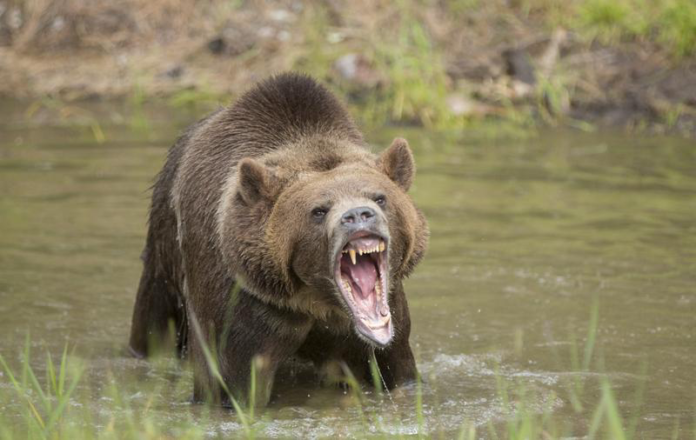
Bulgaria is confronting its first fatal bear attack in 16 years after a 35-year-old man was killed by a female brown bear protecting her cub in Vitosha Nature Park, a forested mountain expanse on Sofia’s southern doorstep that serves as a weekend refuge for the capital’s residents.
The victim’s body was discovered on a Saturday afternoon in Vitosha Nature Park, near a mountain hut along a road connecting two chalets in the park’s northwestern section, roughly a half-hour drive from downtown Sofia. Bulgaria’s interior ministry announced the findings days later after a forensic doctor and a big game expert examined the remains and confirmed a bear was responsible.
Witnesses who spoke to a Bulgarian online newspaper said the man tried to defend himself with a stick, a desperate effort that proved futile against an adult brown bear acting on maternal instinct.
The location of the attack has added a layer of unease to a tragedy already remarkable for its rarity. Vitosha is a heavily trafficked park used year-round by hikers, joggers and families, not a remote wilderness. Brown bears in Bulgaria are more commonly observed in the country’s other mountain regions, not on Sofia’s doorstep.
A Regional Contrast With Romania
Fatal bear encounters in Bulgaria are vanishingly uncommon. The last recorded killing by a bear in the country occurred in 2010, in the Rhodope Mountains far to the south. Bulgaria has so far avoided the political reckoning that has consumed neighboring Romania, where bear encounters have become a near-constant feature of rural and even suburban life.
In 2024, Romania’s parliament approved the culling of almost 500 bears in an effort to control what officials described as overpopulation. The decision followed a deadly attack on a young woman that galvanized public anger.
Bulgaria’s bear-human conflicts remain comparatively isolated. Whether the recent attack will shift that calculus is unclear. The animal in Vitosha was not behaving aberrantly by ecological standards — a sow with a cub is among the most predictable of bear threats — but the location, so close to a major European capital, has unsettled residents who treat the mountain as an extension of the city itself.
Patrols, Cameras and a Drone Overhead
Authorities outlined a response designed to locate the bear and reassure the public in the hours after the determination was announced. Police will patrol the area where the body was found. Camera traps will be deployed across the surrounding terrain. A drone will fly over the perimeter to monitor activity from the air.
The interior ministry, which issued a statement, also reminded the public of standard precautions: travel in groups when possible, make noise while moving through wooded terrain, and never leave food waste behind. Each of those measures, wildlife experts note, reduces the chance of the sudden, close-range encounter that triggers most defensive attacks.
“The brown bear naturally avoids contact with humans,” police said, adding that “the risk of aggressive behavior is possible in the event of a sudden encounter, in the presence of cubs, or when the animal feels threatened.” The circumstances described by investigators — a mother, a cub and a man on foot near a chalet road — appear to have aligned all three.
A Killing Without Recent Precedent
Officials estimate that Vitosha is home to roughly 18 to 20 bears, a relatively dense pocket of a national population believed to number between 300 and 500 animals. Precise figures are not available, a gap that wildlife managers acknowledge complicates any response.
Beyond bears, the park shelters deer, roe deer, wild boars and wolves — a mix that draws naturalists and casual visitors alike. None of that ecology made the tragedy any less shocking to a community accustomed to viewing Vitosha as benign.
For now, the park remains open, though the section near the attack site is under heightened surveillance. Hikers heading into Vitosha were urged to consult posted advisories before setting out, and to assume that the sow and her cub remain somewhere in the surrounding forest. Authorities have not said whether they intend to capture or kill the bear, an omission that officials in Sofia have not yet publicly addressed.
The man’s identity has not been released. His death, the first of its kind in Bulgaria in 16 years, has reopened a quieter debate about how a country with limited wildlife data manages a protected predator whose range increasingly overlaps with its own people.