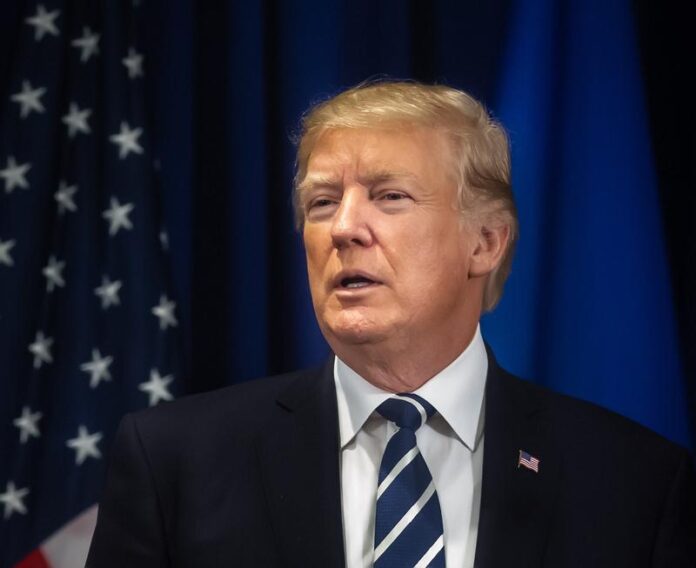
President Donald Trump has placed Cuba at the forefront of his foreign policy priorities, making repeated statements that the Communist-led nation will be “next” after U.S. military operations in Venezuela and Iran, while confidential talks between Washington and Havana persist in private.
The intensifying language has prompted analysts to wonder whether the Trump administration is pursuing actual regime change, a controlled transition, or merely expanded opportunities for American companies on the island territory located just 90 miles from Florida’s coastline.
During his remarks at the Future Investment Initiative summit in Miami on March 27, Trump discussed his administration’s recent military achievements before turning his attention to Cuba. “I built this great military. I said you’ll never have to use it but sometimes you have to use it. And Cuba’s next, by the way. But pretend I didn’t say that.”
These remarks came after the U.S. military’s apprehension of Venezuelan President Nicolás Maduro on Jan. 3, and the assassination of Iranian Supreme Leader Ali Khamenei in coordinated U.S.-Israeli operations on Feb. 28. Trump has become more emboldened in his declarations, informing journalists on Air Force One, “Cuba’s going to be next.”
Secretary of State Marco Rubio, whose parents emigrated from Cuba, has spoken more directly regarding the administration’s goals. Rubio testified to Congress in January, “We would love to see the regime there change.” In March, he stated that Cuba’s leaders “don’t know how to fix it, so they have to get new people in charge.”
The Trump administration has been choking Cuba’s economy via an oil blockade that analysts say has driven the island to its most critical condition since the Soviet Union’s dissolution. The approach escalated after the cessation of oil deliveries from Venezuela following Maduro’s capture, leading to widespread power outages throughout Cuba.
The blockade displayed indications of irregular implementation in late March, when a Russian tanker transporting approximately 700,000 barrels of crude oil reached the port of Matanzas without U.S. interference. The White House indicated the shipment did not signify a systematic modification in sanctions policy and that subsequent determinations would be evaluated on a case-by-case basis. Trump, speaking on Air Force One, minimized the occurrence, saying: “Cuba’s finished.”
Notwithstanding the combative stance, both governments have verified active talks. Cuban President Miguel Díaz-Canel admitted in March that conversations are taking place but remain “still far from an agreement.” Cuba’s deputy foreign minister, Carlos Fernández de Cossío, portrayed the negotiations as both serious and sensitive, while maintaining that regime change is “absolutely” off the table.
The issue of what “taking Cuba” truly signifies has split observers and potentially the administration itself. Paul Hare, who served as British ambassador to Cuba from 2001 to 2004, recognized competing factions within Trump’s team—some willing to cut deals with existing leadership for business access, others insisting on complete regime change.
Christopher Hernandez-Roy, senior fellow and deputy director of the Americas Program at the Center for Strategic and International Studies, said “regime management” represents the only realistic option. He observed that Cuba’s power structure has persisted for almost seven decades and excels at repression, making it a harder target than Venezuela.
Lawrence Gumbiner, a career diplomat who directed the U.S. Embassy in Havana during Trump’s first term, presented a different interpretation. He proposed Trump views Cuba as virgin territory for American business interests after six decades of economic dormancy, with opportunities spanning shipping, transportation, tourism, and construction.
Gumbiner forecast any settlement would involve economic openings first, with new Cuban leadership operating under heavy U.S. pressure. He compared the potential arrangement to the role now played by Venezuelan Vice President Delcy Rodríguez, warning the message would be clear: comply or face consequences.
The Cuban government has resisted Washington’s pressure. Deputy Foreign Minister Fernández de Cossío told NBC’s “Meet the Press” that Cuba’s military stands “prepared” for any U.S. aggression, noting that the world’s most powerful nation has dedicated almost seven decades to trying to destroy Cuba’s governmental system and failed.
Cuban President Díaz-Canel took over the presidency from Raúl Castro in April 2018, becoming the first person since 1976 not from the Castro family to formally lead the country. However, many analysts consider Díaz-Canel a figurehead, with the Castro family maintaining considerable influence behind the scenes through the military conglomerate GAESA, which controls roughly 60 percent of Cuba’s economy.
Hernandez-Roy characterized removing Díaz-Canel’ as primarily symbolic, noting “he’s not the person that actually wields the power in the country, but it would be seen as a symbolic win by the United States.”
As negotiations continue and Trump’s rhetoric intensifies, the fate of the island nation hangs in the balance. Rubio told Fox News in February that the administration would “have more news on that fairly soon,” suggesting significant developments may be approaching in the complex standoff between Washington and Havana
The most tangible indication of progress emerged on April 3, when Cuba released more than 2,000 prisoners, presenting the move as a humanitarian gesture for Easter. Analysts at The Guardian characterized the release as a likely indicator of ongoing covert negotiations between the two governments.