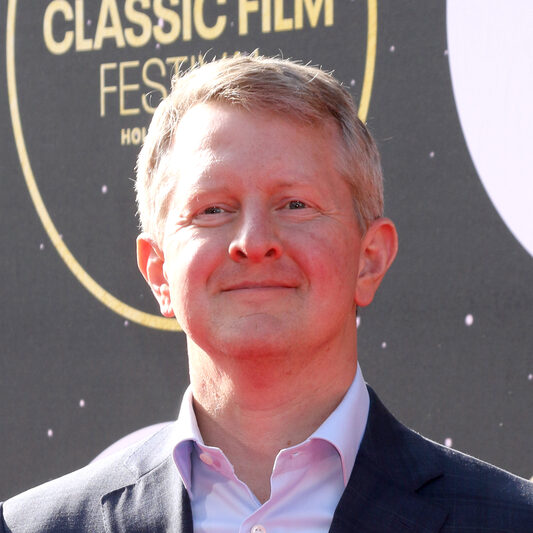
A “Jeopardy!” contestant has just broken one of the show’s longest-standing records, topping a milestone originally set by the person now behind the show’s podium.
Jamie Ding, a law student and government administrator from Lawrenceville, New Jersey, shattered host Ken Jennings’ single-game Coryat score during his third appearance, aired March 17. Ding posted a remarkable $42,400 Coryat, surpassing the $39,200 mark Jennings set on June 10, 2004, amid his famed 74-game streak. The Princeton alum exceeded Jennings’ record by $3,200—nearly a 10% increase.
The Coryat score reflects a contestant’s pure performance by totaling money earned from correct responses before Daily Double bets and Final Jeopardy outcomes are applied. Named for former champ Karl Coryat, it’s regarded as the clearest indicator of knowledge and buzzer skill—filtering out wagering swings to show true control.
At the start of the March 17 episode, Jennings lauded Ding’s earlier showing: “Our champion, Jamie Ding, put on a masterclass here yesterday.” He mentioned that Ding’s 36 correct answers in his second game had already surpassed the season record previously held by 14-game winner Harrison Whitaker.
What came next was even more extraordinary. Ding was flawless, answering 44 clues correctly without a single mistake. Those 44 correct responses tie him with James Holzhauer for the second-highest single-game correct answer total in “Jeopardy!” history—trailing only Jennings, who has the record with 45. Ding controlled the game from the start and never relinquished his lead.
In Double Jeopardy, Ding uncovered the first Daily Double in “Other Kens” valued at $18,000. He wagered $6,000 on a clue about a 1998 book, correctly naming Ken Starr—whose report on President Bill Clinton outsold Tom Clancy’s “Rainbow Six” that year—bringing his subtotal to $24,000.
His opponents were Aidan O’Connell, a wastewater treatment operator from Henderson, Nevada, and Carman Nareau, a founder from Oakland, California. O’Connell located the second Daily Double for $2,600 and bet $2,500 on a “Personifying The Nation” clue about the Philippines, lifting his total to $5,100.
By the close of Double Jeopardy, Ding led with $48,800, while O’Connell had $4,300 and Nareau $600. Final Jeopardy fell under Historic Names, with a clue about a Grand Duchess whose name means “resurrection” in Greek—the correct response was Anastasia.
Although far ahead, Ding made a modest wager. He answered correctly and finished the game with $51,234, giving him $77,800 across three days. O’Connell, who wrote “Who indeed?” as his answer, wagered nothing and stayed at $4,300. Nareau bet $599 and ended with $1.
The Princeton graduate’s road to “Jeopardy!” fame began in molecular biology. Ding earned his bachelor’s at Princeton in 2013 and sported his school’s orange and black during his debut game as a nod to his alma mater. He is now a weekend J.D. student at Seton Hall University Law School while working for the New Jersey Housing and Mortgage Finance Agency as a multifamily and tax credit program administrator.
The record-setting night places Ding among elite company. Jennings holds the top regular-play winnings total with $2,520,700 from 2004. James Holzhauer ranks second with $2,462,216, Matt Amodio is third with $1,518,601, followed by Amy Schneider at $1,382,800. Jennings’ Coryat mark had lasted nearly 22 years.
Ding’s advantage extended beyond his Coryat. He won the buzzer on 40 of 57 clues—a 70.18% success rate—leaving his rivals struggling to keep pace. His quickness and wide-ranging knowledge echo tactics used by champions like Holzhauer and Amodio, who changed the game with aggressive tactics and thorough preparation.
On March 18, 2026, Ding returned for his fourth game and won again, becoming a four-time champion with total winnings of $106,601. This match was tighter—challenger Luke Minton matched him through the first 37 clues—until Ding’s correct $8,200 Daily Double bet gave him the margin he needed, and a correct Final Jeopardy sealed the victory.
On March 19, Ding faced Jason Snell, a journalist and podcaster from Mill Valley, California, and Jordan Haynie Ware, a priest from Edmonton, Alberta, Canada. Jordan led early, but Ding rallied in Double Jeopardy, correctly answering a Daily Double about Utah Beach on D-Day to move ahead with $20,800 entering Final Jeopardy. The category was “Composers,” and Ding was the only contestant to name Johannes Brahms correctly, wagering $4,401 to finish with $25,201 and clinch a spot in the Tournament of Champions.
On March 20, Ding faced his toughest test yet against David Ley, an immersive theater director from Ithaca, New York, and Sinecio Morales, a student from Rockford, Illinois. Ley took the first-round lead after hitting a true Daily Double, but Ding fought back in Double Jeopardy to enter Final Jeopardy with $19,400. The category was “Jargon,” and both Ding and Ley correctly answered a clue about former NFL quarterback Joe Theismann, joking he’d shouted a word over 10,000 times without knowing what it meant — the answer was “hut.” Ding wagered $11,001 to finish with $30,401, becoming a six-day champion with a total of $162,203. He returns on March 23, aiming for his seventh consecutive win.