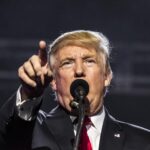

On February 19, 2026, the Seoul Central District Court found former South Korean President Yoon Suk Yeol guilty of leading an insurrection and sentenced him to life in prison, stopping short of the death penalty that prosecutors had sought. Presiding Judge Ji Gwi-yeon ruled that Yoon’s deployment of armed soldiers to the National Assembly and his attempts to arrest political opponents — including current President Lee Jae Myung — constituted acts of rebellion against the constitutional order. The verdict was broadcast live across the nation, drawing both supporters and opponents of Yoon to gather in large crowds outside the courthouse.
The ruling stemmed from Yoon’s declaration of martial law on December 3, 2024, South Korea’s first in more than four decades. In a late-night televised address, Yoon accused the opposition Democratic Party of engaging in “anti-state activities” and colluding with “North Korean communists,” sending armed soldiers into central Seoul to surround the National Assembly and enter election offices. The declaration lasted just six hours before it was overturned. That night, 190 members of parliament forced their way through military barricades to pass an emergency motion rejecting the decree, including some legislators from Yoon’s own party.
Parliament impeached Yoon on December 14, 2024, and the Constitutional Court unanimously removed him from office on April 4, 2025, ruling that the martial law declaration violated the constitution and undermined democratic rule. Yoon became South Korea’s first sitting president to be taken into custody in January 2025. He was briefly released that March after a court revoked his detention order, but was arrested again in July 2025 and remained in custody through his trial.
Prosecutors had sought the death penalty, arguing that Yoon spent more than a year — beginning in October 2023 — devising the martial law plan, placing key military officials in strategic posts in preparation. They cited his complete lack of remorse as a major aggravating factor, noting he never offered a genuine apology and continued to blame the opposition throughout proceedings. In his final court statement, Yoon flatly denied all charges, arguing that declaring martial law was a lawful exercise of presidential authority and that the opposition had paralyzed his government through obstruction and repeated impeachment motions. South Korea has maintained a de facto moratorium on executions since 1997, and the court ultimately issued a life sentence rather than capital punishment.
Convicted alongside Yoon, former Defense Minister Kim Yong-hyun received 30 years in prison for his central role in planning the declaration and mobilizing forces. Four other former military and police officials received sentences ranging from three to 18 years. Former Prime Minister Han Duck-soo had already been sentenced to 23 years in prison in a separate verdict, becoming the first Yoon administration official convicted of insurrection charges.
The insurrection verdict was not Yoon’s first. On January 16, 2026, a Seoul court handed him a five-year prison sentence in the first of eight criminal trials, finding him guilty of defying attempts to detain him, fabricating the martial law proclamation, and bypassing a legally mandated full Cabinet meeting before issuing the decree. Yoon’s legal team said they would appeal that ruling. He still faces six additional criminal trials, including one involving charges that he ordered drone flights into North Korean airspace to deliberately provoke a confrontation that could justify martial law — a charge he denies.
Yoon’s wife, former First Lady Kim Keon Hee, was sentenced on January 28, 2026, to 20 months in prison after being found guilty of accepting luxury bribes — including Chanel bags and a diamond pendant — from Unification Church officials in exchange for political favors. She was acquitted on the more serious charges of stock price manipulation and violations of the Political Funds Act due to insufficient evidence, though prosecutors announced plans to appeal those acquittals. Prosecutors had originally sought a 15-year sentence.
After Yoon’s removal, Lee Jae Myung won a snap presidential election in June 2025 and assumed office. Lee, the former Democratic Party leader who spearheaded Yoon’s impeachment effort, appointed three independent counsels to investigate allegations involving Yoon, his wife, and their associates. Those investigations have led to charges against more than 120 political and military figures. In a brief statement following the February 19 verdict, President Lee’s office said it expected the courts to reach decisions grounded in law, principles, and public expectations. Yoon retains the right to appeal his life sentence, and his remaining trials continue.