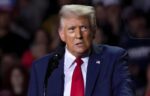

Escalating a dispute that has been ongoing for months, President Donald Trump called for Harvard University to pay $1 billion in damages in a late-night social media tirade on Tuesday, February 3. The conflict centers on federal funding and campus policies.
The president, aged 79, took to Truth Social shortly before 1 a.m. Wednesday to vehemently deny a New York Times report suggesting he had abandoned his initial demand for a $200 million penalty. Trump dubbed the report “completely wrong” and called for an immediate amendment to the article.
Trump resumed his criticism of the New York Times, which he labeled “Fake News,” in a Wednesday morning post for not modifying its report. He accused Harvard of creating a complicated job training concept to evade a heftier settlement and alleged the university committed severe and appalling illegal acts.
The dispute involves the administration’s insistence that Harvard pay direct fines to resolve inquiries into alleged civil rights violations on campus. While Columbia University agreed to a $200 million settlement plus an additional $21M EEOC settlement to end similar investigations, Harvard has declined to make any direct payments to the government.
Alan Garber, Harvard University president, stated that Harvard will not compromise its independence and argued that the administration’s demands infringe on First Amendment rights. The university has taken the administration’s strategies to court and has been prevailing in these legal disputes.
As part of its pressure campaign, the administration has already placed a freeze on billions in funding to Harvard. In April 2025, the Joint Task Force to Combat Anti-Semitism stated it would withhold $2.2 billion in multi-year grants and $60 million in multi-year contract value to the Cambridge, Massachusetts-based institution.
The administration has put $9 billion in federal funding and an extra $255 million in jeopardy to compel Harvard to comply with a series of policy demands. Despite Harvard’s endowment standing at $53.2 billion in 2024, the use of these funds is heavily constrained by donor stipulations and other limitations.
In July 2025, Harvard indicated its willingness to allocate $500 million to workforce programs as part of an agreement to reinstate its federal funding and end the legal impasse. The university resisted making direct payments to the government, viewing such payments as a relinquishment of institutional independence.
A federal lawsuit was filed by Harvard faculty on April 21, 2025, petitioning a judge to prevent the administration from cutting off billions in funding. The lawsuit claimed the threat of a funding cut is akin to an existential threat to the university.
Two groups representing Harvard faculty contended the administration is exceeding its authority by undermining free speech and academic inquiry in favor of the government’s political preferences. They argued that the administration did not follow the correct procedures under the Civil Rights Act before threatening to cut off funding.
The administration’s demands, sent to Harvard on April 11, 2025, included reforming the school’s governance structure, implementing merit-based hiring, closing diversity, equity, and inclusion programs, and permitting audits to ensure viewpoint diversity. The demands also included stipulations to cooperate with immigration authorities and instantly report foreign students who breach campus conduct.
Harvard disclosed the full list of demands sent to campus leadership, a move that infuriated the administration.
Trump has also proposed revoking Harvard’s tax-exempt status, which could inflict significant financial harm to the institution. Such an action would be an unprecedented federal move against a major private university.
During a meeting with billionaire investment executive Stephen A. Schwarzman in Davos, Switzerland, President Donald Trump requested that Schwarzman call him about a possible deal. Schwarzman has been assisting with talks between Harvard and the White House.
The clash with Harvard follows similar actions against other renowned universities. Cornell University settled with the administration on November 7, 2025, agreeing to pay $60 million over three years—$30 million to the federal government and $30 million for agricultural research—to restore over $250 million in frozen federal funding. Northwestern University followed on November 29, 2025, agreeing to pay $75 million over three years to unfreeze $790 million in withheld funds and end civil rights investigations.
Education Secretary Linda McMahon has participated in discussions about potential settlements with universities facing similar investigations. The University of Pennsylvania and Brown University reached agreements with the administration after facing comparable pressure over campus policies.
University leaders remain cautious of potential backlash should they strike a deal during a period of heightened tensions. The administration’s conflict with Harvard comes as the president is confronted with public fury over aggressive immigration enforcement tactics.
During enforcement operations, federal agents shot and killed two U.S. citizens, Renee Nicole Good and Alex Pretti. The New York Times reported, according to four Trump administration and Harvard officials, that the president abandoned his $200 million demand in hopes of reaching a deal amidst record-low approval ratings.
Trump’s late-night posts directly contradicted that reporting. The president’s reference to a $500 million figure in his Truth Social posts seemed to allude to Harvard’s July proposal to spend that sum on workforce programs.
Trump dismissed the proposal as inadequate and now insists on direct damages five times larger than his initial demand. Trump affirmed that the matter should be a criminal, not civil, event and declared that Harvard will have to bear the consequences of their actions.
He stated that the administration does not wish to have any further dealings with Harvard University in the future.