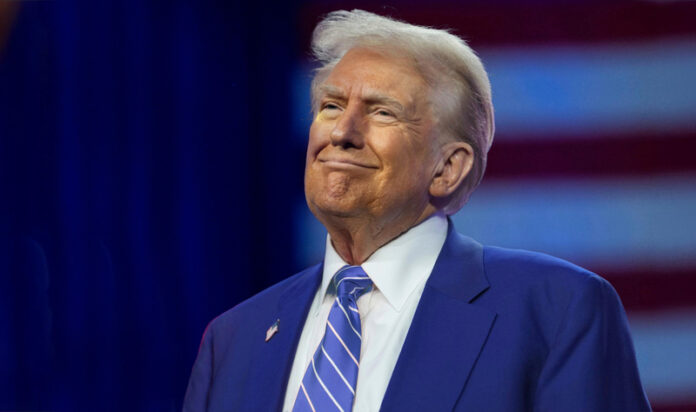
On January 4, President Donald Trump revealed that oil companies were informed about the U.S. military operation targeting Venezuela and its President, Nicolás Maduro, before it took place on January 3. This briefing occurred while Congress was not made aware of the extensive military action.
During a conversation with reporters on Air Force One, Trump confirmed his discussions with oil companies before and after the operation. Responding to a direct question regarding whether he had informed the oil companies about the impending action, Trump stated: “Before and after. And they want to go in, and they’re gonna do a great job for the people of Venezuela.”
This disclosure has prompted serious questions about the administration’s priorities and decision-making procedures. Democratic members of Congress now accuse Marco Rubio of intentionally misleading them about the administration’s plans to initiate the strike. The fact that private corporations were informed in advance while Congress was not represents a significant departure from constitutional norms related to military operations and congressional war powers.
A spokesperson for Chevron informed ABC that the company “had NO advance notice of the recent operation.”
Trump has been transparent about his vision for Venezuela’s future that includes a significant role for American energy companies. At a press conference on January 3, he declared that the United States would “run the country until such time as we can do a safe, proper, and judicious transition.” He detailed plans for major U.S. oil companies to “go in, spend billions of dollars, fix the badly broken infrastructure, the oil infrastructure, and start making money for the country.”
Venezuela is rich in oil reserves, but its petroleum industry has suffered significantly in recent decades due to underinvestment, mismanagement, and international sanctions. U.S. oil companies see Venezuela’s reserves as an opportunity for high profits, though the restoration of the country’s oil infrastructure would require a large capital investment and several years of work.
The timing of the operation has also raised suspicions regarding possible insider trading. A Polymarket account established on December 27, 2025, placed bets of approximately $35,000 on a U.S. invasion of Venezuela. The account gained over $400,000 in less than a day after the operation was made public. Reports suggest that U.S. military officials first considered bombing Venezuela on Christmas Day. This raises questions about whether someone with prior knowledge of the plans leaked information to the betting market.
Trump’s dealings with Venezuelan opposition leader María Corina Machado have also been brought into focus. The president informed reporters that he had not been in contact with Machado, stating that “she doesn’t have the respect within the country” to lead Venezuela. White House sources suggest that Trump was upset after Machado chose to accept the Nobel Prize instead of rejecting it in his favor. Given her leading role in the opposition movement, Machado seemed a natural choice to lead Venezuela’s transition.
While speaking aboard Air Force One, Trump made threats against multiple nations across the Western Hemisphere and beyond. He singled out Colombian President Gustavo Petro with particularly harsh words, labeling him “a sick man who makes cocaine” and hinting at potential military action. When asked whether there would be a U.S. operation in Colombia, Trump responded: “Sounds good to me.”
Trump also threatened Iran, saying the United States would strike the country “very hard” if Iranian security forces kill protesters. His comments came after Senator Lindsey Graham posted a photograph on Monday that showed Trump holding a signed hat reading “Make Iran Great Again,” sparking speculation about potential military action against Tehran. The hat, which Graham shared on the social media platform X, features an Iranian flag.
Trump suggested that Cuba “is ready to fall” and that “something has to be done with Mexico” concerning drug cartels operating there. The president described the Mexican government as unable to control the cartels and hinted at possible U.S. intervention. He also dismissed concerns about Greenland, stating the United States would “worry about Greenland in 20 days or two months,” while emphasizing that the large Arctic territory was strategically important for national security.
Trump even mentioned the possibility of a second strike against Venezuela “if they don’t behave,” indicating that the initial military operation might only be the start of sustained U.S. involvement in the country. Trump’s threats extended to multiple countries, suggesting a wider strategic approach to asserting American power in Latin America and beyond.
The operation in Venezuela represents a major escalation in U.S. foreign policy, marking the first time in decades that American forces have made such a blatant military strike to remove a sitting head of state. This action is reminiscent of previous instances of U.S. intervention in Latin America during the Cold War, when Washington frequently supported coups and regime changes throughout the region. However, the scale and directness of this operation, combined with Trump’s explicit statements about running Venezuela and exploiting its oil resources, separates it from more covert historical precedents.
The international response to the operation has been immediate and predominantly negative, with countries across Latin America condemning what they perceive as an unlawful act of aggression. Colombian President Petro responded to Trump’s threats by urging Latin American nations to unite against U.S. intervention, warning that the region risks being “treated as a servant and slave.” The operation has reignited longstanding concerns about American imperialism in the Western Hemisphere and raised fears that other countries could face similar actions.
The situation is still unfolding, with Trump indicating that decisions about potential U.S. troop deployments in Venezuela would depend on what “the new administration—if you want to call them that” decides to do. The president’s casual disregard for Venezuela’s sovereignty and his public discussion of exploiting the country’s natural resources have stunned foreign policy experts and allies alike. Many warn that this operation sets a dangerous precedent for international relations.