
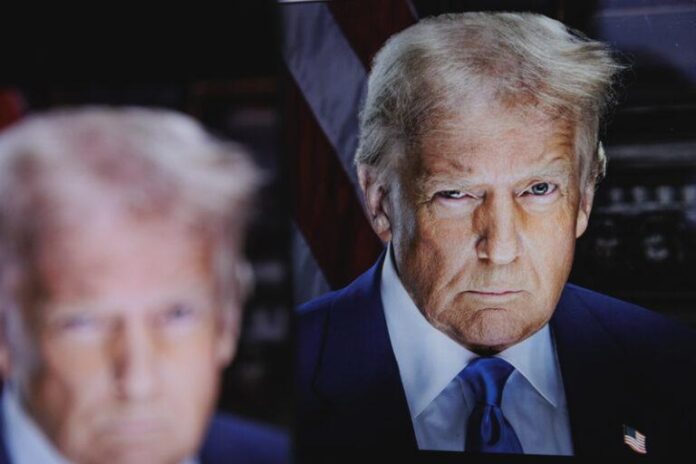
President Donald Trump launched a hostile attack against late-night host Stephen Colbert in the early morning hours of Christmas Eve, telling CBS the network should “put him to sleep” and questioning whether TV networks critical of his administration should lose their broadcast licenses.
Trump posted his attacks on Truth Social at 12:16 a.m. on December 24, 2025. He called Colbert “a pathetic trainwreck” with no talent or anything else needed for success in show business. The 79-year-old president also described the comedian as a “dead man walking” and suggested CBS should end his show immediately rather than wait until May 2026, when it’s scheduled to conclude.
The timing of Trump’s outburst appeared connected to CBS airing a rerun from December 8 of “The Late Show With Stephen Colbert” on the evening of December 23. That same night, the network broadcast the Kennedy Center Honors ceremony, which Trump hosted as the first sitting president to serve as the event’s emcee.
In the December 8 episode that aired as a rerun, Colbert mocked Trump for confusing him with fellow late-night host Jimmy Kimmel. Trump had incorrectly claimed that Kimmel previously hosted the Kennedy Center Honors and said he needed to perform better than Kimmel did. Colbert pointed out that he actually hosted the ceremony for three years from 2014 to 2016, while Kimmel never hosted it at all. Colbert responded to Trump’s comments by saying the president can’t beat Kimmel and shouldn’t hold office.
Minutes after his initial post attacking Colbert, Trump escalated to broader threats against television networks. He questioned whether network newscasts and late-night shows that are almost entirely negative toward him, MAGA, and the Republican Party should have their broadcast licenses terminated. Trump answered his own question by writing that he says yes.
Trump’s suggestion that the government should revoke broadcast licenses based on negative coverage represents a significant escalation in his ongoing campaign against media outlets he perceives as hostile. While the Federal Communications Commission cannot directly cancel licenses for major networks like CBS, ABC, and NBC, it does have regulatory authority over their local affiliate stations. The president’s appointee to head the FCC, Brendan Carr, has already demonstrated a willingness to involve the agency in content disputes with entertainment programming, raising concerns among media observers about potential government overreach into editorial decisions.
The attack on Colbert comes five months after CBS announced in July that “The Late Show” would end its run in May 2026. The network characterized the cancellation as purely a financial decision amid a challenging late-night backdrop. The timing raised questions because it came just weeks after CBS reached a settlement with Trump over a lawsuit he filed against Paramount, CBS’s parent company. Trump had alleged that a “60 Minutes” interview had been deceptively edited during the presidential campaign.
The settlement, reached in July, required Paramount to pay $16 million toward Trump’s future presidential library. The agreement came as Paramount was seeking approval from Trump’s administration for its proposed merger with Skydance Media. Colbert had criticized the settlement on air just days before CBS announced his show’s cancellation, describing it as a big fat bribe.
The relationship between Trump and CBS News has grown increasingly strained in recent weeks. On December 22, just hours before Trump’s Christmas Eve posts, CBS pulled a “60 Minutes” segment about an El Salvador prison from its scheduled broadcast. The decision to spike the story prompted internal criticism from CBS journalists concerned about editorial independence, though the network’s new editor-in-chief said the story needed additional reporting.
Trump’s Christmas Eve posting spree continued with another attack on late-night programming more broadly. He asked which late-night host is the worst and claimed they all share three things: high salaries, no talent, and really low ratings. The president concluded his series of posts with a simple message wishing everyone a merry Christmas.
First Amendment advocates have expressed alarm at Trump’s repeated suggestions that the government should revoke broadcast licenses based on editorial content. Such actions would represent a dramatic departure from American traditions of press freedom and would likely face immediate legal challenges. The broadcast licensing system operates through the FCC, which grants licenses to local television stations rather than national networks. These licenses come with public interest obligations, but content criticism of political figures has never constituted grounds for license revocation under established regulatory frameworks.
Trump’s Christmas Eve posts drew immediate attention from media watchdog organizations and constitutional law experts, who noted the threatening tone and implications for press freedom. The posts also generated discussion about the appropriateness of a sitting president using violent-sounding phrases like “put to sleep” in reference to a prominent media figure.
Neither Colbert nor CBS had issued public responses to Trump’s Christmas Eve attacks as of Tuesday morning. “The Late Show” remains scheduled to continue through May 2026 under the cancellation timeline announced in July.