
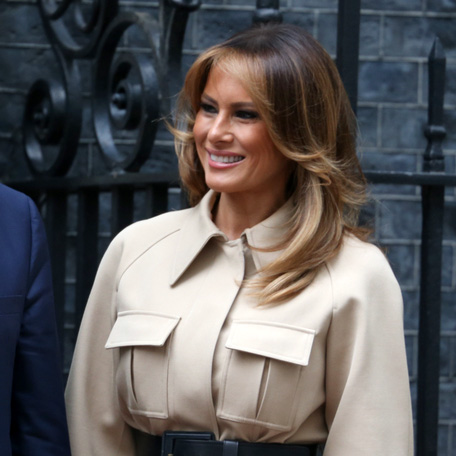
In a seldom seen political move, First Lady Melania Trump voiced her stand on the ongoing unrest in Minneapolis, Minnesota on Tuesday, January 27, 2026. She urged unity and peaceful protests in light of the continuing tensions resulting from two fatal shootings by federal immigration agents in the city.
Appearing on Fox and Friends on Tuesday morning, Melania Trump expressed, “I’m calling for unity. I know my husband, the president, had a great call yesterday [Monday] with the governor and the mayor, and they’re working together to make it peaceful and without riots. I’m against the violence, so please, if you protest, protest in peace. And we need to unify in this time.”
These remarks by the First Lady come in the wake of growing protests following the killings of American citizens Alex Pretti, a 37-year-old man, and Renee Nicole Good, a 37-year-old woman. Both were shot dead by federal agents in Minneapolis during federal enforcement operations. Pretti was gunned down by a federal agent on January 24, while Good fell to an Immigration and Customs Enforcement agent on January 7. Another individual was shot on January 14 but survived.
Typically maintaining a low profile on policy issues, the First Lady’s comments on the Minneapolis situation mark a rare political intervention. This comes amidst her increased visibility in recent weeks to promote her forthcoming documentary.
On January 26, President Donald Trump confirmed he had promising discussions with Minnesota Governor Tim Walz and Minneapolis Mayor Jacob Frey. The president also committed to decreasing the number of federal agents in Minnesota, say officials. Close to 2,000 federal agents have been dispatched to Minnesota for immigration enforcement operations.
The presence of a large federal enforcement unit in Minneapolis has ignited continuous protests since the agents’ arrival in the city in December. The demonstrations have intensified in response to the recent fatal shootings.
The details surrounding Pretti’s death are still contested. Federal officials assert that Pretti was armed with a handgun and was resisting officers aggressively when the shooting took place. However, circulating online videos seem to show Pretti holding only a phone during the incident.
Greg Bovino, the Customs and Border Patrol chief leading the Minneapolis operations, made an unsupported claim that Pretti “intended to massacre law enforcement.” Bovino is now being withdrawn from Minneapolis. Homeland Security Secretary Kristi Noem is among the Trump administration officials who have defended the agent’s conduct.
Pretti’s family strongly refutes the administration’s version of the events. They stated that the administration has spread “sickening lies” about the incident, labeling these claims as “reprehensible and disgusting.” This family counter-claim has increased public scrutiny of the shooting and the federal immigration enforcement tactics in Minneapolis.
A federal judge has forbidden the Trump administration from destroying or altering evidence related to the shooting, ensuring materials are preserved for the investigation. Deputy Attorney General Todd Blanche has been dealing with the legal aspects surrounding the incident, and Minnesota Attorney General Keith Ellison has called for a thorough probe.
The White House announced the assignment of Border Czar Tom Homan to Minneapolis to supervise the state’s immigration enforcement operations. Homan, who was previously not part of the Minnesota operations, will report directly to President Trump about the situation.
The deployment of around 2,000 federal agents to Minnesota represents an unprecedented concentration of enforcement resources, mirroring the Trump administration’s prioritization of immigration enforcement as a policy area.
Minneapolis has become a hub for debates over immigration enforcement tactics and federal-local relationships. The city’s leadership has expressed concerns about the substantial federal presence, while protestors have kept a sustained presence in the streets, demanding the agents’ departure. The deaths of Pretti and Good have turned initial protests over immigration policy into broader controversies over force usage and accountability.
The upcoming release of Melania Trump’s documentary project has led to her increased public appearances in recent weeks. The film, directed by Brett Ratner, is part of a $40 million documentary deal. The premiere at the Kennedy Center is set for January 29, with a theatrical release on January 30.
The First Lady’s heightened media presence coincides with the crisis in Minneapolis, creating an unusual confluence of her promotional activities and commentary on a politically sensitive situation. Her call for unity is one of her most direct statements on a controversial policy matter during her tenure as First Lady.
White House Deputy Chief of Staff Stephen Miller is among the administration officials who have defended the federal enforcement operations and the actions of the agents involved in the shootings.
The situation in Minneapolis is evolving as federal and state officials negotiate over the immigration enforcement agents’ presence in the city. The agreement to reduce the number of federal officers could represent a potential de-escalation. However, the specifics about the timeline and the scope of the reduction remain unclear. Governor Walz’s office indicated that the president agreed to consider reducing agent numbers, hinting at ongoing discussions about the federal presence.
The controversy has prompted questions about the engagement rules for federal agents during immigration enforcement operations, particularly in situations involving protestors or bystanders. The use-of-force policies for Immigration and Customs Enforcement and Border Patrol agents typically necessitate officers to use deadly force only when facing an immediate threat of death or serious bodily injury. The conflicting accounts of Pretti’s actions and possessions at the time of the shooting have made determining the shooting’s compliance with that standard a central issue in the ongoing scrutiny.
Public response to Melania Trump’s statement has been varied, with some applauding her call for unity while others criticized the remarks as inadequate considering the circumstances. The First Lady’s message focused more on the need for peaceful protest rather than directly addressing the fatal shootings or the families’ concerns about the federal response.
As Minneapolis grapples with the aftermath of the shootings, the city is facing ongoing protests and a continued, though potentially reduced, federal presence. The situation has become a critical point in broader national debates over immigration enforcement, federal authority, and the appropriate use of force by government agents. The preservation of evidence ordered by the federal judge ensures that an investigation can proceed, but questions about transparency and accountability remain prominent in public discussions about the events in Minneapolis.