Libya’s military chief and seven others were killed when their plane crashed near Ankara, Turkey, on Tuesday, December 23, 2025, following what officials described as a technical malfunction shortly after takeoff.
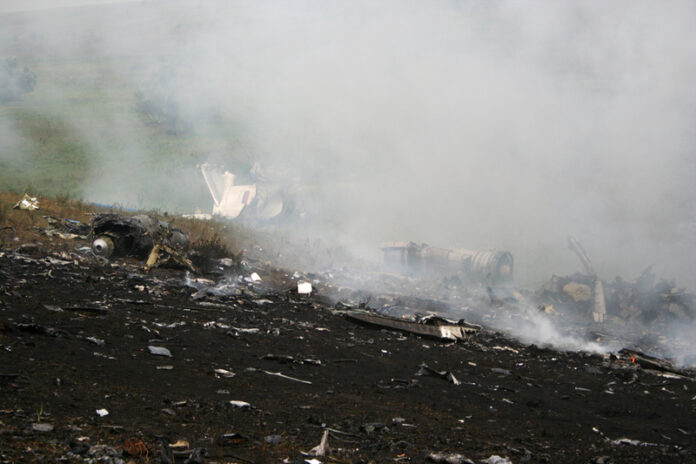
Mohammed Ali Ahmed al-Haddad died along with four other officers and three crew members when their Falcon 50 business jet went down in the Haymana district, near the village of Kesikkavak. The crash site was located approximately 70 kilometers south of Ankara.
The aircraft departed Esenboga International Airport at 8:10 p.m. local time on Tuesday. At 8:33 p.m., the plane informed air traffic control of an emergency caused by an electrical fault and requested an emergency landing. Air traffic control redirected the aircraft back toward Esenboga Airport and initiated emergency measures, but the jet disappeared from radar at 8:36 p.m. while descending for the emergency landing.
Security camera footage aired on local television showed the night sky over Haymana lighting up, as if an explosion had occurred. Turkish search and rescue teams located the wreckage near Kesikkavak village. There were no survivors among the eight people on board.
The delegation had been returning from high-level defense talks in the Turkish capital. Among those killed were General Al-Fitouri Ghraibil and Brigadier General Mahmoud Al-Qatawi. The Malta-registered aircraft carried five officers and three crew members.
Libyan Prime Minister Abdul-Hamid Dbeibah confirmed the deaths in a statement. “It is with deep sadness and great sorrow that we learnt of the death of the Libyan army’s chief of general staff, Lieutenant General Mohammed al-Haddad,” Dbeibah said, calling the incident a “tragic accident.”
Turkey held a military ceremony on Saturday, December 27, 2025, at Murted airbase near Ankara to honor the fallen delegation. Turkish military chief Selcuk Bayraktaroglu and Defense Minister Yasar Guler attended the ceremony before coffins draped in Libyan flags were loaded onto a plane for repatriation.
Libya held its own military ceremony at the Defence Ministry in Tripoli on Saturday. The eight victims received military honors. In Tripoli, Presidential Council head Mohamed al-Menfi posthumously promoted al-Haddad to the rank of Field Marshal during the ceremony. Prime Minister Dbeibah stated that “Field Marshal Mohamed al-Haddad was a cornerstone to protecting the state and maintaining stability” and assured that investigations into the crash “are continuing with full accuracy and credibility in coordination with Turkiye.”
On Sunday, December 28, thousands gathered at Misrata football stadium for the funeral of al-Haddad and two companions who were from the coastal city. Misrata officials declared the day an official holiday to allow citizens to attend. Libya’s Government of National Unity announced three days of national mourning, with flags at half-mast and official ceremonies suspended.
Four prosecutors have been assigned to investigate the crash. Turkish officials said the inquiry would examine all aspects of the technical malfunction that caused the tragedy.
On Wednesday, December 24, Turkish Interior Minister Ali Yerlikaya announced that both the cockpit voice recorder and flight data recorder had been recovered from the crash site. “The examination and evaluation processes of these devices have been initiated by the relevant authorities,” he told reporters. The Turkish Ministry of Defense confirmed on Thursday that technical analysis of the black boxes had begun in cooperation with Libyan authorities. A 22-person Libyan delegation, including five family members of the victims, arrived in Ankara on Wednesday to assist with the investigation. The French civil aviation investigations agency (BEA) announced it would participate in the probe.
Al-Haddad led the UN-backed truce committee, playing a crucial role in efforts to unify Libya’s divided armed forces. His death drew condolences from across Libya’s fractured political landscape, including from rival factions. Khalifa Haftar expressed condolences.
In a statement, Haftar expressed “deep sorrow over this tragic loss” and offered condolences to al-Haddad’s family.
The military chief’s role in bridging Libya’s political divisions made him a unique figure in the country’s complex landscape. The country remains split between rival administrations in the east and west, backed by rogue militias and different foreign governments.
Turkey has been the main backer of Libya’s western government, but has recently taken steps to improve ties with the eastern-based administration as well. During his time in Ankara, al-Haddad met with Turkish Defense Minister Yasar Guler and other officials to discuss boosting military cooperation between the two countries and addressing regional issues.”
The loss of al-Haddad and his senior officers represents a significant setback for efforts to unify Libya’s military structure.