
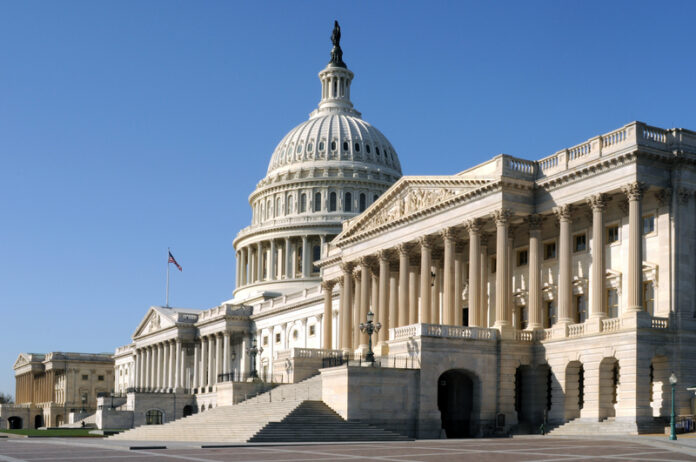
Two months ago, Senate Parliamentarian Elizabeth MacDonough disrupted the progress of President Donald Trump’s extensive legislative initiative, “One Big Beautiful Bill,” by ruling that several key components did not comply with Senate regulations. This decision initially delayed the Republican Party’s goal of passing the bill by July 4, 2025. However, the legislation is now in effect. Here is an overview of how events unfolded and the current situation.
In late June, MacDonough informed senators that certain elements of the domestic policy package violated the Byrd Rule, preventing them from advancing through the reconciliation process. Her memo, released by Democrats via the Senate Budget Committee, identified multiple violations, requiring Republicans to modify or eliminate significant provisions.
Among the most significant exclusions were the expansions of Medicaid funding for Alaska and Hawaii, which were linked to Senator Murkowski’s concerns about Medicaid and SNAP reductions. Republicans had advocated for these measures to secure her support.
Ultimately, Senator Lisa Murkowski of Alaska cast an agonizing yes vote, despite not all her requests being included in the final legislation. Although the parliamentarian rejected her proposal for expanded Medicaid funding in Alaska and Hawaii, Republicans offered other incentives. The package featured a substantial $50 billion rural hospital fund and postponed new SNAP cost-sharing rules that would have significantly impacted Alaska. Murkowski acknowledged the bill’s imperfections but stated that the accommodations for her state were sufficient to earn her endorsement.
MacDonough also dismissed a Medicaid provider tax reform crucial for Republicans to finance extensive tax cuts. Additionally, proposals such as broad Medicare drug exemptions, tighter enrollment rules, and nursing home staffing reductions, which were projected to save $23 billion over a decade, were rejected.
Other revisions included removing Medicaid eligibility for noncitizens, reducing federal support to states aiding immigrant coverage, and prohibiting Medicaid and CHIP coverage for gender-transition care.
Republicans responded forcefully. Senator Tommy Tuberville labeled MacDonough the “WOKE Senate Parliamentarian” and called for her dismissal, while Rep. Greg Steube questioned the authority of an unelected appointee wielding such influence.
However, Majority Leader John Thune upheld the decision, stating that overruling MacDonough would effectively eliminate the 60-vote filibuster. Senators Lindsey Graham and John Kennedy supported this position, opposing any override.
Nonetheless, some Republican priorities remained intact. An extension of provider tax cuts received approval, with a one-year prolongation, and restrictions on Medicare coverage for noncitizens were deemed acceptable.
Among the more contentious elements retained was a ban on Planned Parenthood receiving Medicaid funds, though Republicans reduced its duration from ten years to one to ensure compliance.
On July 1, 2025, the Senate passed the bill with a 51–50 vote, with Vice President JD Vance casting the deciding vote. The House subsequently approved the Senate’s amendments on July 3, and President Trump signed it into law on July 4, meeting the deadline.
With the law now in effect, significant impacts include:
Medicaid & SNAP cuts are real now: The Congressional Budget Office estimates that approximately 10 million Americans will lose coverage—7.5 million from Medicaid, 2 million from Affordable Care Act plans, and several hundred thousand more becoming uninsured. Lower-income households are most affected, while higher earners benefit.
Red tape and work requirements start: Medicaid now enforces stricter work mandates and administrative barriers that will result in program disenrollments.
Healthcare costs and inequality deepen: The law reduces Medicaid funding by $900 billion over a decade, favoring the wealthier while adversely impacting the less affluent.
Some Social Security recipients see tax savings: Adjustments to the standard deduction allow certain retirees to pay less tax on Social Security benefits. These savings are modest and primarily benefit those with additional income sources beyond Social Security.
Currently unfolding developments include:
Public backlash is fierce. Analysts report this as one of the most unpopular major laws in recent decades, with disapproval ratings ranging between –10% and –22%. Independent voters are particularly dissatisfied.
The GOP is scrambling to rebrand it. Efforts are underway to adopt names like “Working Family Tax Cuts” to improve its image, though working families are not its primary beneficiaries, especially with the upcoming midterm elections.
During a campaign appearance in Georgia, Vice President Vance described the new law as ‘the biggest tax cut for families that this country has ever seen.’ However, experts note that benefits such as deductions on tips and overtime apply only to limited amounts and primarily aid those who itemize, raising questions about the extent of these benefits.
State budgets are crumbling. Colorado had to convene a special session to address a nearly $800 million deficit resulting from Medicaid and food program cuts.
In summary, individuals most reliant on safety-net programs and with the least financial security will experience the greatest impact under the “One Big Beautiful Bill.”
Low-income families and individuals dependent on Medicaid, SNAP, and ACA subsidies will face the harshest consequences. Millions are expected to lose health coverage due to eligibility reductions, new work requirements, and stricter regulations.
People with disabilities and older adults relying on Medicaid for long-term care and home health services are particularly vulnerable, as provider cuts and staffing reductions will limit available care.
States with higher poverty rates will confront significant budget shortfalls as federal Medicaid funding decreases, necessitating either service cuts or state tax increases.
In contrast, wealthier households and corporations benefit, as the largest tax savings favor higher earners and business owners.
In essence, the poorest households, individuals with disabilities, and low-income seniors face the greatest challenges, while the wealthiest enjoy the most substantial financial advantages.
That encapsulates the “Big Beautiful Bill.”