Bootleg liquor that passed through the hill villages of Chandel district in Manipur, India, has left 17 people dead.
Officials said at least 17 people have died and 228 remain in hospitals after drinking suspected counterfeit liquor in Chandel, a mountainous hill district with an unfenced international border with Myanmar, where the poisonings happened between Nov. 18 and Nov. 20, 2026.
The toll climbed through the weekend. Officials counted 11 dead, with about 180 people in hospitals, before the figure reached 13 on Saturday morning, Nov. 21, and 16 later that day. The 17th death came Sunday, Nov. 22. Sixteen of the dead came from Chandel and one from neighboring Kakching district, and the poisonings concentrated in the Chakpikarong area of Chandel, about 75 kilometers, or 47 miles, south of the state capital, Imphal.
By 3 p.m. on Nov. 23, the state health department reported that 81 patients remained in hospitals, 11 of them in intensive care. Local media reported on Tuesday, Nov. 24, that a 37-year-old man from Kakching had also died, putting the toll at 19, though officials had not confirmed the higher figure.
A Death at Home in Nungpan
Hrangbung Beruwng Anal, a 50-year-old man from Nungpan village, died first, at his residence on the night of Nov. 18, a police official said. Twelve more people died Thursday, Nov. 19, and Friday, Nov. 20, in different villages of Chandel district. Many of the victims died while being transported to hospitals, or at local primary health centers and community health centers. Most of those affected came from Nungpan, Chakpikarong and adjoining villages.
Hungyo Worshang, Manipur’s excise commissioner, said the district administration, police, excise and health departments sent teams into those villages.
Many Came Forward Out of Panic
Sapam Ranjan Singh, a state government spokesperson and lawmaker from the governing Bharatiya Janata Party (BJP), told reporters at the chief minister’s secretariat in Imphal on Sunday, Nov. 22, that teams had screened 1,130 people, admitted 228 and put 38 of them on dialysis. “It’s very unfortunate that around 17 precious lives have been lost,” Ranjan Singh said. His own estimate of the number still hospitalized, about 250, differed slightly from the government’s detailed count of 228 admitted.
Many of those who came forward had drunk the liquor without developing symptoms and sought screening out of panic, he said. At the peak, hospitals across the state reported around 600 people in their care.
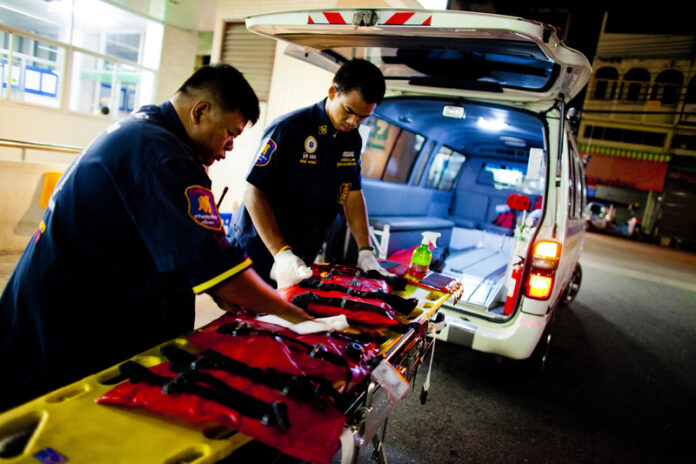
Doctors moved the critically ill to Imphal — to the Regional Institute of Medical Sciences, the Jawaharlal Nehru Institute of Medical Sciences, Shija Hospitals and Research Institute and Babina Hospital. The government sought help from private hospitals to handle the surge.
Chief Minister Yumnam Khemchand Singh visited patients at a hospital in Imphal on Nov. 20 and ordered an inquiry. Opposition Congress leader K. Meghachandra Singh also visited patients. Rahul Gandhi, the Congress leader and Leader of the Opposition in the Lok Sabha, demanded compensation for those affected.
Liquor Traced to Sugnu and Andro
Chandel District Superintendent of Police Dharmendra Kumar wrote in a report to Deputy Commissioner Mamoni Doley that the adulterated liquor had reportedly been purchased from Sugnu, in neighboring Kakching district. A preliminary investigation also pointed to supply links involving liquor procured from Andro, in Imphal East district.
Police have arrested six people, Thokchom Radheshyam Singh, a government spokesperson and lawmaker, said. State authorities said on Nov. 23 that the number of arrests had risen to nine. Investigators are identifying others involved in producing, distributing or selling the liquor.
Enforcement agencies have registered 48 cases since Nov. 17 and seized 2,419 liters of illicit country liquor, including 1,967 liters on Nov. 21. Radheshyam Singh put the total seized so far at around 4,600 liters, or about 1,200 gallons.
What the Samples Have Not Shown
Investigators have not conclusively determined what killed the 17. They sent samples to the National Food Laboratory in Kolkata, India, the Forensic Science Laboratory in Imphal and the State Public Health Laboratory there.
Authorities described symptoms that included vomiting, abdominal pain, dizziness, blurred vision and breathing difficulty — a pattern consistent with methanol poisoning. Methanol can damage the optic nerve and the kidneys, can be fatal in small amounts, and often requires dialysis to clear the toxin from the blood. Officials have not confirmed that methanol was involved.
A high-level inquiry committee headed by Principal Secretary R.K. Dinesh will examine the source and composition of the liquor, the medical and forensic findings, and any administrative or enforcement lapses. The committee has a month to report.
The excise department directed enforcement teams to inspect liquor outlets and local production units across Manipur and to have samples tested. Police were directed to step up raids on illegal manufacture, storage and sale. The Chandel district administration issued a seven-point public health advisory telling residents to stay away from locally brewed liquor of doubtful origin and to seek immediate care for any unusual symptoms after drinking.
Why Manipur Restricts Liquor
Manipur banned liquor in 1991 under the Manipur Liquor (Prohibition) Act and only partially lifted the ban in 2022. Across India, hundreds of people die every year after drinking cheap bootleg alcohol, often spiked with methanol, which can cause blindness, liver damage and death.