Oyo Nyimba Kabamba Iguru Rukidi IV, the Omukama, or king, of Uganda’s Tooro Kingdom, died at about 10 p.m. Uganda time on August 27, 2026, at the age of 34 — a monarch who entered the record books as a toddler and is now being mourned by people in 39 countries who have signed an online book of condolence.
The kingdom’s official memorial page, whose counters run live, showed 424 published messages of condolence and 792 candles lit in the king’s memory on the morning of September 10, with 39 countries represented. Uganda accounts for the great majority; messages have also arrived from the United States, the United Kingdom, Brazil, the Democratic Republic of the Congo, Belgium, Kenya, Zimbabwe, South Korea, Sri Lanka, the Netherlands, Ghana, Canada, Tanzania, Nigeria and elsewhere. The kingdom has drawn its grief together under a single mourning motto — “Omukama Atulize. Enkuba Etutire.” Mourners who prefer to sign by hand have been able to do so at Buziga Palace, where a physical Book of Condolences was opened on August 28.
News of the death was made public in a statement issued August 27 by Calvin Armstrong Rwomiire Akiiki, the Prime Minister of Tooro Kingdom, who urged the Batooro to remain united, calm and prayerful. “This is an immeasurable loss to the Royal Family, the people of Tooro and the nation of Uganda,” Akiiki said in the announcement. The kingdom said in that first announcement only that the monarch had been critically ill and receiving treatment in the United States; Ugandan officials later confirmed that he died in Dallas, Texas. Health Minister Chris Baryomunsi told Parliament the cause was cancer; the kingdom itself has never published one, and the BBC noted on September 1 that it had not been disclosed.
Museveni Reveals Cancer Battle
The details came later from Ugandan President Yoweri Kaguta Museveni, who said in a statement on his official X account that an aggressive cancer had killed the king during his medical care in the United States. The diagnosis had been brought to him months earlier, he said, by Queen Mother Best Kemigisa, known as Nyinomukama, who came to tell him in person. Travel to Germany for treatment, and afterward to the United States, where the king died, was supported by the government. “I gave assistance to the king and his family before his death,” Museveni said at Entebbe on September 4, according to Africanews. “They first went to Germany and later they went to United States for treatment but it didn’t go as we hoped.” The Daily Monitor transcribed the same remarks differently, quoting him as saying the family met him in November while he was campaigning.
The president wrote on behalf of himself, First Lady Janet Kainembabazi Museveni and all Ugandans, offering condolences to the royal family and lamenting that a monarch orphaned as a small boy had died young. “How unfair life can be!!” he wrote in a statement on August 28. King Oyo, he added, had shown the potential to work with central and local government to develop Tooro. The president has ordered an official burial and directed that national flags fly at half-mast for three days around the funeral.
A Casket Comes Home
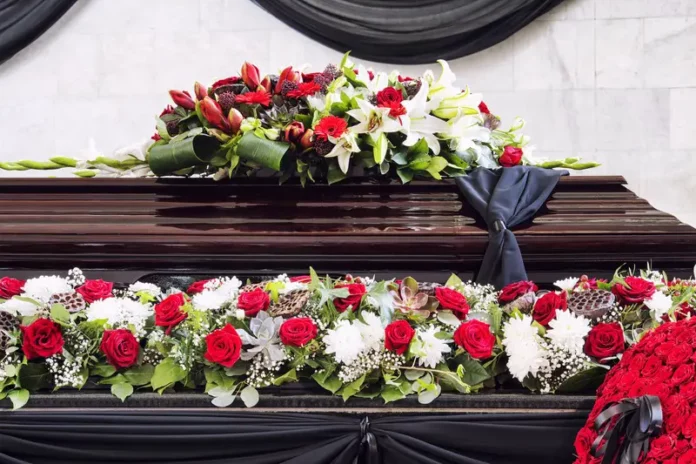
The king’s body left Dallas Fort Worth International Airport on September 2 and travelled home by charter flight through Nairobi. It reached Entebbe International Airport at noon on Friday, September 4 — a day later than the kingdom first announced, and two hours behind the revised programme — where Museveni laid a wreath and the casket was received with military honours. A Ugandan army helicopter carried the remains to Kyegegwa District, and a road procession took them on to Karuziika Palace in Fort Portal.
A formal nine-day mourning period began with the body lying in state at Karuziika Palace, open to the public, with prayers each evening. Prayers had been held for the king at the Texas airport two days earlier, attended by relatives, friends and Ugandan officials.
A King Crowned at Three
His father, Rukirabasaija Patrick David Matthew Kaboyo Olimi III, died on August 26, 1995, at 49, and the crown passed on September 12 that year to a boy born April 16, 1992. He was three when he took the throne of the kingdom in western Uganda, and Guinness World Records recognized him as the world’s youngest reigning monarch, a distinction that turned him into a global curiosity.
During his childhood, traditional affairs were handled by a regency that included the queen mother, and his official coronation was held on April 17, 2010, the day after his 18th birthday. Full direct leadership came on reaching adulthood then, and his reign lasted nearly 31 years in all. As the 13th monarch of Tooro by the BBC’s count — the kingdom’s own records number its kings differently — of a kingdom established in the early 19th century, he was custodian of the heritage of well over a million Batooro, with his royal seat at Karuziika Hill in Fort Portal.
An elected president and parliament govern Uganda, a republic. Several traditional monarchies also sit within it, institutions that wield largely symbolic political power while retaining substantial cultural and social influence. King Oyo used that space to build a public profile around youth empowerment, environmental and climate conservation, education and vocational training, healthcare and HIV/AIDS awareness.
A Nation and a Continent Mourn
The largest and most influential traditional institution in the country, Buganda Kingdom, said it was mourning alongside the people of Tooro, while Rwenzururu Kingdom also sent condolences to all those grieving the loss. The Federation of Uganda Football Associations, calling the late monarch “a true friend of the beautiful Game,” ordered a moment of silence before kickoff at every match from August 28 to September 4.
Uganda’s parliament held a special tribute session on Thursday, September 3. Prime Minister Robinah Nabbanja called King Oyo a “symbol of unity,” and acting opposition leader Patrick Nsamba Oshabe told the chamber, “Heritage and development were never rivals in his hands.”
“You can’t see anyone smiling,” said Margaret Muhanga, a government minister, who added that one million trees would be planted in the king’s honor during the mourning period. Tributes also came from Ugandan musician Juliana Kanyomozi — “It is a very dark day for Tooro Kingdom,” she wrote. “Gone too soon. What a loss!!!!” — and from pop star-turned-politician Bobi Wine, who called it “most devastating news.” The Tooro Annual Youth Conference 2026 was postponed as well, with organizers saying they were joining the people of Tooro in mourning.
Succession and an Official Burial
A prince had been left as the king’s heir, Akiiki said in the announcement of the death, and his identity would be formally revealed at the appropriate time, in keeping with the traditions and customs of Tooro. Continuity of the crown, the prime minister said, was assured. Local Government Minister Balam Barugahara said the kingdom is not without a plan: “We have a succession plan and we have a Babiito clan, we have the chief Mubiito who is now the current chairperson of the kingdom.” Elders of the Babiito were formed into a 21-member committee to identify the successor and announce him, headed by Charles Kayondo Kamurasi, the Omusuuga, who heads the Babiito royal clan. A young boy heir would be introduced to the public at the right moment, Museveni said the queen mother had told him.
Kamurasi flatly contradicted that account on August 31. “The king had no child. I don’t know about it because we have never been told that,” he said. “Whatever you might have heard on the radio or television is a statement by the prime minister.” Senior Babiito clan members say they are unaware of any child who could inherit the throne. “What will happen now is that we shall go back to the Rukidi lineage,” Kamurasi said, pointing to King Oyo’s grandfather, the late King George Rukidi III, who reigned from 1928 to 1965, “and those issues have to be sorted out by the clan.”
The question broke open on Wednesday, September 9. The 21-member committee named a crown prince — Edward Rukidi Kijanangoma, a cousin of the late king and a news anchor and editor at the state broadcaster, Uganda Broadcasting Corporation — in a statement read by Monsignor Isaiah Mayombo at Karuziika Palace. He is expected to be crowned within days. Reports in Ugandan media said the committee’s first choice, Prince George Desmond Kamurasi, a London-based footballer and coach, declined after criticism that he was too distant from the kingdom.
Hours earlier, King Oyo’s personal lawyer, Michael Akampurira, read a will dated September 14, 2022 to the royal family and government officials. It names the king’s son first in line. “I hereby declare and direct that if, at the date of my death, I am survived by a son lawfully recognized as my biological son, I appoint him as my heir to the throne of the Kingdom of Tooro,” it reads, citing the Institution of Traditional or Cultural Leaders Act, 2011. The document then lists Prince Yoweri Komwiswa, Prince Solomon Nyaika and Kamurasi himself as fallbacks. The son is not named.
Princess Ruth Komuntale, the late king’s sister, rejected the committee’s choice the same day. “We are just very disappointed,” she told NBS. “Honestly, to me it’s very dramatic, trying to bring division and turmoil.” She said the will settles the matter. Princess Elizabeth Bagaya said she was unwell and had given Komuntale her authority and support. Babiito clan spokesman Moses Musinguzi told the princesses to sue. “Let them go to court; for us we are continuing with our functions,” he said, adding that even a son of the late king “would not automatically make him king.”
The Queen Mother said on September 10, that the royal family had been confined to the palace. “We cannot leave or receive people freely. We are under house arrest,” Kemigisa said, accusing the committee of celebrating while her son lay in his casket. She said royal guards had been removed and replaced by soldiers, and that the Omusuuga had been taken away. The army had not responded. “There will be time for all of that,” she said. “Let us grieve and bury my son, King Oyo.” Rwomiire, who made the original announcement, sided with her on Spetember 10, asking that the will be examined “calmly and credibly, not through competing announcements, confrontation, or attempts to establish facts on the ground while our King still awaits burial.”
An official burial for the king has been directed by Museveni, who also ordered flags flown at half-mast for three days — the day of the burial itself plus the days immediately before and after it. Official mourning runs for nine days, the kingdom said, and the clock starts only when the body reaches Karuziika Palace rather than from the date of death. The burial remains set for Saturday, September 12 at the Karambi Royal Tombs — the 31st anniversary, to the day, of the boy king’s enthronement. Public viewing at the palace ends at 5 p.m. on Friday. The body moves on Saturday to St John’s Cathedral for a three-hour service beginning at 9 a.m., with mourners asked to be seated by 7 a.m., after which the procession walks roughly six kilometres to the tombs. Henry Basaliza Araali, the deputy prime minister for foreign affairs and head of the burial committee, said the public will not be admitted to the royal tombs themselves. The government has met the cost of repatriation and the medical bills, and the kingdom said the remaining funeral arrangements will be published through its verified channels.