
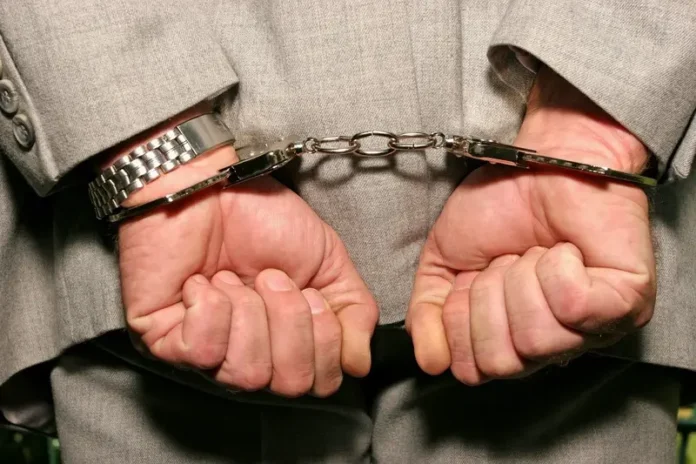
Judges in The Hague convicted Hashim Thaci, the former president of Kosovo, of war crimes committed during his country’s 1998-99 war for independence from Serbia, and on September 16, 2026, sentenced him to 25 years in prison. The Kosovo Specialist Chambers (KSC) returned guilty findings against Thaci, 58, on four counts: murder, torture, cruel treatment and arbitrary detention.
The judges held him responsible for 96 killings — the indictment had alleged 102 — along with the arbitrary detention of 385 people, the torture of 303 and the cruel treatment of 49. The victims were political rivals and people suspected of helping Serbian security forces, and included Kosovo Albanians, Serbs and Roma. None, the judges said, were taking part in the fighting.
Dressed in a suit and tie, Thaci stood in silence while Presiding Judge Charles Smith read out the conviction and the sentence. He has denied every charge. Prosecutors had asked for 45 years for each of the four defendants in closing arguments on February 9. Both sides can appeal, and his lawyer, Luka Misetic, said on X the next day that Thaci would — urging citizens to remain “peaceful” and thanking them for “the outpouring of support.”
What the Judges Concluded
Thaci took a hands-on role in the offenses, the court ruled, and encouraged them as a member of a joint criminal enterprise, using his rank and standing to that end. Kosovo Liberation Army (KLA) fighters also committed abuses he failed to investigate or punish.
The intelligence behind many of the arrests “was little more than unverified rumours,” Smith said. “In reality, there is no indication that the victims in this case were spies or collaborators” — having Serbian friends or a job at a Serbian company, he said, was enough to be treated as one. The American judge also underlined what the case did not decide: it passed no judgment on the legitimacy of the KLA’s cause, nor on its aim of winning independence for Kosovo, at the time a province of Serbia.
All four defendants were acquitted of six counts of crimes against humanity, the panel having concluded that prosecutors did not prove the crimes formed part of a widespread and systematic attack on civilians. Three judges heard the trial, which opened in April 2023.
The three other former KLA leaders tried alongside Thaci pleaded not guilty. Jakup Krasniqi was sentenced to 25 years, Kadri Veseli to 18 and Rexhep Selimi to 13, the last two terms taking in time already served. Veseli’s lawyer, Rodney Dixon, said he would mount a robust appeal.
A Second Case Already Heard
Thaci faces a separate prosecution for obstructing justice, and that trial has already been heard. Closing statements came on September 10, six days before the war crimes verdict, and prosecutors asked for six years for Thaci, to run consecutively with any war crimes sentence. Four co-defendants — Hajredin Kuci, Fadil Fazliu, Isni Kilaj and Bashkim Smakaj — face requested terms of nine months to three years. Prosecutors allege Thaci directed them to tell witnesses what to say, citing roughly 28 hours of recordings from nine detention center visits. All five deny it, and no verdict date has been set.
From Commander to President
Formed in the mid-1990s, the KLA stepped up its armed operations in 1997 and 1998, and Serbian forces answered with large police and military sweeps. An estimated 13,000 people died in the war that followed, which drove hundreds of thousands from their homes. Fighters on both sides committed crimes. Thaci, who helped found the group and went by the nom de guerre Gjarperi — the Snake — headed the KLA’s political and information directorate.
Western governments courted him. At the 1999 Rambouillet peace talks in France he charmed the diplomats, then-U.S. Secretary of State Madeleine Albright most notably, and came to be seen as the man who could steer Kosovo to statehood. He had led a provisional government in 1999 and 2000, and returned as prime minister in January 2008, weeks before Kosovo proclaimed independence — making him the new state’s first head of government. He later served as foreign minister and held the presidency from 2016 to 2020. The tribunal’s indictment prompted his resignation in November 2020, and he was transferred to The Hague that month.
Anger in Pristina and The Hague
Thousands in Pristina watched the hearing on a giant outdoor screen, and the length of the sentence stunned them. Chants of “UCK” — the Albanian initials of the Kosovo Liberation Army — rose from the crowd, which marched across the capital past dozens of riot officers. Masked protesters threw stones at the perimeter wall of the European Union Rule of Law Mission in Kosovo (EULEX) at Kosovo Polje and broke windows. In The Hague, hundreds massed near the courthouse and briefly clashed with Dutch riot police, who said two people were detained.
Kosovo’s government condemned the ruling. Prime Minister Albin Kurti called it “an unacceptable injustice,” said a verdict pronounced in the people’s name “should not be confused with the people’s will,” and said it “must be corrected on appeal.” Foreign Minister Glauk Konjufca called it a terrible and draconian judgment for Kosovo and its liberation war. Albanian Prime Minister Edi Rama posted an image of barbed wire ringing a map of Europe with a single word: shame. Serbian officials welcomed the conviction.
Specialist Prosecutor Kimberly West welcomed the ruling. “Certain individuals exploited those war circumstances to commit grave crimes, and it is to the credit of Kosovo that those individuals are now being held accountable,” she said. Human Rights Watch called the verdicts an important step, while noting how much wartime crime on all sides remains unpunished.
KLA veterans led a rally of thousands in a central Pristina square on Friday, September 18, one of the largest since the sentencing. Many wore fatigues and carried the KLA flag. Protesters accused the court of political bias and of relying on evidence supplied by Serbia, which has never recognized Kosovo’s independence. “We demand that the court overturn this decision,” war veteran leader Nasim Haradinaj told the crowd.
Thaci remains a hero to many Kosovo Albanians, and the court commands little public support there — though Kosovo’s own parliament created it in 2015, under Kosovo law, as a condition of closer ties with the European Union. It sits in The Hague, is funded by the EU and other states, and all three of its chief prosecutors have been American.