
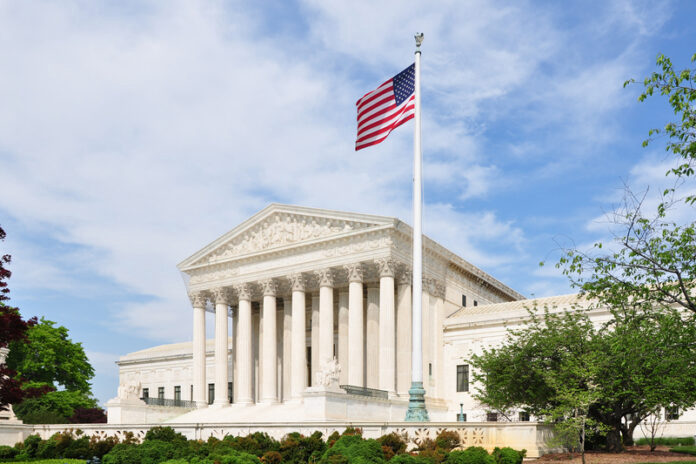
Supreme Court Justice Sonia Sotomayor delivered a scorching dissent from the bench Thursday, June 25, 2026, after the court’s conservative majority voted 6-3 to strip asylum-seekers of key legal protections — warning in stark terms that the ruling would cost human lives.
“The consequences of today’s decision are predictable,” Sotomayor said from the bench. “More people will die.”
The ruling allows federal immigration authorities to turn away asylum-seekers at the border without ever processing their claims. Justice Samuel Alito authored the majority opinion, holding that migrants who arrive at a U.S.-Mexico border port of entry but remain on Mexican soil have not legally “arrived” in the United States and therefore lack the right to apply for asylum or be inspected by an officer.
At issue was a “metering” policy that permits ports of entry to cap the number of asylum-seekers processed each day, forcing thousands to wait indefinitely in Mexico or turn back altogether. The legal question centered on whether noncitizens physically present at a port of entry, but not yet admitted, have legally arrived under federal immigration statutes — and thus whether the government must inspect them.
The Majority’s Logic and the Dissent’s Rebuttal
Alito’s opinion used plain language to argue that simply attempting to enter a place does not constitute arrival; actual entry is necessary. Under that interpretation, immigration officers may physically refuse entry to asylum-seekers regardless of individual circumstances or processing capacity. The ruling gives the executive branch sweeping discretion to reject migrants before making any determination about their eligibility for protection.
Sotomayor, the most senior liberal justice on the high court, fired back with a blistering critique. She pointed out that since 1917, Congress has required immigration officers to inspect noncitizens who arrive at ports of entry, a framework designed to ensure the government evaluates every person seeking admission to determine who should enter, who should be turned away, and who qualifies for asylum. Alito’s interpretation, she wrote, “makes no sense” — comparing it to a train conductor announcing arrival at Penn Station while still half a mile away.
Justices Elena Kagan and Ketanji Brown Jackson joined Sotomayor in dissent.
A Rare and Heated Courtroom Moment
The act of reading a dissent aloud from the bench is uncommon, typically reserved for cases where a justice believes the majority has made a grave mistake. Sotomayor’s decision to deliver her dissent orally Thursday caught Alito off guard. In an unusual retort, he said from the bench that he would have expanded his own remarks had he known in advance. He defended the metering policy as a reasonable management tool used by two different administrations to ensure orderly processing at busy border crossings. Tensions ran high in the courtroom afterward.
The metering policy itself has roots in both parties. It was first introduced in 2016, during the final stretch of President Barack Obama’s administration, following a surge of migrant arrivals that overwhelmed a single port of entry in southern California. President Donald Trump’s first administration used the policy to limit the flow of asylum-seekers at the southern border. President Joe Biden rescinded it in November 2021. Now, the Trump administration has moved to revive it, and Thursday’s ruling clears the legal path to do so.
The Deadly Practical Impact
Sotomayor’s dissent focused sharply on the real-world harm the ruling would inflict. With ports of entry now empowered to refuse entry without inspection, she argued, desperate people fleeing violence, persecution, or harm will have no safe avenue to seek protection. More will attempt perilous crossings elsewhere along the border, she warned, exposing themselves to violence from criminal organizations or deadly conditions — all because of their race, religion, nationality, or political beliefs.
The majority’s decision, she wrote, allows the executive branch to circumvent procedural safeguards that have been part of immigration law for more than a century, effectively letting the government “slam the door shut” on refugees before any official determination of their eligibility. She argued that both statutory history and longstanding executive branch practice required the government to inspect and process any noncitizen arriving at a port of entry seeking admission.
Part of a Broader Immigration Push
Thursday’s asylum decision is the latest in a series of rulings reshaping immigration law. On September 8, 2025, the Supreme Court issued a separate 6-3 emergency ruling authorizing immigration agents to use racial profiling during enforcement operations — a decision that also drew a fierce dissent from Sotomayor, who wrote that the ruling subjected Latino residents of Los Angeles and elsewhere to seizure based solely on their appearance, accents, and occupation. Kagan and Jackson joined that dissent as well. Sources confirm this was an emergency order (shadow docket), not a full ruling.
Together, the two decisions underscore the extent to which the conservative supermajority has reshaped the legal landscape for immigrants and asylum-seekers, handing the Trump administration broad new authority to enforce its immigration agenda at the border and beyond. For Sotomayor, the stakes could not be more concrete: more people, she warned Thursday, would not survive the consequences.