
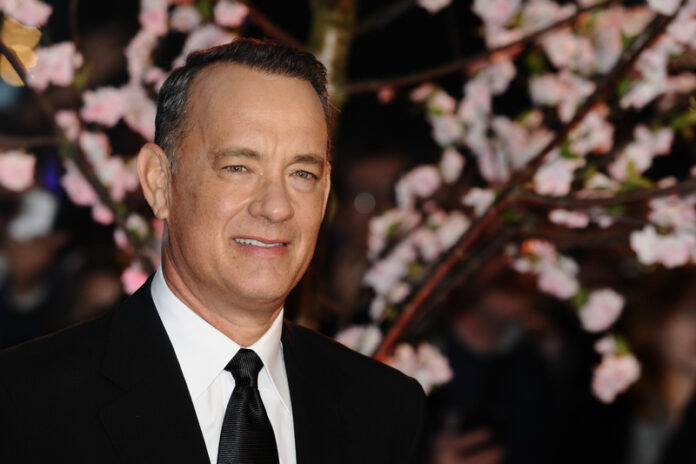
In a conversation that doubled as a history lesson and a civic wake-up call, Tom Hanks warned that indifference — not hatred — poses the gravest danger to American democracy.
“The best petri dish for tyranny is indifference, and we have a choice every single day to do something or not based on what we think is right,” he said.
The Oscar-winning actor made the remarks during an interview with Time, published last week, which was highlighted by HuffPost on Monday. The wide-ranging discussion centered on his new History Channel docuseries about World War II, but it quickly turned to uncomfortable parallels between that era and the present moment.
The Taxonomy of Resistance
When asked what moral courage looks like today, Hanks described civic engagement as both deeply personal and unavoidable. He laid out different paths for different people — a spectrum of action that doesn’t require everyone to protest, but demands that everyone participate.
“Now, for some of us, it’s showing up and raising our fist and saying, ‘not on my watch,'” Hanks explained. “For others, it’s giving money to those who fight the good fight. For many others of us, it just comes down to not ignoring what’s going on and continuing to tell the stories that matter.”
That final group — the storytellers — includes Hanks himself, who has built much of his career exploring American history through projects like “Saving Private Ryan,” “Band of Brothers” and “The Pacific.” His latest effort, “World War II with Tom Hanks,” is a docuseries created with the National WWII Museum in New Orleans. New episodes premiere on the History Channel, with the first three available to stream now.
Internment Camps and Willful Blindness
Hanks used the imprisonment and displacement of Japanese Americans during World War II as a case study in collective denial. The nation, he argued, has a habit of rewriting its complicity after the damage is done — insisting it didn’t know, didn’t see, didn’t understand what was happening.
He then drew a stark comparison to the present. For a population to claim it didn’t know neighbors were being rounded up and sent away, Hanks said, is the same as Americans today claiming they don’t see signs of homelessness on their streets. It’s obvious. It’s happening. And the country cannot afford to be complicit now — or risk recreating something far worse.
The comments, widely circulated internationally, come at a politically charged time. President Trump has publicly attacked Hanks as “destructive” and “WOKE.” The actor has not responded in kind, choosing instead to speak about history rather than engage in personal feuds.
A 250th Anniversary as Reckoning
The United States will mark the 250th anniversary of its founding, and Hanks framed the milestone less as a celebration than as a moment to assess how far the country has — and hasn’t — come.
He called the anniversary “all about the beginning of the two-steps-forward, one-step-back process of making our nation a more perfect union.” Perfection, he acknowledged, isn’t the objective. Getting closer to it is.
“We will never be a perfect union but we’ve had 250 years to figure out how we actually get closer to that,” he said.
From Film to Documentary
The actor’s latest docuseries represents another dive into World War II, a period that has consumed much of his creative energy. But this project, he suggested in the interview, is less about honoring what he has often called the greatest generation than about asking what that generation would think of those in charge now.
Hanks, long known for channeling his fascination with the past into his work, positioned the country as being tested in ways that echo some of its darkest chapters. The actor, photographed at the 2024 premiere of his film “Here,” was last in the cultural spotlight for that Robert Zemeckis-directed drama. His turn toward documentary feels purposeful — a pivot from playing history to interrogating it, and asking viewers to do the same.
For Hanks, the message lands somewhere between a history lesson and a civic alarm bell. The country, he believes, is being graded every day on whether it pays attention. The internment camps weren’t built in secret. The signs of poverty aren’t hidden. The choices, he said, are right in front of us.
And, as coverage of the interview noted, the warning carries a sharper edge precisely because it comes from one of the country’s most reliably affable public figures. When Tom Hanks talks about tyranny, people tend to listen. Whether they act, he suggested, is a different question entirely.