NASCAR icon Kyle Busch, the two-time Cup Series champion whose ferocious driving style and record-breaking victories defined a generation of stock car racing, died on May 21, 2026, from severe pneumonia that progressed into sepsis. He was 41.
The cause of death was confirmed on May 23 in a statement released by Dakota Hunter, vice president of Kyle Busch Companies, who said the Busch family had received the medical evaluation Saturday.
“The medical evaluation provided to the Busch Family concluded that severe pneumonia progressed into sepsis, resulting in rapid and overwhelming associated complications,” the family said in a statement. “The Family asks for continued understanding and privacy during this difficult time.”
Sepsis is a life-threatening emergency that occurs when the body’s response to infection turns on itself, damaging tissues and organs. According to the Centers for Disease Control and Prevention, the condition can cause widespread inflammation, microscopic blood clots and leaking blood vessels — a cascade that can prove fatal within hours once it takes hold.
Collapse Inside the Simulator
Busch was testing inside a racing simulator at a General Motors training facility in Concord, North Carolina, on Wednesday, May 20, when he became unresponsive. He was rushed to a hospital in Charlotte, where he died the following day.
A 911 call placed around 5:30 p.m. that Wednesday afternoon — obtained from the Cabarrus County Sheriff’s Office — captured the alarming scene inside the complex. An unidentified caller calmly informed dispatchers: “I’ve got an individual that’s [got] shortness of breath, very hot, thinks he’s going to pass out and is producing a little bit of blood, coughing up some blood.”
The caller said Busch was lying on the bathroom floor and confirmed he was awake. He also directed responders to the location and asked them to turn off their sirens upon arrival.
Warning Signs in the Weeks Before
In hindsight, troubling signs had emerged earlier in May. Busch was believed to have been battling a sinus cold while racing at Kansas Speedway on May 10, where he radioed his team during the race saying he needed a “shot” from a doctor afterward. The intense conditions appeared to aggravate the illness.
Yet Busch seemed to rebound. The following weekend, he competed in both the Truck Series and the All-Star Race at North Wilkesboro Speedway between May 15 and May 17. He had been preparing to race in the Coca-Cola 600 at Charlotte Motor Speedway on May 24 when he collapsed.
Brad Keselowski acknowledged he had noticed something was wrong but declined to share specifics. He said Busch’ apparent recovery had eased his concerns. Keselowski also reflected on the unique pressure drivers face to keep racing even when ill, noting that no one wants to give up a seat to a replacement waiting in the wings.
Chase Briscoe described Busch’ death as a “wake-up call” for drivers who routinely push past warning signs because of relentless travel and competition schedules. If something feels off, Briscoe said, “you need to get checked out.”
A Legacy Etched in Records
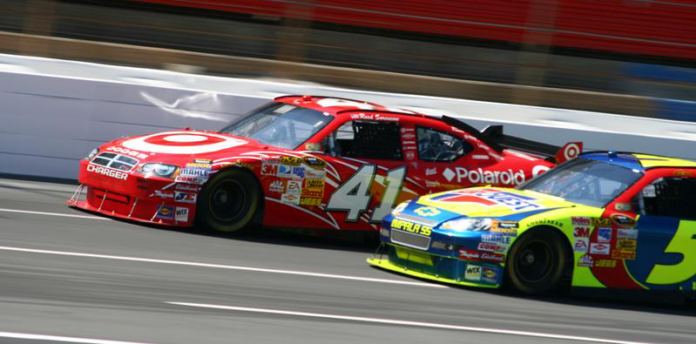
Busch leaves behind one of the most decorated résumés in motorsports history. The two-time NASCAR Cup Series champion captured 234 victories across NASCAR’s three national series — the most wins in racing history. Known to fans as “Rowdy” and “Wild Thing” for his postrace tempers and uncompromising aggression, he was equally beloved and reviled, a polarizing figure who commanded conversation in every garage and grandstand he entered.
NASCAR CEO Steve O’Donnell led tributes from across the sport, and a joint statement from the Busch family, Richard Childress Racing and NASCAR called him “a future Hall of Famer” and “a rare talent, one who comes along once in a generation.”
The Indianapolis 500, scheduled for Sunday, May 24, will honor Busch by illuminating the pylon for Lap 8 — the number of his car. At Charlotte Motor Speedway, Austin Hill will race the No. 33 car for Richard Childress Racing on Sunday. All 39 cars in the Coca-Cola 600 field will display a small black No. 8 decal in tribute.
In perhaps the most touching gesture, RCR announced it is temporarily retiring Busch’ No. 8 car until his 11-year-old son, Brexton, is old enough to race it himself. Busch’ teammate Austin Dillon was not made available for comment, and reigning Cup champion Ryan Blaney was among those joining the chorus of mourning across the paddock.
The Family He Leaves Behind
Busch is survived by his parents; his wife, Samantha; his son, Brexton, 11; and his daughter, Lennix, 4. The family has asked for privacy as they navigate the staggering loss of a husband, father and one of the most accomplished racers ever to strap into a stock car.
As tributes poured in from drivers, celebrities and fans, the sentiment was nearly universal: NASCAR has lost a giant, far too soon.