
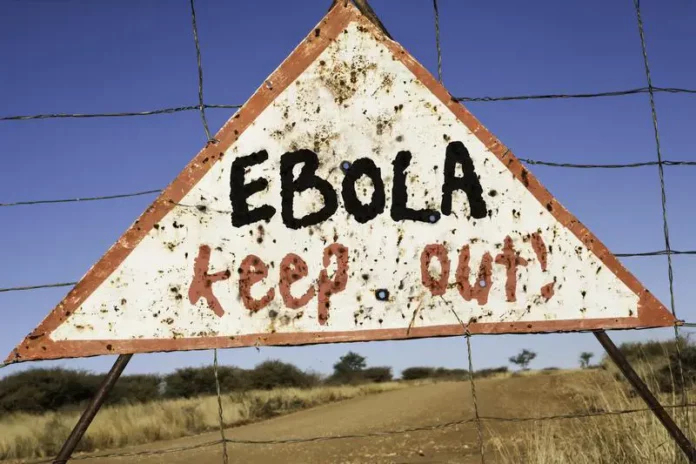
Laboratory tests have confirmed that Ebola Bundibugyo is responsible for a severe outbreak in northeastern Democratic Republic of the Congo, which has resulted in at least 134 deaths and affected nearly 250 individuals, according to health officials on May 15, 2026.
The National Institute of Biomedical Research in Kinshasa identified this uncommon Ebola variant in eight of 13 patient samples from the Mongbwalu and Rwampara health zones in Ituri Province. Health authorities believe an additional 80 community deaths may be linked to the virus as numbers climb.
A significant gap occurred between the initial infection and laboratory verification — problematic given the virus’s 21-day incubation window. A nurse who became ill on April 24 is thought to be the first case, though confirmation of an active outbreak required another three weeks of testing.
An Uncommon Strain With Limited Treatment Options
Bundibugyo is one of three Ebola species that infect humans, but receives far less research attention than the more lethal Zaire strain. The virus earned its name from Uganda’s Bundibugyo district in 2007 during the first documented outbreak, which sickened 131 people and killed 42 — representing a 32% fatality rate. A subsequent outbreak happened in 2012 before the virus seemed to vanish.
No approved vaccine or cure exists for this virus — only untested experimental treatments are available. Bundibugyo also presents diagnostic challenges; initial tests on outbreak samples came back negative for Ebola, requiring more sophisticated lab work to identify the precise species.
Handling Bundibugyo represents “one of the most significant concerns” in this outbreak, according to Professor Trudie Lang of the University of Oxford.
Global Health Emergency Declared
The World Health Organization has declared a public health emergency of international concern — its highest alert classification — citing rapid disease spread, the conflict-affected region where transmission is occurring and the lack of approved medical treatments for this particular variant.
“The Democratic Republic of the Congo possesses considerable expertise in managing Ebola outbreaks, and WHO is quickly expanding assistance to the current response,” stated Dr. Mohamed Janabi, the WHO Regional Director for Africa.
The organization is transporting five metric tons of materials and supplies from Kinshasa to Bunia, including protective equipment for infection prevention, laboratory shipping supplies, patient care resources and shelter. Specialists in disease surveillance, medical care and supply chain management are being deployed to improve contact tracking, early detection systems and respectful burial procedures.
Extended Undetected Transmission
Dr. Anne Cori from Imperial College London warned that the virus has been spreading undetected for an extended period, making it harder to find exposed individuals and isolate those who are infected. Patients have shown symptoms including fever, generalized pain, fatigue and nausea, with some experiencing bleeding and rapid deterioration leading to death.
The affected region faces substantial obstacles: population movement driven by mining operations in cities, persistent armed conflict and over 250,000 internally displaced persons. Significant cross-border travel increases the likelihood of the virus reaching adjacent nations.
Uganda has already documented a case of Bundibugyo in a person who came from the DRC and died at a hospital, followed by another confirmed case. South Sudan and Rwanda are at heightened risk due to significant commercial and personal connections with the impacted areas.
Experience With a New Challenge
This represents the DRC’s 17th Ebola outbreak since the virus was first identified in 1976 in Yambuku in Equateur Province. The most recent outbreak ended in December 2025. This track record has enabled the development of strong response systems — yet none specifically targeting this variant.
In the absence of preventive vaccines or specific medications, Bundibugyo management relies solely on comprehensive supportive care — alleviating discomfort, treating secondary illnesses and maintaining proper hydration and nutrition. Swift medical care increases survival chances, though delivering it in a conflict-affected, displacement-heavy area presents the biggest hurdle. Initial presentations resemble flu symptoms: fever, headache and exhaustion. This progresses to vomiting, diarrhea, organ dysfunction and, in certain individuals, internal and external bleeding. Roughly one-third of those infected do not survive.
Minimal International Risk
The emergency declaration does not suggest a pandemic equivalent to COVID. Ebola spreads through direct exposure to body fluids from sick individuals, and transmission typically doesn’t happen until people show signs. The devastating 2014-16 West Africa outbreak affected 28,600 individuals, yet Great Britain only reported three cases — all medical professionals working as volunteers abroad.
The danger this virus presents globally remains minimal, but the WHO alert conveys something broader. “It reflects that the circumstances are complex enough to warrant worldwide partnership,” Dr. Amanda Rojek of the Pandemic Sciences Institute at the University of Oxford, told the media.