
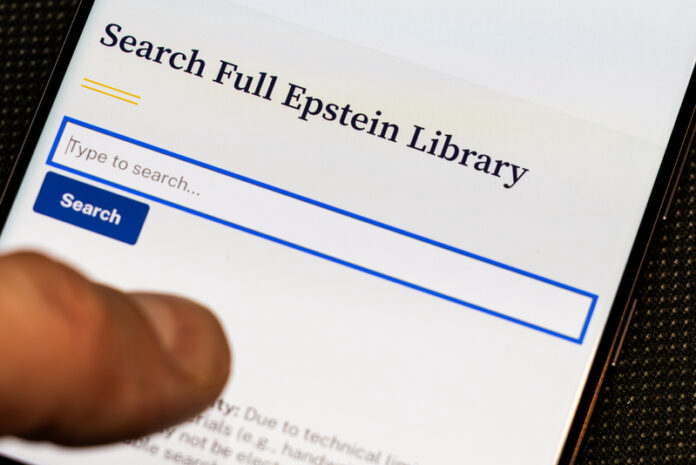
The Department of Justice withheld certain key FBI interview records from the extensive Epstein files archive, including documents connected to a woman who alleged that President Donald Trump assaulted her when she was a minor, according to reporting by CNN and NPR.
CNN’s review determined that over 90 FBI witness interview files seem to be missing from the more than three million pages released by the DOJ starting in December 2025. Among the absent documents are three FBI interviews with a woman who told agents that Jeffrey Epstein abused her repeatedly beginning at age 13 in the early 1980s, and who also claimed President Trump assaulted her during that period.
The DOJ disclosed the records after President Trump signed the Epstein Files Transparency Act on November 19, 2025, requiring the release of all investigative materials linked to the convicted sex offender. Epstein died in federal custody on August 10, 2019, while awaiting trial for sex trafficking.
Rep. Robert Garcia, the top Democrat on the House Oversight Committee, called the missing documents potentially criminal. “We have a survivor that made serious allegations against the president,” Garcia told CNN. “But there’s a set of documents, and what seem to be possible interviews the FBI conducted with the survivor, that are missing and inaccessible to us.”
The woman contacted the FBI hotline around July 10, 2019, after recognizing Epstein in a photo. Federal agents interviewed her four times over several months that year, creating more than 50 pages of notes. Only the first interview appeared in the public archive, and it was extensively redacted.
Independent journalist Roger Sollenberger first noticed the discrepancy by comparing serial numbers from evidence logs provided to Ghislaine Maxwell’s legal team with materials posted on the DOJ website. Maxwell, Epstein’s longtime associate, was convicted in December 2021 on five charges related to sex trafficking and sentenced to 20 years in prison.
The evidence log lists approximately 325 FBI witness interview documents, yet more than one-fourth are missing from the DOJ’s public release. The absent files reflect interviews conducted in multiple states, including New York, Washington, Oregon, and Georgia.
A DOJ spokesperson denied that anything had been removed. “We have not deleted anything, and as we have always said, all documents responsive were produced,” the spokesperson said. The agency said withheld materials were duplicates, protected, or tied to ongoing investigations.
President Trump has consistently denied any wrongdoing connected to Epstein and has repeatedly claimed that the released records “totally exonerated” him. The White House dismissed the allegations as “false and sensationalist.”
The publication of the Epstein files has been sharply criticized by investigators and survivors. Julie K. Brown, the Miami Herald journalist whose work exposed much of Epstein’s operation, told PBS NewsHour that the redactions reveal continuing inequalities. She argued that protecting powerful men’s identities while revealing some victims’ names demonstrates “two systems of justice in this country.”
Andrew McCabe, former FBI deputy director and CNN analyst, emphasized the importance of witness interview documents in any criminal investigation. “It’s the most basic and important brick in the wall that becomes the investigation,” McCabe said.
The DOJ’s release of 3.5 million pages involved more than 500 lawyers and reviewers who spent weeks evaluating material from six major sources: the Florida and New York cases against Epstein, the New York case against Maxwell, investigations into Epstein’s death, a Florida case involving Epstein’s former butler, various FBI probes, and an Inspector General review. The release also included over 2,000 videos and 180,000 images.
Garcia said Democrats on the Oversight Committee will launch an investigation into the missing files. “Covering up direct evidence of a potential assault by the President of the United States is the most serious possible crime in this White House cover-up,” he said.
The matter has drawn global attention, with The Guardian reporting that the U.K. has taken stronger steps toward institutional accountability regarding Epstein’s network than the U.S. Andrew Mountbatten-Windsor, the former prince who lost his titles, was arrested on Feb. 25, 2026 on suspicion of misconduct in public office based on information revealed in the files.
Survivors of Epstein’s crimes expressed anger over the incomplete disclosure. “All of us have been looking for our victim statements,” said Jess Michaels, one of Epstein’s victims. She accused the Justice Department of “gaslighting the entire country.”