
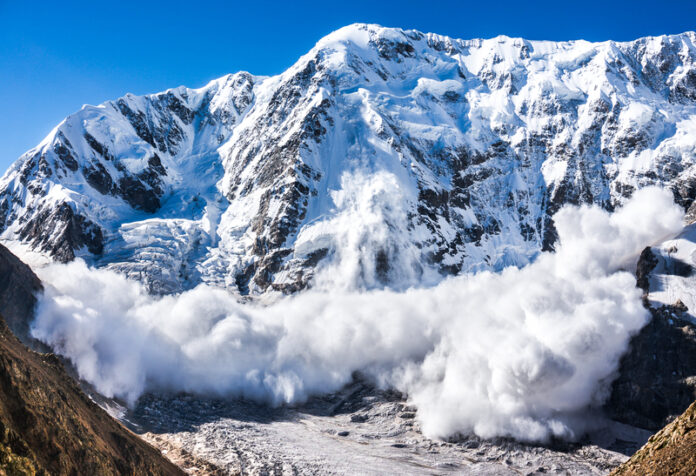
Over the weekend, six skiers lost their lives in avalanches throughout the French Alps, all while skiing off-piste, despite explicit warnings about hazardous snow conditions from local authorities and weather forecasters.
Three skiers perished in individual avalanche incidents on Sunday, January 11, 2026, following an equal number of fatalities on Saturday, January 10, 2026. Among the deceased was a British man in his fifties, who succumbed at the La Plagne ski resort after an avalanche buried him under approximately eight feet of snow while skiing off-piste.
A search operation involving over 50 rescuers was initiated at La Plagne. They located the victim after an hour-long search, but attempts to resuscitate him were unsuccessful.
At Courchevel, another skier died on Sunday in a separate avalanche. The skier was discovered buried in the snow by rescue teams.
The last fatality on Sunday was a 32-year-old skier at Vallorcine in the Haute-Savoie region. A ski patroller from Chamonix and a father of two, the victim was thrust against a tree by the avalanche’s force. The collision resulted in fatal injuries.
Two separate avalanches on Saturday claimed three lives at two different resorts. At Val-d’Isère in the Savoie department, two skiers were buried under approximately eight feet of snow and died. The skiers did not carry avalanche transceivers, electronic devices that aid in locating individuals buried in the snow.
At the Arêches-Beaufort resort, also in Savoie, an avalanche trapped a skier and his companion. A ski patroller witnessed the incident and quickly found the trapped skiers. One was airlifted to a hospital, while the other was declared dead at the scene. Jean-Pierre Mirabail, the resort chairman, commented on the severity of the incident.
In addition to the six fatalities, other avalanches occurred during the weekend. A snowboarder was injured in an avalanche at Tignes on Saturday. On the same day, two brothers were trapped in an avalanche while skiing at Oreille.
Météo France, the national weather forecaster, had issued explicit warnings of a high avalanche risk, rating it a four on the five-tier European Avalanche Danger Scale. They had warned against off-piste skiing before the weekend.
On Sunday morning alone, officials in the Savoie department recorded at least six avalanches in ski areas. Level 4 avalanche warnings continued to be in effect in several areas including Maurienne, Vanoise, Beaufortain, and Tarentaise.
Marie Wencker, chief of staff of the Savoie prefecture, rebuked the skiers who risked off-piste skiing despite the clear dangers. “What I want to emphasise is that by risking their lives, skiers who engage in activities that are currently unsuitable given the situation are also putting the entire rescue operation at risk, as they operate in sometimes difficult conditions,” she said.
Jean-Luc Boch, the mayor of La Plagne, pointed out that off-piste skiing is not illegal at French resorts. “The conditions were challenging for skiers attracted by pleasant weather and pristine snow conditions that masked underlying dangers,” he said.
Off-piste skiing, which involves skiing outside of marked and maintained trails, carries significantly higher avalanche risks than skiing on designated slopes. Ski patrols at resorts work to manage avalanche danger on marked trails using various methods, including the use of explosives to trigger controlled avalanches. Off-piste areas do not receive such management, leaving natural snow conditions unstable and unpredictable.
Avalanche transceivers, which the victims at Val-d’Isère did not possess, are critical safety equipment for backcountry and off-piste skiing. These devices emit a signal that helps rescuers locate victims buried under snow more quickly than visual searches. In avalanche rescues, speed is paramount—survival rates plummet after the first 15 minutes of burial due to the risk of suffocation from compacted snow and potential trauma injuries.
The European Avalanche Danger Scale, which uses a five-level system to communicate avalanche risk to the public, rated the weekend’s danger at level 4. This indicates a “high” danger level, where avalanches are likely and can be triggered by individual skiers. Level 5, the highest rating, signifies “very high” danger with large avalanches expected even on moderate slopes. Weather conditions, recent snowfall, changes in temperature, and wind all factor into avalanche danger assessments.
Each winter, the French Alps attract millions of skiers to world-renowned resorts. While skiing on maintained slopes is relatively safe, the fresh powder snow in off-piste areas lures experienced skiers seeking more challenging terrain. However, even experienced skiers cannot always accurately assess avalanche conditions, as the stability of the snow depends on the complex layering of old and new snow, which may not be visible from the surface.
The high number of fatal avalanches in a single weekend highlights how weather conditions can simultaneously destabilize an entire mountain region. When forecasters issue high-level warnings across multiple resorts and areas, the danger is widespread and not confined to specific slopes.
Rescue operations in avalanche conditions also put emergency responders at risk, as the same unstable snow that caused the initial avalanche can slide again, potentially burying rescuers. This secondary avalanche risk means that rescue teams must carefully assess conditions before launching search operations, which can sometimes delay responses that could be critical for the survival of buried victims.