
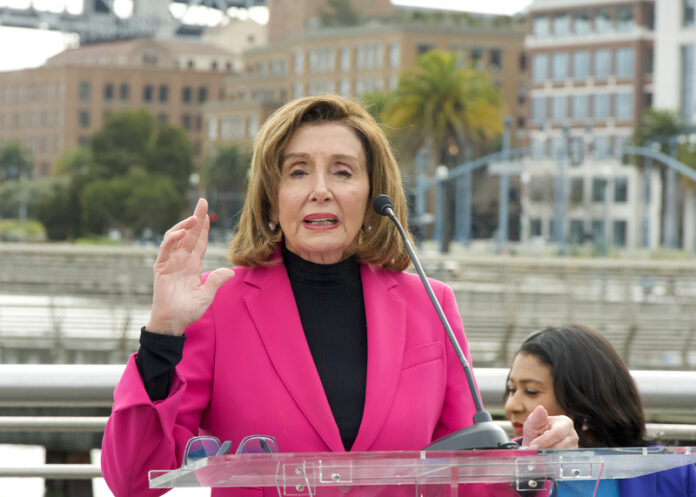
Former House Speaker Nancy Pelosi escalated her criticisms of President Donald Trump in a recent interview, declaring she has “had enough of him” and citing his recent prime-time address as evidence of what she called his “mental incapacity.”
In an interview with ABC’s Jonathan Karl, Pelosi explained why she chose not to watch Trump’s speech last month. She told Karl she had enough of him, but did see some of it in the news afterward, and thought it was a demonstration of his mental incapacity.
Pelosi, who will retire at the end of her term, pointed to multiple examples of behavior she found troubling. She specifically referenced Trump’s attack on filmmaker Rob Reiner following the deaths of Reiner and his wife Michele, who were found dead in their home last month.
Pelosi said something was wrong with Trump, and something was wrong with the people around him that they don’t stop him from his ridiculousness.
During his prime-time speech last month, Trump made sweeping claims about his administration’s accomplishments, stating he had brought the nation back from the brink of ruin in less than a year. He also declared he had made America the hottest country in the world. The speech drew sharply divided reactions along partisan lines, with Democrats and Republicans interpreting the address through vastly different lenses.
Pelosi described the speech as ridiculous, though she acknowledged she had not watched it in its entirety and only saw portions in news coverage afterward.
The White House responded swiftly to Pelosi’s comments, with a spokesperson calling her unhinged and lashing out. The administration suggested Pelosi would ultimately be remembered not for her legislative achievements but for corrupt stock trading, referencing long-standing controversies over congressional stock transactions that have dogged members of both parties.
Pelosi’s history with Trump dates back to his previous term in office, marked by several high-profile confrontations that became cultural touchstones. One particularly memorable moment occurred during a White House meeting, when Pelosi was photographed pointing her finger at Trump in what became known as the finger-wagging moment. The image went viral and remains popular among her supporters — Pelosi noted in the ABC interview that she is frequently asked to sign photos of that encounter even today.
Perhaps the most iconic clash between Pelosi and Trump came during his State of the Union address, when she tore up a copy of his speech while standing behind him on the dais. The gesture, captured on live television, became one of the defining images of Trump’s first presidency and sparked intense debate about decorum and protest in American politics.
Trump responded to the torn speech with outrage, falsely claiming that Pelosi’s action was very illegal. Legal experts quickly refuted this claim, noting that while the gesture was unprecedented and controversial, it violated no laws. Pelosi defended her decision in the recent interview, explaining she tore up the speech because it was a manifesto of lies.
These confrontations between Pelosi and Trump have come to symbolize the broader partisan warfare that has defined American politics in recent years. While some view Pelosi’s actions as necessary resistance against what they see as presidential overreach and dishonesty, others criticize them as contributing to the breakdown of traditional political norms and civility in Washington.
Pelosi’s decision to speak out about Trump’s mental fitness represents a continuation of Democratic concerns about the president’s behavior and decision-making. Throughout both of Trump’s terms, Democrats have raised questions about his temperament, judgment, and fitness for office, though such criticisms have typically failed to sway his Republican supporters or base.
The former speaker’s impending retirement marks the end of an era in Democratic politics. Her departure will leave a significant void in Democratic leadership at a time when the party is seeking to regroup after recent electoral setbacks.
As Trump continues his current term, conflicts with prominent Democrats like Pelosi show no signs of abating. The ongoing tensions reflect deeper divisions within American politics, where partisan gridlock and personal animosity between political leaders have become standard features of the Washington landscape.
Political observers note that Pelosi’s willingness to speak bluntly about Trump, even as she prepares to leave Congress, demonstrates the lasting impact of their contentious relationship. Her comments about his mental incapacity go beyond typical partisan criticism, representing a direct challenge to Trump’s fitness for office that is likely to generate continued debate among voters and political commentators.
The exchange also highlights how personal relationships between political leaders can shape public discourse and policy debates. While substantive disagreements over legislation and governance remain central to American politics, the personal dimensions of conflicts like the one between Pelosi and Trump often dominate headlines and public attention.