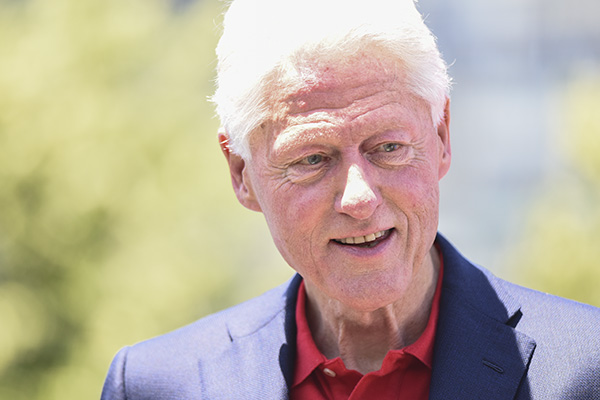
Former President Bill Clinton has raised concerns about the future of American liberties, following the fatal shooting of Alex Pretti, a nurse from the VA, by Border Patrol at a protest against ICE in Minneapolis, Minnesota on January 24, 2026.
On January 25, Clinton expressed his apprehensions on X, characterizing the incident as a pivotal moment in the nation’s history. He stated, “Over the course of a lifetime, we face only a few moments where the decisions we make and the actions we take will shape our history for years to come.”
The ex-president’s comments were in response to the killings of Pretti and also Renee Good, who was shot dead on January 7. Both were American citizens. Clinton criticized the conduct of federal agents and called on Americans to reaffirm democratic values, saying: “It is up to all of us who believe in the promise of American democracy to stand up, speak out, and show that our nation still belongs to We the People.”
Tensions have heightened in Minnesota after the protest shooting. The Department of Homeland Security confirmed that investigators are reviewing bodycam footage from the incident, with multiple angles available, according to DHS officials.
On the following Monday morning, President Donald Trump and Minnesota Governor Tim Walz held a discussion. Walz sought federal help in the shooting investigation, to which Trump consented, pledging to supply evidence for an independent inquiry. However, White House Press Secretary Karoline Leavitt, in a press briefing, refrained from guaranteeing the release of the body camera footage to the public.
The increased federal law enforcement in Minnesota has sparked controversy. U.S. District Judge Kate Menendez is presiding over a hearing to consider limiting ICE operations in the state. State officials and residents have expressed concerns about the sudden influx of federal agents, which has risen from 80 ICE agents to approximately 4,000.
Border czar, Tom Homan, is under scrutiny for his role in the expanded operations, as the government continues to enforce tough immigration policies. The deployment of additional federal agents in Minnesota signifies a considerable increase in comparison to previous ICE operations in the state.
Despite facing his own political challenges, including contempt charges related to the Jeffrey Epstein investigation involving him and Hillary Clinton, Clinton chose to speak out about the Minnesota situation. He depicted it as a crucial test for American democracy and civil rights.
Senator Raphael Warnock of Georgia also shared his views on the federal actions, describing them as potentially problematic for democratic norms. The shooting has triggered reactions from a variety of political figures as inquiries about the scope and conduct of federal immigration enforcement operations increase.
Since his inauguration in early 2025, the Trump administration has enacted sweeping immigration enforcement policies, including a birthright citizenship order signed as part of his inaugural day actions on January 20, 2025.
Under the leadership of Brendan Carr, the Federal Communications Commission has started investigations into NBC, NPR, PBS, and CBS. The FCC is also investigating Comcast over DEI policies, raising questions about the administration’s approach to press regulation and oversight among advocates of media freedom.
Judge Menendez is expected to decide soon on imposing restrictions on ICE activities in Minnesota. The Monday hearing included debates on striking a balance between federal immigration enforcement authority and state concerns regarding civil liberties and public safety. Minneapolis city attorneys argued that the overwhelming federal presence is fostering widespread fear among residents and causing long-term harm to communities.
Federal lawyers defended the deployment of federal agents, arguing that Minnesota was not effectively enforcing federal immigration law. When asked by Judge Menendez if the same enforcement objectives could be achieved with fewer agents, they cited that previously, 80 agents were operating in the state.
The legal dispute over federal authority and state sovereignty in immigration enforcement reflects broader tensions in American federalism. Although states have traditionally played significant roles in law enforcement, immigration is primarily a federal responsibility. This disagreement challenges this relationship, especially when federal operations occur on an unprecedented scale within state borders.
Clinton’s warning about relinquishing freedoms is particularly noteworthy considering his own experience with civil liberties debates during his presidency. His statement highlights the potential irreversibility of certain democratic backsliding, suggesting that rights given up in moments of crisis may be difficult or even impossible to regain. His reference to American history places the current moment within the context of the nation’s founding principles and the vulnerability of democratic institutions.
The political dynamics surrounding the shootings of Pretti and Good have implications beyond Minnesota. These incidents have become a national focal point in discussions about immigration enforcement, federal authority, and the appropriate use of force by law enforcement. As investigations proceed and legal cases unfold, these cases are likely to influence both policy debates and public opinion regarding the balance between security concerns and civil liberties.
Judge Menendez has indicated that she will make a decision promptly, acknowledging the urgency of the situation while emphasizing the need for thorough legal analysis. Her ruling could establish important precedents for how federal immigration enforcement operations are conducted, especially when state and local governments oppose the methods or scale of federal activities within their jurisdictions.
As the situation in Minnesota evolves, attention remains nationally focused on how federal authorities, state officials, and the courts will navigate the complex legal and political issues raised by aggressive immigration enforcement operations. The outcome may have lasting implications for federal-state relations, civil liberties protections, and the conduct of immigration enforcement operations nationwide. Clinton’s intervention brings the perspective of a former president to what he describes as a pivotal moment for American democracy and constitutional freedoms.