Guatemala has been engulfed by a series of coordinated gang attacks that claimed the lives of ten police officers. The violence began with rioting in three prisons, leading President Bernardo Arévalo to declare a state of emergency for 30 days to tackle the escalating violence.
The unrest started on Saturday, January 17, when prisoners took control of three penitentiaries and held 43 guards hostage. The gangs were seeking privileges for their members and leaders. Security forces initiated a takeover operation on Sunday, which sparked a series of revenge attacks on police officers.
Police stormed the Renovacion I maximum-security prison in Escuintla, approximately 46 miles south of Guatemala City, using armored vehicles and tear gas. Gang members also held hostages in two other facilities: 28 in the Fraijanes II prison east of the capital, and nine at the Preventivo prison on the city’s fringes.
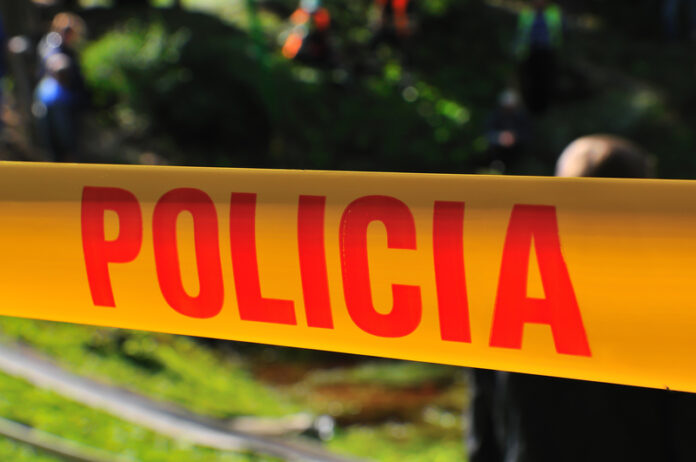
In Villanueva, on the outskirts of Guatemala City, officers were killed in the aftermath of the prison operations. Initial reports stated that eight officers were killed and ten were wounded in the reprisal attacks. On Monday, January 19, officials confirmed the death of a tenth officer.
President Arévalo announced the month-long state of emergency on Sunday evening. The decree suspends the right to assemble and allows for individuals to be detained and questioned without a court order. The emergency declaration was approved by the country’s legislators on Monday in an almost unanimous vote.
In response to the emergency declaration, soldiers were deployed around Congress in Guatemala City on Monday. Schools across the nation were closed on Monday as a safety measure.
President Arévalo attended a wake for the deceased officers hosted by the Interior Ministry on Monday. He was seen comforting the families of the slain officers, showing solidarity with the bereaved.
The U.S. Embassy issued a security alert on Sunday, advising its staff to stay indoors and avoid large gatherings. In October, Congress amended the law to classify Barrio 18 and Mara Salvatrucha gang members as terrorists, also increasing prison sentences for gang members involved in criminal activities.
National Civil Police Director, David Custodio Boteo, reported at least 10 armed attacks against police. Interior Minister Marco Antonio Villeda stated that the killings were a reaction “by these terrorists, in response to the actions the Guatemalan state is taking against them.”
The interior ministry released a video showing officers arresting the alleged Guatemalan leader of the Barrio 18 gang, Aldo Dupie, also known as “El Lobo.” Barrio 18 and its rival, Mara Salvatrucha, are held responsible for much of the drug trafficking and violent crime that blights this Central American nation. Both gangs have been designated as terrorist organizations by the United States.
Since 2025, gang members have staged revolts in prisons, demanding more lax conditions for their leaders. In October, 20 Barrio 18 leaders escaped from prison. To date, only six have been recaptured, and one was shot and killed.
In 2025, Guatemala’s homicide rate was 16.1 per 100,000 residents, over twice the global average. Defense Minister Henry Saenz stated that the military “will remain on the streets” to continue “dismantling” criminal groups.
The loss of ten officers has significantly impacted the National Civil Police and sparked conversations about officer safety and resource allocation for law enforcement. The state of emergency allows the government to tackle the crisis with increased powers, bypassing the usual procedural checks and balances.