President Donald Trump falsely denied making a statement he had made on camera just five days earlier, according to a fact check by senior CNN reporter Daniel Dale. The president then launched a personal attack on the ABC News reporter who accurately repeated his earlier remarks.
The incident, which occurred Monday, December 22, 2025, involved Trump’s statements about video footage from a US military strike on September 2. The military conducted strikes against a suspected drug-smuggling boat in the Caribbean, with a follow-up strike killing survivors from the initial attack.
On December 8, 2025, ABC News reporter Selina Wang asked Trump at the White House whether he would release video of the follow-up strike. Trump responded that he had no problem releasing the footage. “I don’t know what they have, but whatever they have we’d certainly release, no problem,” the president stated.
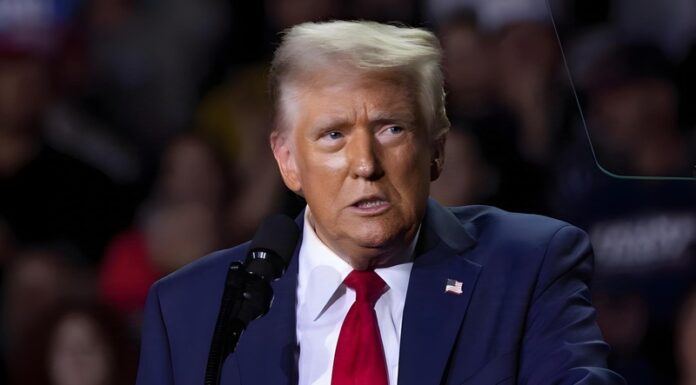
Fourteen days later, ABC News reporter Rachel Scott attempted to follow up on Trump’s statement, noting that Pete Hegseth said the question of releasing the video was under review. When Scott referenced Trump’s earlier comment, the president denied having made it.
“I didn’t say that. That’s – you said that, I didn’t say that. This is ABC fake news,” Trump told Scott during the exchange.
When Scott attempted to continue her questioning, Trump called her “the most obnoxious reporter in the whole place” and “actually a terrible reporter.”
ABC News journalist Jonathan Karl defended his colleague on social media, confirming that Scott had quoted the president accurately.
The incident represents part of a long-standing pattern. Trump has a long history of falsely denying he ever said things he had said in public, according to Dale’s reporting.
This is not the first time the Trump administration has faced questions about denying documented statements. Robert F. Kennedy Jr., Trump’s nominee for secretary of health and human services, denied saying things he did say during his confirmation hearing, which took place around January 29, 2025, according to fact-checking by Dale and CNN reporter Danya Gainor.
At the hearing, senators Michael Bennet and Raphael Warnock confronted Kennedy about controversial past statements. Kennedy denied or claimed uncertainty about comments he had made regarding African AIDS in a 2021 book and comparing the Centers for Disease Control and Prevention to Nazi death camps in 2013.
Similarly, Trump has repeatedly distanced himself from Project 2025, a conservative blueprint for government overhaul. The president said he had not read the 922-page document produced by the Heritage Foundation.
However, a CNN analysis found that 36 of 53 executive orders from Trump’s early administration align with proposals outlined in Project 2025. Paul Dans, who oversaw the initiative at the Heritage Foundation, told CNN the alignment represented exactly the work they had set out to accomplish.
The pattern of denial extends beyond political figures in the current administration. Such incidents raise questions about accountability when public figures deny statements that have been captured on video or documented in written records.
In the case of the September 2 military strikes, the Trump administration publicly released video of the initial strike but has not released footage of the follow-up strike that killed survivors.
During the Monday exchange, Trump defended the strikes, claiming that each boat destroyed saves lives. When Scott attempted to return to the question of releasing the video, Trump dismissed her.
The president ultimately told reporters that whatever decision Hegseth made about releasing the video would be acceptable to him, despite his earlier statement expressing no problem with its release to the American people.
Dale, CNN’s senior reporter who has fact-checked numerous claims from Trump and other political figures, documented the contradiction between Trump’s statements made five days apart on camera.